






Ouyi OKEx Observation: In-depth analysis of Polkadot parachain slot auction, what does it mean for DOT and ecology?


image description
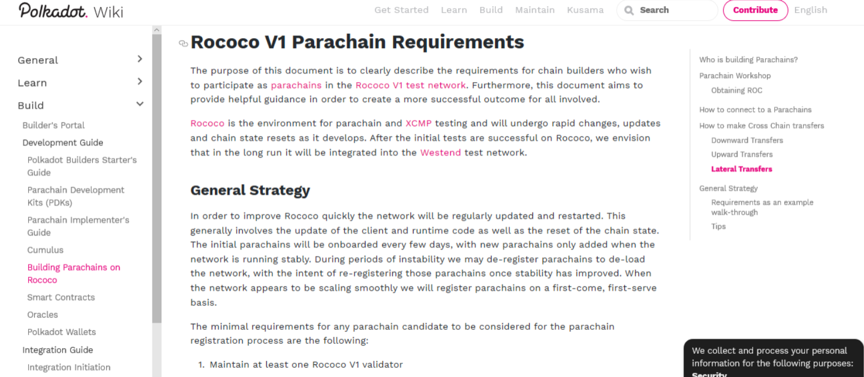
Note: Rococo is a public testnet launched by Polkadot in August 2020 designed for testing the functions of parachains, and is jointly maintained by Parity Technologies and the Polkadot developer community.
With the release of the Rococo V1 testnet, it means that the Kusama and Polkadot parachain slot auction and launch will gradually begin. For the highlight of the "slot auction", the market has accumulated continuous enthusiasm and high expectations. As of January 10, the Polkadot token DOT has risen by 97% within a month, and its market value has surpassed BCH and ADA to rank No. six.
secondary title
1. What is Parachain Slot Auction?
Before understanding the parachain slot auction, you must first understand the structure of Polkadot.
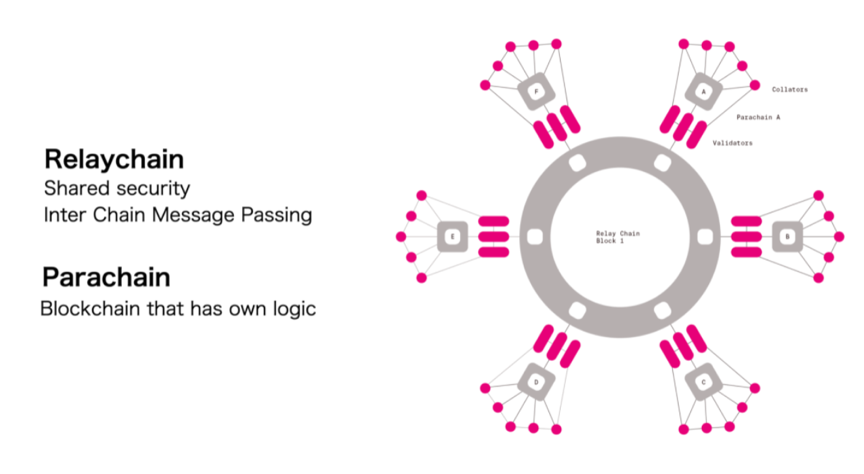
Polkadot is a scalable heterogeneous multi-chain blockchain, and cross-chain is its core vision. To achieve this goal, Polkadot consists of relay chains, parallel chains, and transfer bridges. The relay chain (Relaychain) is a block chain created based on the substrate. As the center of the Polkadot network, it is responsible for the verification of information interaction, protection and coordination of parallel chains, and maintenance of the security of the entire network; Enter the relay chain to run and interact with the relay chain, responsible for handling various "trivial things". Different parachains can focus on different businesses and serve different needs.
Parachain Slots are the interface between the relay chain and the parachain. In order to share the security of the Polkadot network and conduct business interaction with other parallel chains, it must be realized through slots. The slots are divided into community beta slots and commercial slots. 20% of the slots are reserved for deployment and support by the Web3 Foundation, as a community beta parachain to promote the entire Polkadot ecosystem The remaining 80% of the slots will be used as commercial slots and will be opened through auctions.
Since the operation of parallel chains needs to consume certain network computing resources, in order to ensure network efficiency and security, the number of parallel chains in the initial stage is limited. Polkadot founder Gavin Wood said at the Polkadot China Tour event in July 2020 that the upper limit of the number of parachains will be about 100, which means that the upper limit of the number of slots running at the same time is also about 100.
In order to ensure fair distribution, Polkadot has designed an auction method that allows project parties to obtain the right to use slots through bidding. The right to use means that the slot is only rented and not sold, and the project party needs to bid for the right to use by locking a certain amount of time and a certain amount of DOT. After the lease period ends, the locked DOT can be unlocked and returned. (Note: DOTs that have participated in pledge mining cannot be used to participate in auction lock at the same time)
secondary title
2. How to bid for slots and how to participate?
Polkadot's slot auction method is relatively new and relatively fair.
In order to reduce auction sniping, Polkadot parachain slots will use "candle auctions", and some improvements have been made on traditional candle auctions, and a retroactive closing mechanism has been used.
"Candle auction" originated from the sale of ships in the 16th century, and was named from the "one-inch candle" that determined the opening period of the auction. When the candle flame goes out, the auction ends abruptly, and the bidder at that moment wins. When the candle auction is applied on the network, a random number is needed to determine the termination time. The parachain slot auction is a slight improvement on the ordinary candle auction. It has a known opening period. At the end, a past block is randomly calculated. This past block is the time when the real auction ends. But retroactive blocks are made after the entire process, so no one knows when the auction will end.
In summary, the candle auction approach means that everyone knows the status of the auction, but not when the auction will end, which helps to ensure that bidders are more willing to bid early.There are two stages in the Polkadot parachain slot auction process: security period and random period. DOT can be freely pledged in both stages, and the auction will stop suddenly at an unpredictable time point in the random period, and the bids before this time point will be won by the highest bidder. Therefore, bidders need to bid early and stake as much chips as possible before the second stage.
The auction of parachain slots takes place every six months, and only one slot is released each time. The lease period of the slot is based on 6 months, divided into 6 months, 12 months, 18 months, and 24 months. Only the items participating in the auction can bid freely, bidding for a single or adjacent multiple lease periods , the highest price wins. The successful bidder needs to lock (stake) its DOT within the corresponding period, and the deposit will be refunded at the end of the parachain lease period.
If the project party has insufficient funds, it can also become a parachain through PLO (Parachain Lease Offerings, Gavin called it crowdloan, crowd loan) and apply for funding from the Web3 Foundation. For example, through a series of incentives to attract investors to lock DOT to themselves, in turn, investors can also lock their own DOT in the auction module to support their favorite projects. If it fails to be auctioned to become a parachain, it can also be connected to the relay chain through a parallel thread.
secondary title
3. Significance of Parachain Slot Auction
So, why do people pay so much attention to slot auctions? Project parties are actively preparing for them. What does parachain slot auction mean to Polkadot, project parties, and investors?
1) Against Polkadot
As a representative of cross-chain projects, Polkadot is known as a blockchain project comparable to Ethereum. The parachain slot auction is an important milestone in Polkadot's roadmap, and it is also Polkadot's "highlight" this year, which means that its cross-chain vision will begin to land.
Gavin Wood once said that one of the biggest goals of Polkadot in the future is to establish chain bridges with other blockchains. The current blockchain world is more like a data island. If Polkadot can bridge mainstream blockchains such as Ethereum and Bitcoin through a transfer bridge, then in the future, data and assets between different blockchains will be realized. Communication and Interoperability. This will be of great significance to the Polkadot ecology and even the entire blockchain ecology.
At the same time, for the Polkadot token DOT, the slot auction can enrich the usage scenarios of DOT. Since parachain slot auctions and investors support their favorite projects all need to pledge DOT, it will affect the total lock-up rate and lock-up structure of the DOT network.
When the parallel chain slot auction starts, a large amount of DOT is required to participate in the auction, and some pledged DOT will be unlocked. With the release of more parachains, it is expected that the total DOT lock rate (node pledge + auction lock) of the entire network will rise. From this perspective, the increase in the total lock-up rate is expected to have a certain positive impact on DOT’s secondary market performance (the same is true for KSM), but the specific currency price needs to be judged in light of the current market environment.
2) To the project party
Successfully winning the slot to become a Polkadot parallel chain will be able to share the consensus and security of the Polkadot network, and will be able to realize business sharing and interaction while realizing different business lines, which has great advantages for the project party. Bidding for the first batch of slots will bring the project a certain first-mover advantage, which can advance the planned development work as soon as possible, which is conducive to its later ecological construction. At the same time, it is also a high-profile publicity, which is good for the project to build momentum
Parallel thread development still needs a certain amount of time. Before the parathread lands, many projects that intend to build in the Polkadot ecosystem will first try slot auctions. (For some lightweight projects that do not need to process transactions in every block, it is more suitable to choose pay-as-you-go parathreads, which is more cost-effective.)
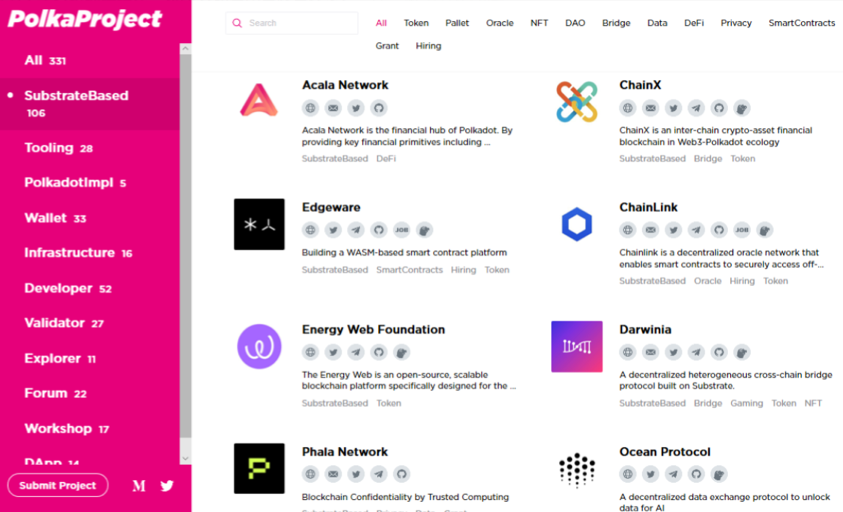
According to PolkaProject, at present, there are 333 Polkadot ecological projects, 106 of which are based on Substrate. The parachain slot auction has not yet started, and there are many well-known and representative projects that are ready to go, publicly declaring that they will participate in the parachain slot auction, such as Acala, Phala, ChainX, Darwinia, Bifrost, Stafi, Litentry, etc. .
3) For investors
The PLO scheme designed by the parachain slot auction gives market investors a way and opportunity to participate in the Polkadot ecosystem. Investors choose supported projects to pledge DOT in the bidding module to help projects participate in the auction. At the same time, you can get some token rewards or other incentives from the project, which may be more imaginative than the NPoS pledge income.
At present, exchanges, investment institutions, and investors in the secondary market are all paying close attention to the development process of Polkadot, supporting and optimistic about its ecological development, and seeing it as an opportunity worthy of attention. Many investment institutions that have deployed the Polkadot ecology have expressed their intention to participate in the auction, which will help the invested projects to win the slot and indirectly obtain greater benefits.
And various mainstream trading platforms also regard Polkadot as one of the key layouts, and have established Polkadot ecological funds one after another, and provide investors with convenient channels to participate in the Polkadot ecology. On December 30, OKEx announced that in order to support the Polkadot community and ecological co-construction, it officially launched the DOT pledged mining service. The number of participants is 1DOT, and the expected annualized return is 12.8%. In addition, OKEx has also established the Block Dream Fund, a fund that empowers global high-quality blockchain projects, with an initial capital of 100 million US dollars, which will focus on investing in blockchain infrastructure, Polkadot ecology, DeFi and OEC ecology, etc.
There is no doubt that these important participating roles represented by trading platforms and investment institutions will help the construction and development of the Polkadot ecosystem.
image description
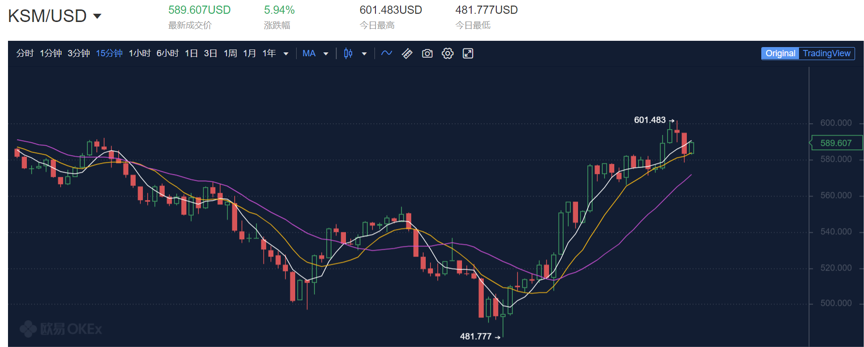
Image source: OKEx
As far as Polkadot's macro vision is concerned, the implementation of the parachain is only one of the key nodes in its development process, and the future development is still a long way to go. Let us wait and see





