


The epic project DFINITY is online, read the overview in this article


introduction: Known as an epic project, Dfinity has been reported countless times by the media in the industry since its inception, and Forbes often reports on it. In the past few weeks, the roadshow before the launch has ended around the world, and it will finally be launched at 10:00 am Pacific time on May 7th and 2:00 am China time on May 8th.
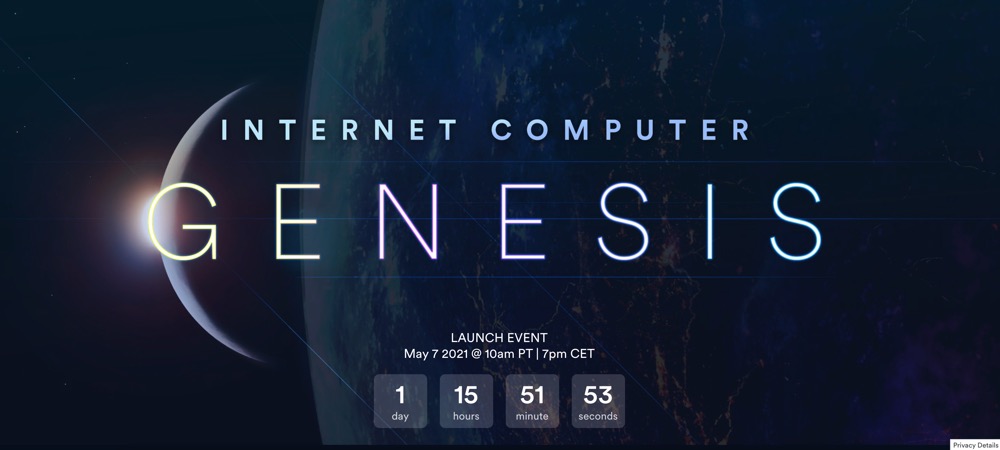
image description
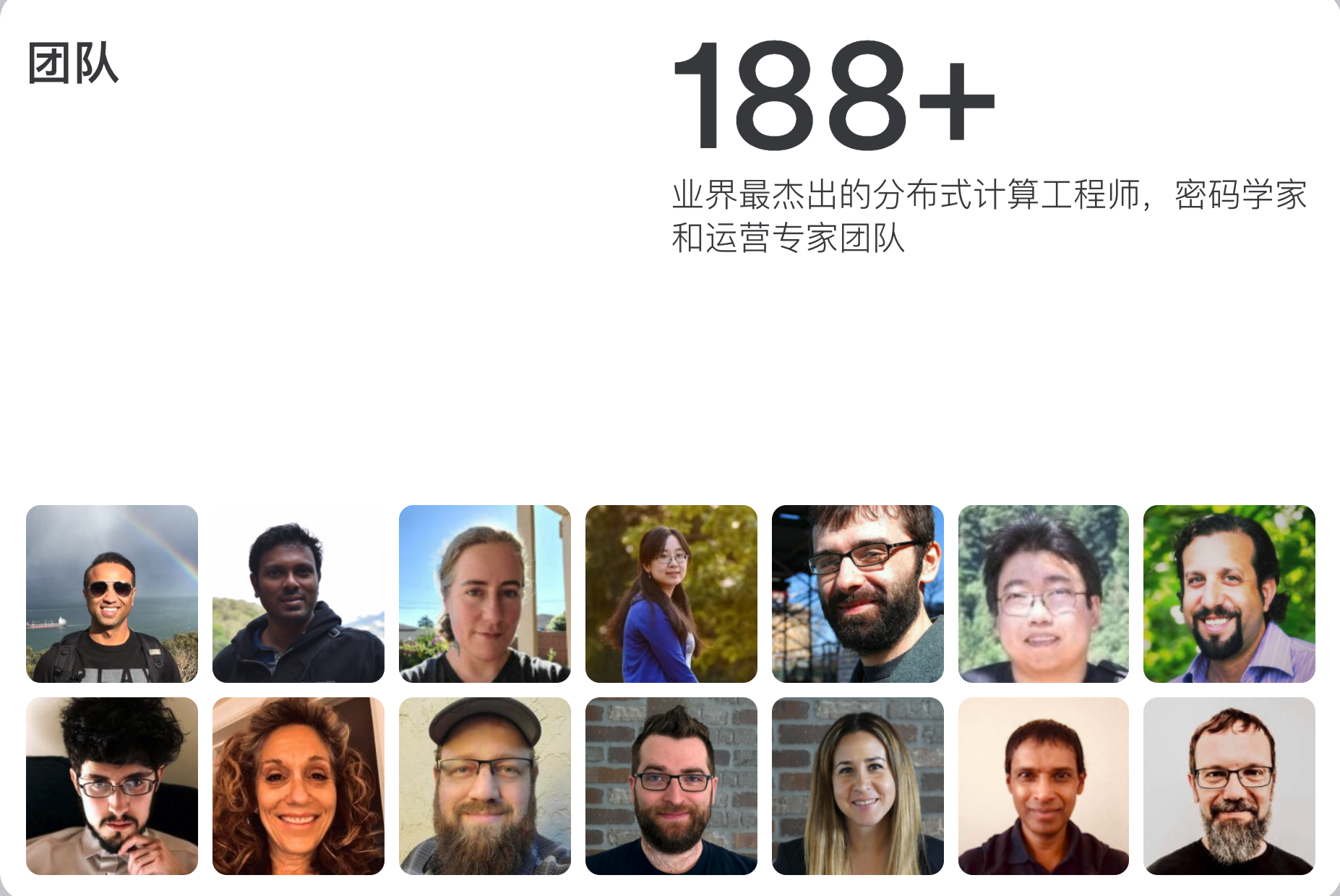
It was originally conceived in 2015 by Dominic Williams, who founded Dfinity in Palo Alto, California. Dominic is the president and chief scientist of the Dfinity Foundation. The Dfinity Foundation currently responsible for the project is located in Zug, Switzerland. The project has more than 180 employees and researchers since its establishment.
secondary title
1. What is Dfinity?
secondary title
Dominic Williams started his career in technology back in 1995 when he graduated from King's College in London with first class honors in computer science. He has developed many innovative software products over the years and is a serial entrepreneur who has created many successful companies. In Dfinity's R&D department, Ben Lynn, Timo Hanke and Andreas Rossberg.
Ben is the "L" in the "BLS" encryption technology used by Threshold Relay to generate randomness and achieve incredible security, speed, and scalability in public networks. Ben, formerly Dan Boneh's Stanford PhD, joins the Dfinity team after 10 years in senior engineering roles at Google.
Andreas was previously an engineer at Google, with whom he co-designed the WebAssembly virtual machine, and continues to serve as editor-in-chief of the language specification and works on Chrome's V8 JavaScript engine. Andreas was a postdoctoral researcher at the Max Planck Institute.
(Image source dfinity.org)
secondary title
3. Token economic model
Token Name: ICP
DFINITY conducted a token airdrop worth $35 million to early DFINITY community members in June 2018. In the United States, giving away Dfinity tokens for free prior to network launch can still be classified as an unregulated public securities transaction. Therefore, this airdrop distribution is limited to non-US persons. When the network was launched, there were 469,213,710 ICPs, which were allocated to the teams that participated in the early contribution and investment before the establishment of the foundation. The token distribution ratio was:
9.5% early contributors;
24.72% Seed investors
6.85% strategic investors
4.75% pre-sale round investors
1.25% community airdrop, preferably allocated to community members who support the project for a long time
52.93% Foundation funding, teams and partners, tokens held or used by the foundation to achieve its competitive goals are used to fund research and development and project operations, community programs, employee incentives, partner incentives and other long-term needs.
The token acts as a utility within the platform used to pay for data centers in the network system. For example, to install and run software or store data using the ICP protocol, the payment fee will be in the form of tokens, and those who provide the data center will be paid in these tokens. Consumption in any operation will be determined by the system to execute precise instructions, process data volume and store data volume, which is no different from the current cloud computing pricing. The token will also provide the utility of voting in the governance of the protocol, which will take a form of autonomy. This is similar to the current concept of mining, but there is a price (staking tokens) to provide storage power, not just to secure the network.
3.1 What is Dfinity Neural Network (BNS)?
Network upgrades and proposals are managed on the chain through the blockchain nervous system (BNS), which is equivalent to the human brain. BNS operates similar to a Decentralized Autonomous Organization (DAO): network participants vote at the periphery, and the final decision is automatically enforced by the network itself. But BNS enables participants to set their preferences before voting on proposals, posting votes is no longer a manual process.
Video translation version viewing link: https://www.bilibili.com/video/BV1154y1j7So?from=search&seid=5118727929596845171
secondary title
The Dfinity Foundation launched an ICO (seed round) in early 2017, raising 3.9 million CFH (Swiss Francs), mainly in BTC and ETH. The total funds raised this time is about 4.1 million US dollars. After a year of painstaking development, they raised $61 million (strategic round) from A16z and Polychain Capital, real heavyweights in the crypto investing space and beyond. In the middle of 2018, new investment was ushered in. A16Z and Polychain Capital led the investment. The main investors in the previous round invested another 100 million US dollars (pre-sale round). The other 9 venture capital funds also joined in, namely SV Angel, Aspect Ventures, Village Global, MulticoinCapital, Scalar Capital and Amino Capital, KR1, all funding rounds provide Dfinity with a total of over $195 million in funding to realize its vision for the Internet Computer.
secondary title
5. How does Dfinity work?
Dfinity Internet is built on a new decentralized protocol called the Internet Computer Protocol (ICP), which combines the collective computing power of a large number of computer nodes to produce a single unity capable of supporting applications of any size and complexity computer platform.
Unlike the traditional Internet (Internet), the Dfinity Internet computer will host and serve applications and data directly on-chain, rather than relying on a centralized infrastructure. At its base layer, a data center network can launch nodes running the ICP protocol. These nodes can then be arranged into subnets that host software containers that users can interact with as part of their Web 3.0 experience.
secondary title
6. How is Dfinity different from Ethereum?
Unlike Ethereum, which hopes to provide a technology stack for decentralized applications (DApps) that primarily involve moving and using digital assets such as ETH and ERC-20 tokens, Dfinity Internet's mission is to To replace the traditional Internet, and use ICP to finally hand over the governance power of ICP to users.
On the one hand, Ethereum uses smart contracts to automatically execute agreements and actions. Dfinity computers, on the other hand, use containers. They are very similar to smart contracts and are hyper-scalable.
Besides that, the two platforms also have a big difference in speed and efficiency. While Ethereum currently suffers from relatively high transaction fees and slow transaction confirmation times (largely due to congestion), Dfinity's massive throughput ensures that it can achieve absolute transaction completion within 5-10 seconds , while due to innovations in Ethereum, its scalability is almost infinite threshold relay.
These performance benefits can be seen when comparing Dfinity to the current state of Ethereum. With the gradual rollout of Ethereum 2.0, these differences may change significantly. Ethereum is now accepted by technology developers, which reduces the learning cost of development. The current Dfinity Internet operation is relatively complicated, and developers need to re-learn new development languages to adapt to their technology development.
https://medium.com/dfinity/a-technical-overview-of-the-internet-computer-f57c62abc20f





