


Odaily Frontline|Korean Encryption Guide: BTC and XRP are my favorites, ETH and DeFi are not very popular


This article comes fromCrypto News Flashsecondary title
Odaily Translator |
Summary:
Summary:
In South Korea, XRP transaction volume is second only to Bitcoin; compared to Western countries, the DeFi market is not as popular in South Korea.
The Philippines, Japan, and Malaysia are also other important markets for XRP in Asia.Asia Encryption Field ReportAsia Crypto Landscape Report
, investors in South Korea prefer to trade XRP rather than ETH. According to the report, South Korea is the center of the crypto industry in Asia. South Korea has the highest penetration of crypto investors, with a third of employees investing in cryptocurrencies.
Also, unlike neighboring Japan, cryptocurrencies are not only appealing primarily to millennials, but people of all ages as well. As many as "8 percent of senior residents in their 60s and 70s" support the market. Due to capital controls and a ban on serving foreigners, investment demand was so high that South Koreans paid a whopping 50% premium for “kimchi” in bitcoin in 2017.
Due to the popularity of cryptocurrencies, large crypto exchanges such as Bithumb, Upbit, Korbit, and Coinone emerged. Among these exchanges, XRP remains the second most popular cryptocurrency after BTC. According to Messari, this may be because Koreans, unlike Westerners, are less active in the DeFi space.On the other hand, one reason may be that ETH and stablecoins are not very popular in South Korea,” except for Upbit because of the partnership with Bittrex (ends in 2019
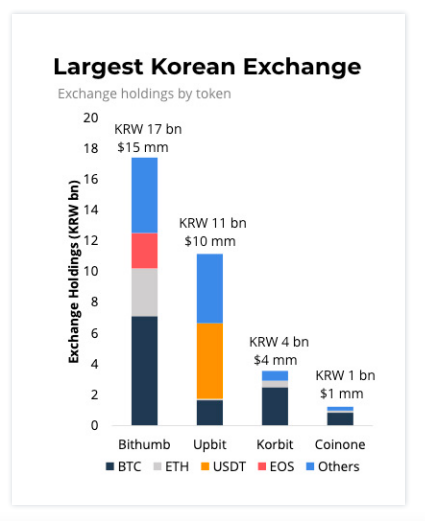
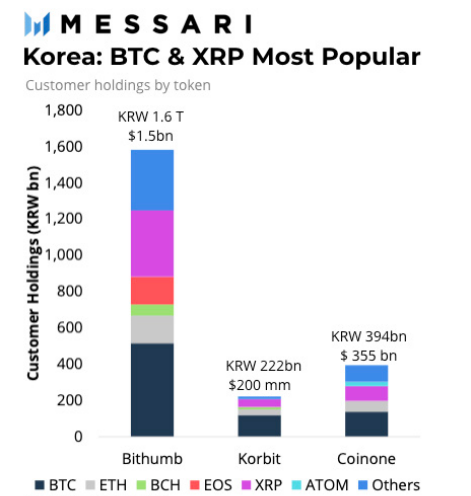
) while having significant USDT exposure, (exchange) customers mostly hold BTC and XRP, not ETH. "
Besides South Korea, Japan is another important cryptocurrency market in Asia. 26 cryptocurrency exchanges in the country have successfully obtained licenses. However, they are not allowed to list Tether (USDT), which is why Messari suspects that “investors in the country are moving to platform-based projects like XRP.”Messari also said that "Japanese companies such as SBI Group have a positive attitude towards XRP." SBI has cooperated with Ripple as early as 2017 and is also a board member of Ripple Labs. SBI Holdings CEO Yoshitaka Kitao announced last summer that it would launchJapan's first cryptocurrency fund
, will consist of 50% XRP, 30% BTC and 20% ETH.
In addition, as we all know, the US Securities and Exchange Commission (SEC) recently sued Ripple, and SBI clearly expressed its support for Ripple. Companies in Japan "rely on and prefer centralized systems," Messari said.
secondary title
Related Reading:





