


OKEx Xu Kun: Opportunities and Impacts of Ethereum 2.0 | The Road to Evolution



On the afternoon of December 1st, the "Road to Evolution - Witnessing the Launch of Ethereum 2.0 Phase 0 Online Live Summit" hosted by Odaily, OKEx, Whale Exchange, Hyperion, and Hashquark was successfully held (Click here to watch the video). Xu Kun, Chief Strategy Officer of OKEx, delivered a speech on the topic of "The Opportunities and Impacts of Ethereum 2.0" at the event.
Xu Kun said that transactions on the Ethereum chain are active, and the prosperity of DeFi feeds back the value capture of ETH; ETH is more accepted by traditional markets. Xu Kun also shared that the pledge process of Ethereum 2.0 has a large-scale effect; after the launch of Ethereum 2.0, the actual circulation of ETH is far lower than the total amount, and even deflation may occur; Ethereum 2.0 pledge service mainly has three modes: node technology Services, collective pledge of retail investors, decentralized matching and matching; participating in ETH2.0, you need to be especially cautious about the choice of platform, and you need to pay attention to platform security, technical stability, and asset liquidity.
The following is the essence of the speech, edited and organized by Odaily, enjoy~
secondary title
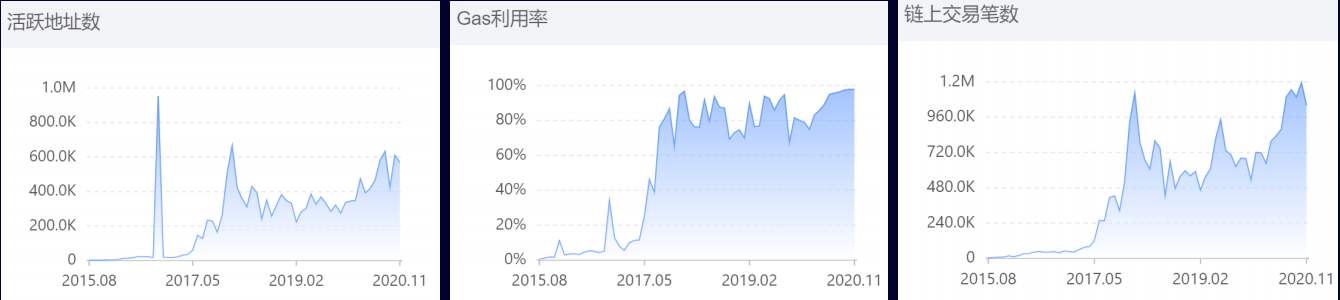
Ethereum’s on-chain transactions are active
secondary title
The prosperity of DeFi feeds back the value capture of ETH
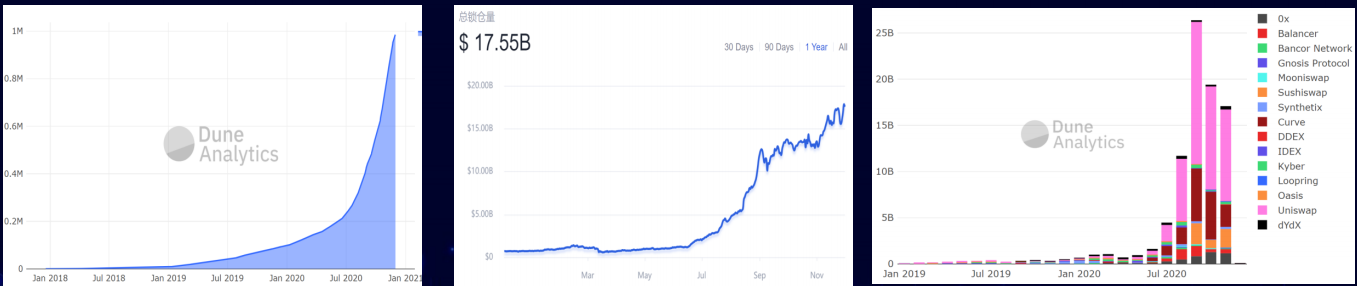
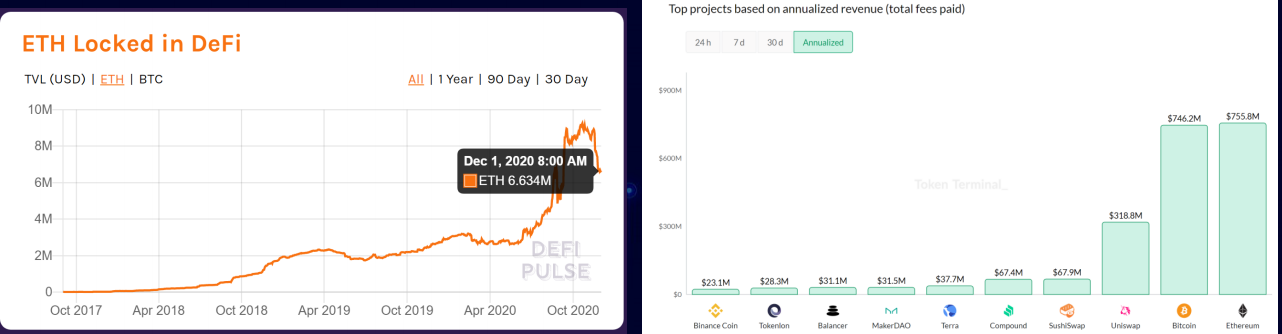
The number of DeFi users is close to 1 million, which is 10 times that of the beginning of the year. The total lock-up volume of DeFi reached 17.55 billion US dollars, an increase of 23 times from the beginning of the year; nearly 150,000 BTCs were locked in DeFi, which was less than 1,000 at the beginning of the year; the total market value of stablecoins reached 18.3 billion, which was 3.3 billion at the beginning of the year, and an increase of 15 billion for the whole year . DEX trading volume, for 4 consecutive months, the monthly trading volume exceeded 10 billion U.S. dollars, and the cumulative trading volume in the past year reached 91.1 billion U.S. dollars.
 secondary title
ETH is more accepted by traditional markets
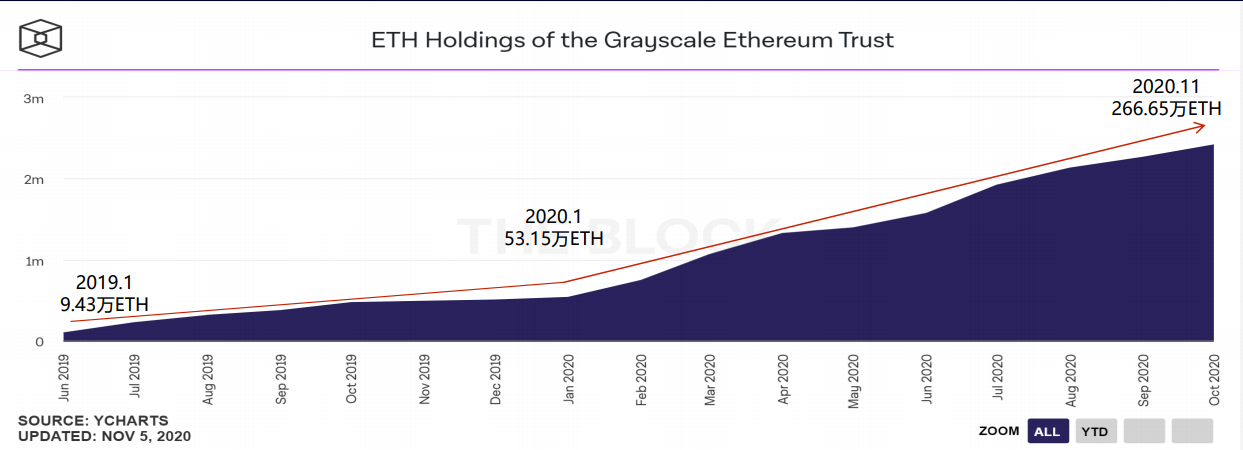
As of November 30, the total holdings of Grayscale Ethereum Trust was 2.6665 million ETH, compared with January this year, it only held 530,000 ETH, and its holdings increased by more than 2 million ETH during the year. In addition, Grayscale Ethereum Trust became a company reporting to the SEC in October this year, which means that it has a higher degree of recognition in the traditional market. PayPal began to support US users to purchase 4 encrypted digital assets through PayPal in November, including ETH.
secondary title
The four stages and main impact of Ethereum 2.0
There are two main goals of ETH2.0: one is to improve the overall performance and provide a more powerful infrastructure for the development of the application layer; the other is to optimize the token economic model. ETH has become an important economic resource in the ecology.
secondary title
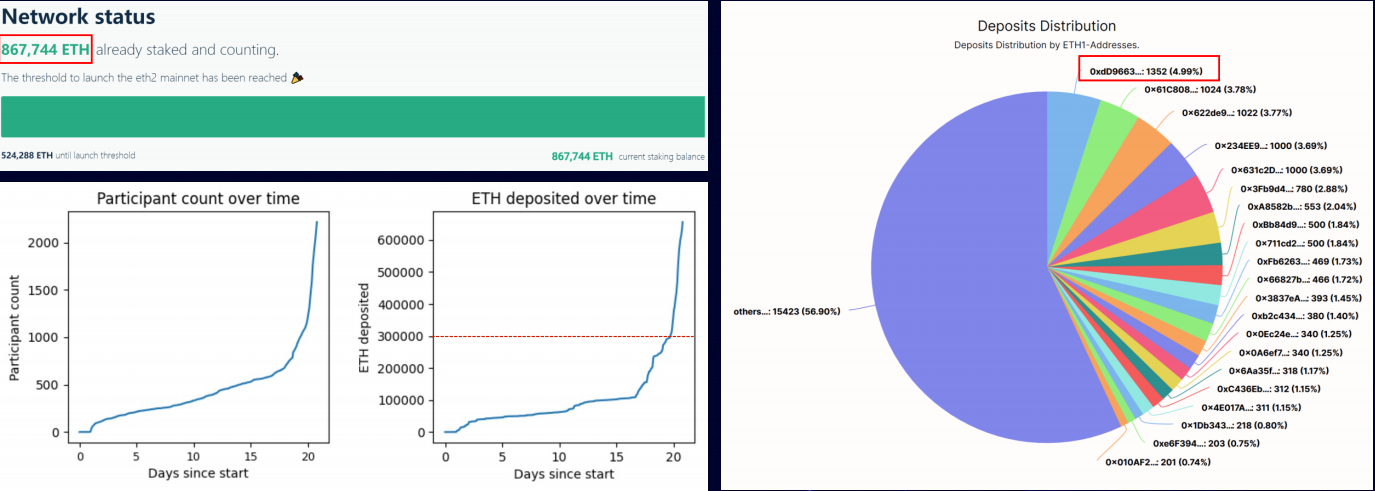
Staking Progress on Ethereum 2.0
secondary title
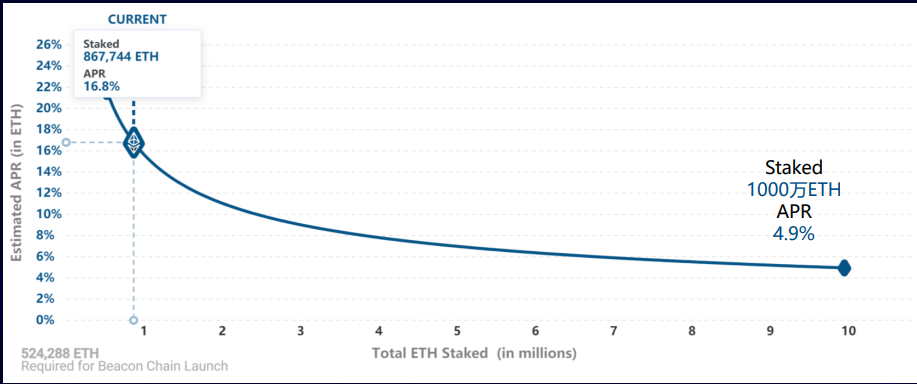
Staking Earnings on Ethereum 2.0
secondary title
Changes in circulation after the opening of Ethereum 2.0
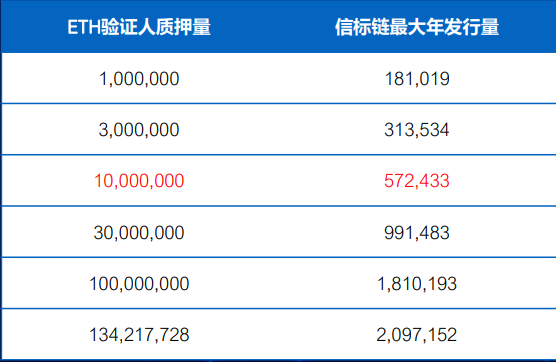
In the first two stages of ETH2.0, that is, in about the next two years, the POW chain of ETH1.0 and ETH2.0 will exist at the same time. Currently, POW mining will issue an additional 4.2 million ETH per year. EthHub has estimated the annual additional issuance of BETH, as shown in the table below. If validators are punished, the actual additional issuance will be smaller than this figure.
According to Vitalik's estimation, the amount of pledges on the beacon chain will reach 10 million ETH. In the next 1-2 years, the overall issuance of ETH (including ETH1.0 and 2.0) will be about 4.7 million per year. At present, the total amount of ETH is about 113 million. According to the annual increase of 4.7 million, by the end of next year, the total amount will reach about 118 million. However, among them, some Ethereum does not actually belong to the category of free circulation, or is in other forms. ETH circulation:
The part pledged in the 2.0 beacon chain (estimated at 10 million);
The part pledged in DeFi (currently 6.6 million);
The part of grayscale holdings (currently 2.67 million).
secondary title
Three modes of Ethereum 2.0 pledge service
There are three main modes of Ethereum 2.0 pledge service: node technology service, collective pledge of retail investors, and decentralized matching.
The first one is to provide technical services for node construction, which is aimed at users who hold 32 ETH. For example, in the solo mode of Stakewise, each witness charges a fixed fee of $10 per month; StakeFish charges each witness a one-time fee of 0.1ETH.
The second type is for users who do not meet 32ETH, collective mining, similar to a mining pool model. For example, Stakewise’s Pool mode has no minimum pledge amount, and will draw 10% of the reward as a fee; while Stkr will draw 23% of the reward.
secondary title
Opportunities and risks of participating in ETH2.0 pledge
Participate in ETH2.0 pledge, and you can get additional ETH. According to the pledge amount of 10 million, the currency-based annualized rate of return is about 5%. At present, the annualized interest rate of ETH currency-based deposits in the DeFi lending market is less than 1%, Compound is 0.05%, and Aave is 0.07%. Therefore, it is still very attractive for currency holders. •However, to participate in ETH2.0, you need to be especially cautious about the choice of platform, and you need to pay attention to three points:
The first is platform security. The Ethereum 2.0 pledge needs to last for at least 2 years. Whether the operation of the platform that provides third-party pledge services is safe, and whether the principal and interest can be paid as scheduled after 2 years are the primary factors that users need to consider.
The second is technical stability. If the verification node has problems such as offline and failure, it may face punishment. Therefore, the stability of node technical services directly affects the actual income of pledge, which also needs to be paid attention to.
The third is asset liquidity. The ETH pledged in the beacon chain cannot be transferred out for at least two years. In order to meet the needs of users to withdraw early, future pledge certificates may be circulated in the form of tokens on various platforms. If the liquidity of the platform is not good, it may lead to The large price difference also needs to be paid attention to.





