






Eth2.0 Genesis block has just been born, you should understand these knowledge points


Author | Qin Xiaofeng
Editor | Hao Fangzhou
Produced | Odaily

Author | Qin Xiaofeng
Editor | Hao Fangzhou
Produced | Odaily
At 8 o'clock tonight, Beijing time, the much-watched Eth2.0 beacon chain genesis block was officially launched. This time, Ethereum finally stopped bouncing tickets.BeaconchaAccording to OKLink data, as of 8 o'clock tonight, the Eth2.0 deposit contract address has received 881,537 ETH, far exceeding the activation threshold (524,288 ETH).
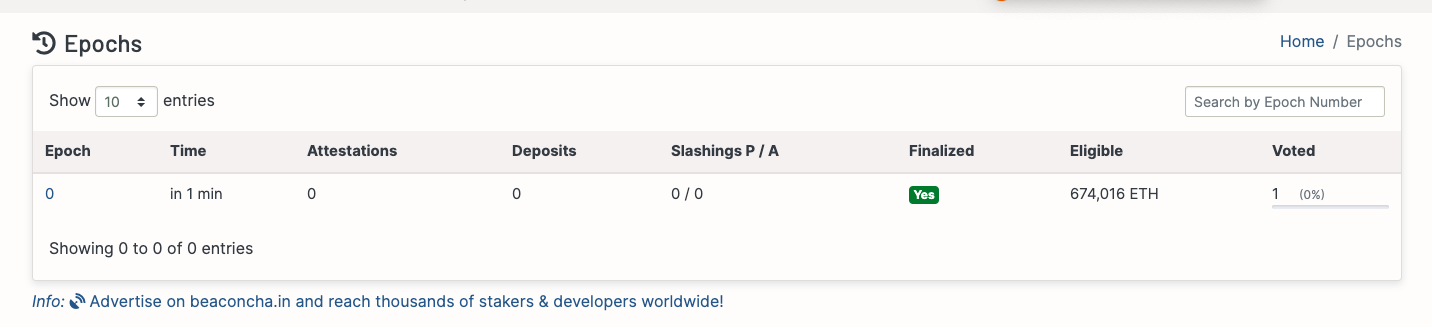
If participants want to obtain the 17% annualized income of the genesis block (Ethereum standard), it is best to activate it before the genesis block is born tonight. Because only 4 validator nodes can be activated per epoch after the launch of Eth2.0, it may take a long time to activate at that time.
According to the Ethereum 2.0 browser
Odaily observed that currently the number one deposit contract address holds 1352 verification nodes, accounting for more than 5%, and the top ten addresses account for more than 30%.
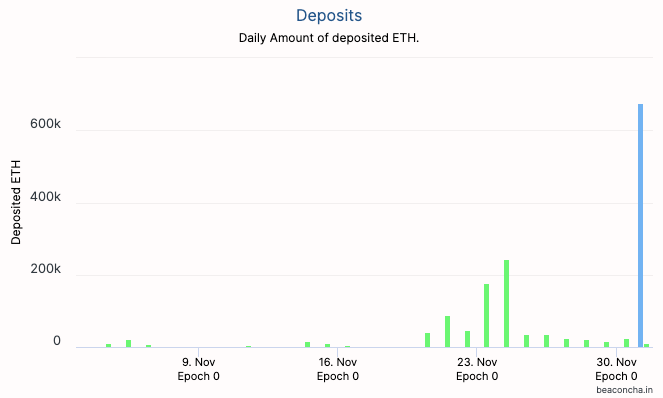
Since the official release of the deposit contract on November 4, Ethereum has undergone "shaking" changes in the past month.
In the first week after the deposit contract was launched, the amount of pledge was seriously insufficient, only reaching 15% of the minimum start-up standard, and it has not been improved since then. At that time, the outside world generally believed that the start time of Ethereum's established genesis block on December 1 would be postponed again.
image description
(ETH deposit amount)The turnaround occurred two days before the final deadline, that is, November 23 and 24. The total pledged amount in the two days reached 421,000 ETH, accounting for nearly 80%.
Why is the number of ETH pledged soaring? Which market players do these pledged ETH mainly come from?To put it simply, there are three main types of people: Ethereum developers, represented by Vitalik; Ethereum big players (some are miners, project parties) and technical enthusiast supporters; institutional supporters who are optimistic about the development of Ethereum enter. More content, recommended reading
Another question is,
Become a validator to participate in Eth2.0 pledge, how much profit?
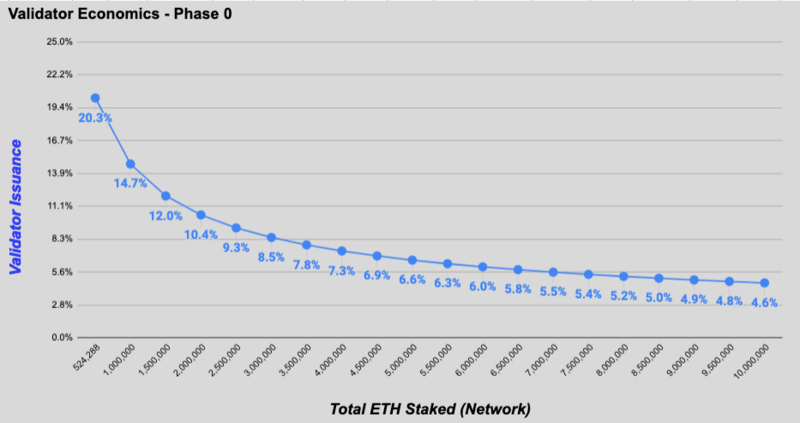
According to official data, as the number of participants increases, POS revenue will drop from 20.3% at the start-up period to 4.6% (total deposit 10 million ETH), as shown below:
(ETH staking gross income)
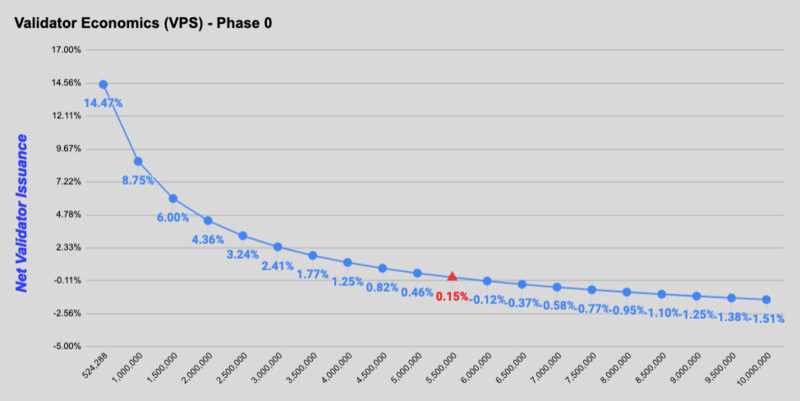
Of course, becoming a verifier also requires the fulfillment of obligations, which naturally requires investment costs (hardware, software).
image description
(VPS pledge income)
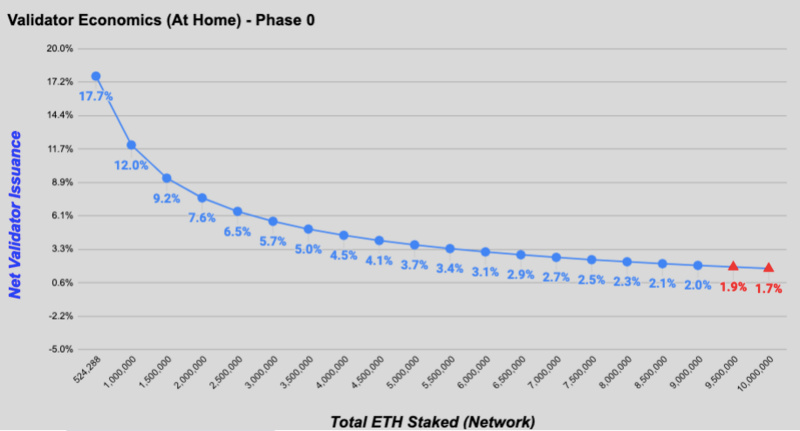
If you choose "At home", the input cost is relatively small, and the actual net rate of return will be between 17.7%-1.7%, as shown below:
image description(“At-home” staking income)、Of course, no matter what, I need to remind everyone that at present, Eth2.0 only supports the deposit function and does not support transfers. It will not support transfer transactions until Phase 2 (maybe one year later). In other words, currently participating in Eth2.0 pledge is a long-term promising long-term investment, which needs to be chosen carefully.。
For more content, click to read"ETH2.0 is coming, do you want to participate in the pledge?" ""One article to understand how to participate in Ethereum 2.0 pledge? "In fact, in the past month, Odaily also saw
There are many Eth2.0 liquidity release solutions in the market, although the specific implementation methods (decentralization & centralization) are different, they basically release liquidity through derivative Eth. What are the advantages and disadvantages of these solutions, it is recommended to read
In addition, there has been a hot topic of "how long can Ethereum be mined" before. It should be noted that,
The launch of Eth2.0 tonight will not directly replace Eth1.x, and miners can still continue mining for at least 2 years, so there is no need for miners to panic.
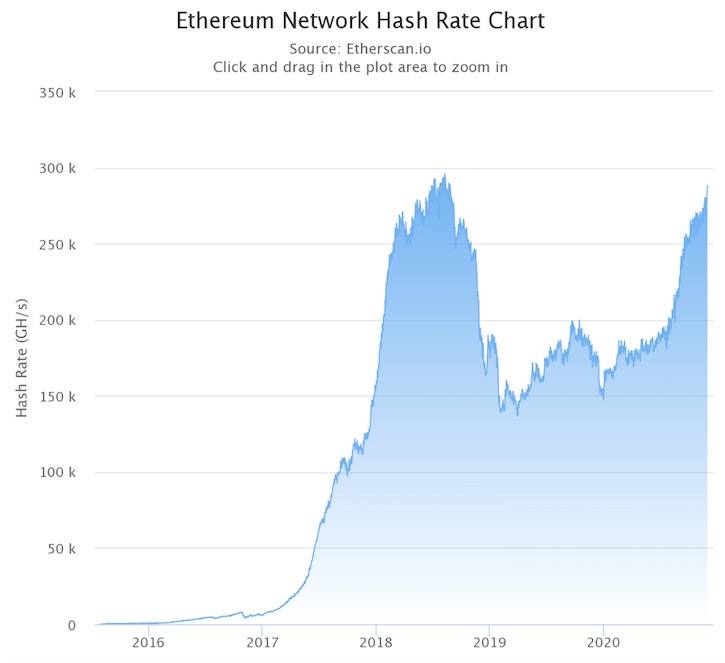
Odaily also noticed that since the beginning of the year, the hashrate of the Ethereum network has been on a rising trend, rising from 152 TH/s to 289 TH/s, which is about to break through the historical high of 294 TH/s in 2018. In contrast, the difficulty of the Ethereum network is also rising, and reached a record high yesterday, reaching 3616.421 TH.
image description
(Ethereum computing power changes)
Although the price and network difficulty cannot represent the price, to some extent it also reflects the long-term optimism of the ecosystem participants on Ethereum, and a large number of miners are willing to invest in it.





