


Odaily Frontline | Hyperinflation, profit-taking and growing pains in the DeFi crisis


This article comes fromIntoTheBlock, original author: Lucas Outumuro
Odaily translator |
Odaily translator |
 Decentralized finance (DeFi) had a breakout quarter in the summer of 2020. The total value locked (TVL) of DeFi protocols grew from $2 billion in July to $11 billion in October, and some DeFi tokens appreciated 5-10 times over the summer. However, since September, despite continued growth in TVL, DeFi token prices and protocol metrics have diverged significantly, with token corrections exceeding 50%. This divergence may be due to investors turning to a safe-haven environment as they decide to lock in profits and become wary of the high supply inflation of the still-early-stage coin.
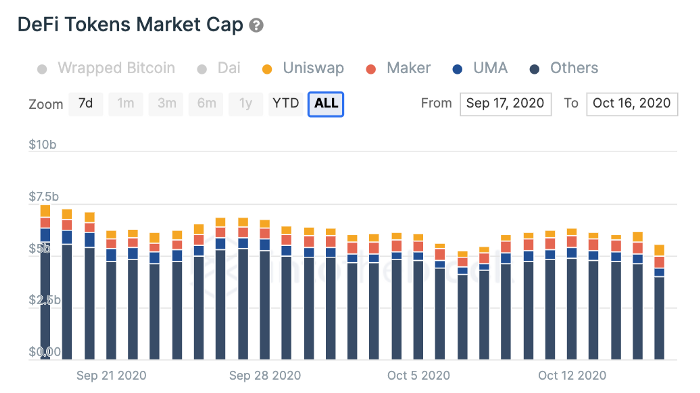
image description
Overall, the market capitalization of DeFi governance tokens on Ethereum fell by about a third from $7.5 billion to $5.07 billion just last month. Meanwhile, the market capitalization of stablecoins and Bitcoin-pegged coins continues to grow.
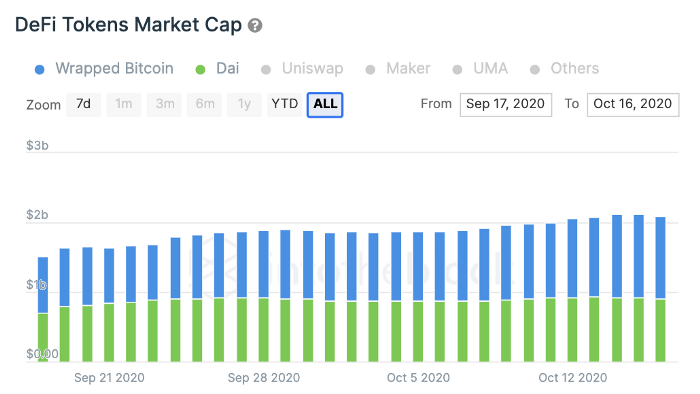
image description
Source: DeFi Insights by IntoTheBlock
Since then, hundreds of protocols and forks have launched their own yield farming schemes, becoming the primary way to simultaneously attract liquidity and distribute governance tokens. Initially, token prices and liquidity supply across the major protocols were growing, but that quickly changed as markets began to crash in September. Governance tokens, especially those with high inflation rates through yield mining, have since retreated significantly.
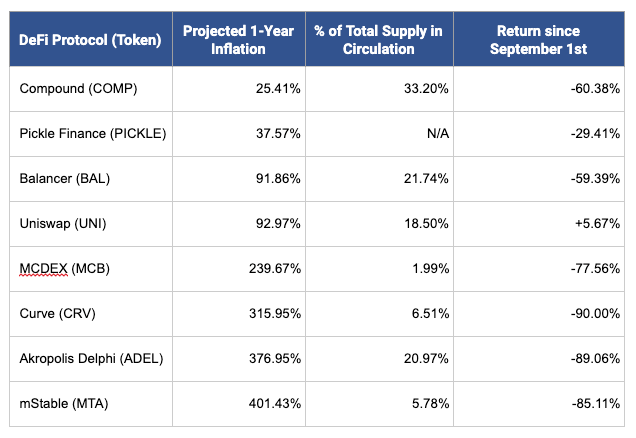
image description
A non-exhaustive list of DeFi tokens providing current yield farming initiatives as of October 19, 2020. Source: IntoTheBlock
As can be seen from the above table, since September 1st, DeFi tokens with a 1-year inflation rate of more than 100% have fallen by at least 75%. Likewise, tokens with a lower percentage of the total supply in circulation fell more than tokens with a higher percentage of the circulating supply. While this is a relatively small sample size, the correlation between 1-year inflation and price changes since September 1 is -0.73, suggesting a strong inverse relationship between the two. Overall, this suggests that while liquidity mining can stimulate supply-side demand, it can also lead to tokens suffering a devaluation similar to hyperinflation.
It might not be a surprise that tokens that increase in price 10-20x tend to subsequently correct by 60-80+% due to persistently high inflation. This is due to natural market forces and profit taking. By comparing the number of addresses that are profitable at a certain price level, we can estimate that DeFi token holders have closed their positions. Using IntoTheBlock's Historical In/Out of the Money, it becomes apparent that significantly fewer holders were profiting at the same price level prior to the market crash.
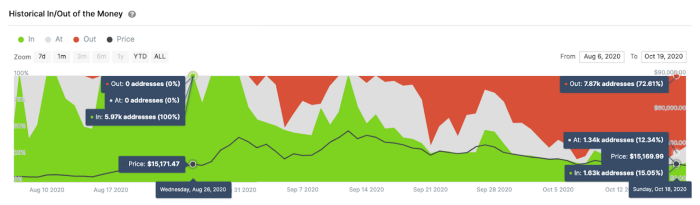
image description
Source: YFI Financial Metrics by IntoTheBlock
It is normal for an emerging market like DeFi to experience this kind of price volatility, especially in the crypto space. Overall, DeFi tokens on Ethereum are still insignificant: they currently represent only 1.39% of the total crypto market capitalization ($365 billion at press time; the latest CMC data shows that the total crypto market capitalization has reached $403.46 billion). In terms of the number of holders, DeFi tokens occupy an even smaller market share.
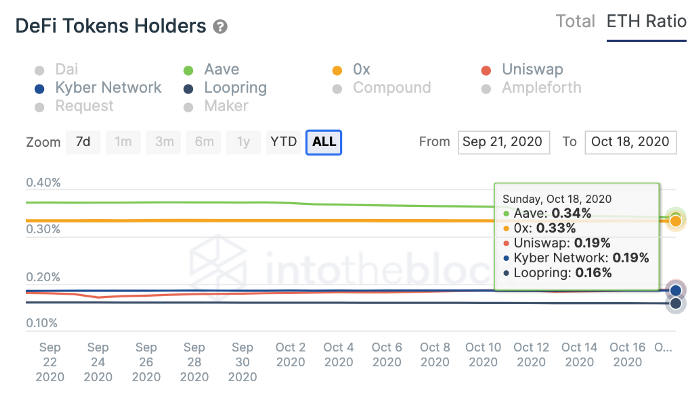
image description
Source: DeFi Insights by IntoTheBlock
At press time, despite the token migration process, the percentage of ETH addresses holding Aave (LEND) is still the highest. At present, no DeFi token can reach 0.5% of Ethereum addresses. This shows that there are still a considerable number of holders in Ethereum who have not bought DeFi tokens, indicating that the space is still in its early stages.
DeFi continues to forge ahead despite plummeting token prices. The industry has taken a critical step toward mass adoption as the protocol tests Layer 2 solutions for greater scalability. Beyond that, the progress of Ethereum 2.0 shows that a more robust decentralized application infrastructure is ready. Additionally, solutions like USDC's "meta transactions" will aim to reduce barriers to entry for users outside the existing Ethereum community.





