


The Ethereum Foundation released the 2.0 verifier tool, the most complete usage strategy is here


Editor's Note: This article comes fromBabbitt Information (ID: bitcoin8btc)Editor's Note: This article comes from
Babbitt Information (ID: bitcoin8btc)
Babbitt Information (ID: bitcoin8btc)
, compiled by: Wendy, released with permission.
Want to help secure the upcoming Ethereum 2.0 network and earn ETH along the way? A tool just released by the Ethereum Foundation makes things even easier.
The Ethereum Foundation today announced the long-awaited (and long-delayed) Ethereum 2.0 upgrade "Validator Launchpad." This platform will connect verifiers—that is, users who pledge ETH and confirm transactions—to Medalla, the latest test network of Ethereum 2.0, and will be launched later this year or early next year (different development teams will always give different results). answer) was used in its mainnet.
Validators on Ethereum’s new PoS system are essentially equivalent to miners on the old PoW network. Ethereum 2.0 includes a move to a PoS system, where those who stake the most ETH (i.e. the wealthiest people on the network) are rewarded for validating blocks.
This is different from the PoW system, in which miners need to use a lot of computing power to verify transactions.
In its blog post, the Ethereum Foundation wrote that the purpose of this new validator launch platform is to “make the process of becoming an eth2 validator as easy as possible without sacrificing security and education.”
Of course, it is also possible to become a validator using a third-party service, such as Coinbase, which allows people to stake the PoS currency Tezos in their app. But third-party services often charge a fee and require putting your passwords in the hands of someone else.
However, if you run your own validator, you must keep track of your own private keys. According to the Ethereum Foundation:
"With this responsibility comes an inevitable trade-off between ease of use, security, and education."
The validator platform clearly explains what it takes to become a validator, how much you can earn (the rewards are dynamic, not fixed), and the risks.
The startup also puts a disclaimer in place to ensure validators understand what they are doing. Validators must sign a form stating that they understand that being a validator means managing their own keys and that staked ETH is not accessible for a period of time.
Once this is done, the startup platform will let you upload your public key online and become a validator.
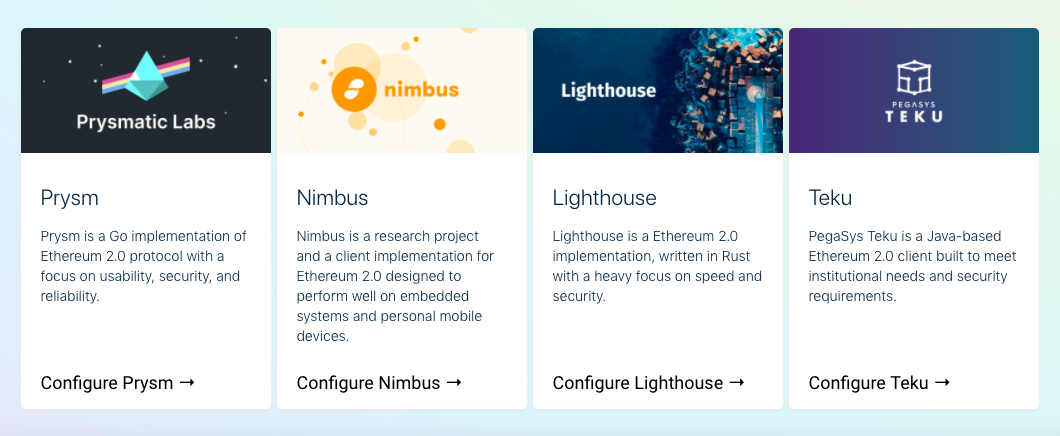
One last thing: you have to choose a client for setting up the Beacon node, importing the keystore and running the validator software, currently available clients are Lighthouse, Nimbus, Prysm and Teku.
This validator is available on the Medalla testnet, but can also be used on the Ethereum 2.0 mainnet.
Ethereum 2.0 has been in the works for years, and the exact launch date depends on who you ask: Ethereum co-founder Vitalik Buterin and Ethereum Foundation researcher Danny Ryan think it could be released this year. Their opponent, Justin Drake, a researcher at the Ethereum Foundation, believes that the "earliest feasible date" will be January 2021.
The following is a detailed tutorial for this validator platform:
The platform is now released to track and deposit funds on Medalla, an upcoming multi-client testnet. However, we will continue to tweak the interface before mainnet goes live.
The platform wants to make the process of becoming an eth2 validator as easy as possible without sacrificing security and popularization.
secondary title
basic information
popular science
The first mission of this platform is to help validators understand every aspect of the process. First, we want to make sure validators know what they are doing and why.
basic information
Before starting the registration process, you should understand what eth2 is and why validators are necessary for eth2 to work properly.
Timeline and Milestones
You also need to know that eth2 is presented through several stages:
Phase 1 handles data addition and storage work related to eth2.
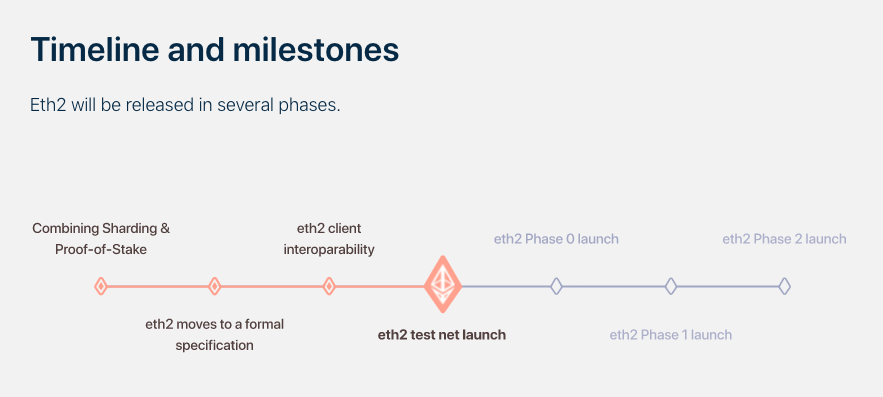
Plus the current timeline:
award
image description
award
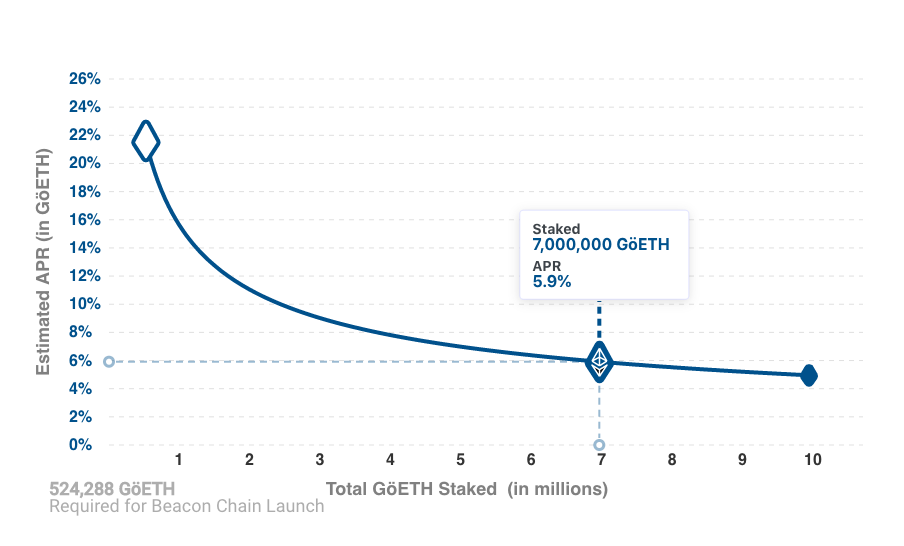
Before deciding whether to run a validator, it is important to understand the amount of rewards you can earn.
You need to understand that rewards are not fixed, but dynamic.
(Figure 2: The number of pledged ETH and the rate of return)
If not much ETH is staked, the annual rewards are high, but as the total increases, the rewards received by each validator start to decrease.
image description
(Figure 3: Start registration)
The first section consists of a series of statements—providing a piece of information on the form, followed by "I understand this information"—that can be broadly grouped into three categories: risk, liability, and safety (although some of these overlap).
text
The eth2 network can only function successfully if validators understand their responsibilities and the risks involved.
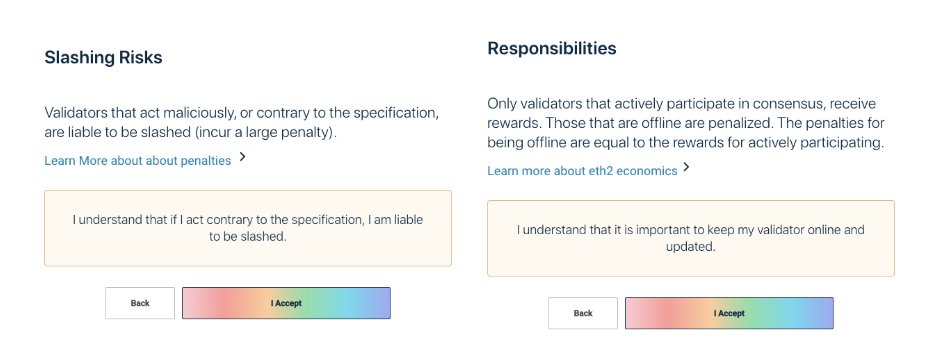
Regarding risks, we want you to understand what your risk of slashing (i.e. validators who misbehave or break the rules could have funds confiscated) is, and the inherent risks involved in being an early adopter.
Regarding accountability, we want to make sure you understand that you will only be rewarded if you actively participate in it, and that the process is irreversible (you won't be able to move your ETH out of eth2 until much later).
image description
security (key)
Unlike joining a staking pool, running your own validators is responsible for managing your own keys.
Before we start generating keys, we want you to understand what they do and how they are created. Most importantly, you should understand that your key is generated from a unique mnemonic, and you cannot withdraw your funds without using this mnemonic.
secondary title
generate key
Once you accept the above risks and responsibilities, the dapp will guide you on how to generate keys offline using a separate command line interface (CLI).
1. Select language
When entering the interactive CLI, you will be asked to select your preferred language (Czech, Traditional Chinese, Simplified Chinese, English, Spanish, Italian, Korean).
2. Enter passphrase for key storage and mnemonic generation
After confirming the password correctly, generate the mnemonic (24 mnemonic words used to generate the private key).
Write down the seed phrase and keep it safe (you will need it to get your funds back).
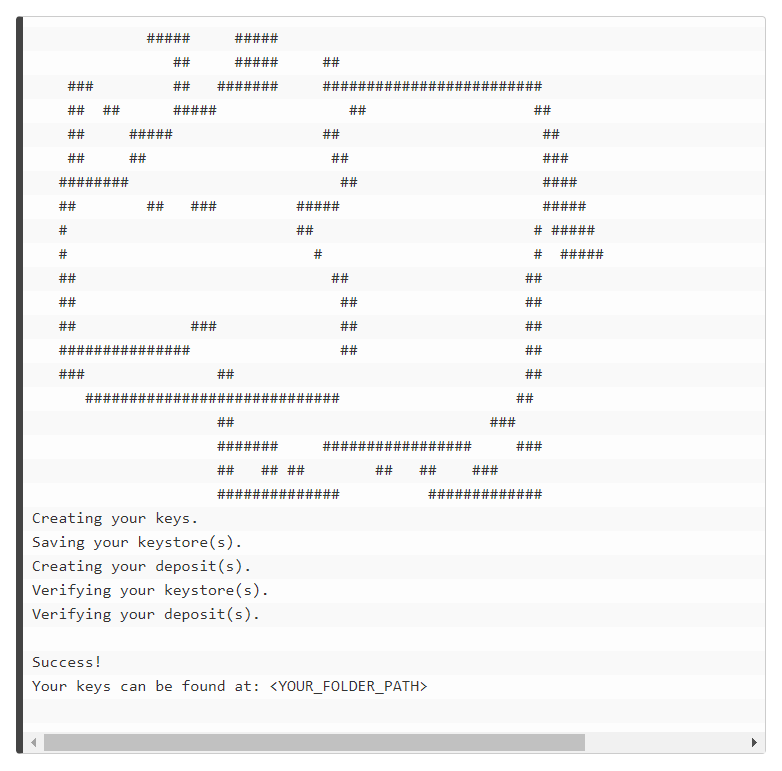
image description
trade
(Figure 5: Key generation interface)
secondary title
trade
After securely generating the keys, we will guide you on how to upload your public keys online, where they will be verified and sent to the deposit contract.
We will verify that the data you upload is valid.
Then help you send the transaction.
Then you have successfully deposited funds and become a validator on eth2!
After making the deposit, the next step is to choose the client (the software you will use to set up your Beacon node, import your keystore, and run a validator).
image description
(Figure 6: Optional client)
This verifier platform is an important project for us, it can provide a good popular science experience for beacon chain (beacon chain) and eth2. Nevertheless, we still hope that the client operator and the team can provide other excellent interfaces, and we hope that you will also try other versions when the time comes.hereWe hope you enjoy this simple demo. We can't wait for you to deposit on the Medalla testnet using this platform.





