


Can't wait? Vitalik Pushes Ethereum Client to Launch ETH 2.0 "Phase 1"


This article comes fromTrustnodes, the original author: Trustnodes
Odaily Translator |
Odaily Translator |
Ethereum co-founder Vitalik Buterin has publicly stated that he is "actively promoting" the implementation of Ethereum 2.0 "Phase 1". In the words of Vitalik Buterin, "I've been actively pushing some client teams to start working on Ethereum 2.0 'Phase 1' as soon as possible, so we can get a better idea of how Ethereum 2.0 Phase 1 actually works."
During a recent ethereum 2.0 developer call, Vitalik Buterin revealed that an ethereum client that was somewhat behind on “phase 0” work should start work on “phase 1,” explaining:
"Ethereum 2.0's 'Phase 1' work does not require any research, basically all the work is the optimization and development of the specification. Conceptually, I think the 'Phase 1' specification is actually very simple, because many of the Phase 1' hard work has been done in 'Phase 0'."
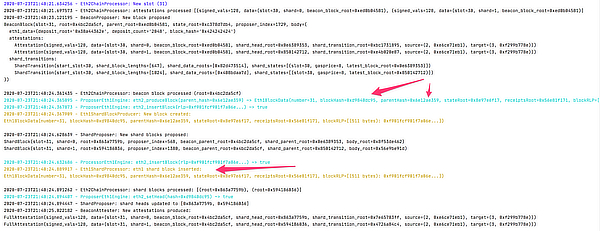
For now, the main technical risk of Ethereum 2.0 "Phase 1" is that the sharding (Sharding) P2P network has never been implemented in this way before, so it means that Ethereum is taking the risk of unknown network. That said, Ethereum already uses a sharded P2P network for proof broadcasting, but its capacity is already limited, so this bottleneck may make the technology less attractive.
At this stage, the main research focus of Ethereum 2.0 is: if it is possible to get Ethereum 2.0 light client support in Ethereum 1.0 (or bridge) at the same time as the "phase 1" launch, it will undoubtedly be very interesting. Well, because this way, "Phase 1" will be very useful for Rollups based on the Ethereum 1.0 blockchain, and can also achieve the previous promise of 100,000 TPS scalability-of course, the exact details of how this will be done are still open. A lot of work is required.
Ethereum 2.0 "Phase 0", a key link in the implementation of the proof-of-stake consensus algorithm for the Ethereum blockchain, is expected to be released in November 2020 if all goes well, and includes the implementation of a so-called "sharding" solution, as long as Bundle ETH stakers into different groups, all of which can still function as a network.
According to Vitalik Buterin, the "Phase 1" of Ethereum 2.0 may start in 2021, when shard storage will be added, and DApp can use shard storage to improve the performance of processing 100,000 transactions per second. On the other hand, it will also be interesting to see if miners are actually mining in the "1.5 phase", because the goal of the Ethereum proof-of-stake consensus is to "eliminate" miners, and this work has clearly begun. In other words, if Ethereum 2.0 is officially launched next year, miners, the most important role in the blockchain network since the cryptocurrency industry was born, will disappear on Ethereum, and the block rewards of Ethereum will also change from the current 2 ETH per block reduced to 0.22 ETH.
Previously, Ethereum 2.0 researcher Justin Drake said that "Phase 0" may have to be delayed until 2021, and at least three clients must run the test network for eight consecutive weeks before the main network can be launched. But this view was opposed by Vitalik Buterin, who stated that he strongly disagreed with this and wanted to start "Phase 0" substantially by the end of 2020, whether it was ready or not. Vitalik Buterin explained:
"Ethereum 1.0 took 4 months from the launch of the first multi-client testnet (from Olympic in March 2015 to the launch of Ethereum 1.0 at the end of May 2015), when the Ethereum 2.0 testnet Altona was launched , I think the UK is on a four month countdown from early July 2020, Ethereum 2.0 'Phase 0' is in some ways simpler than Ethereum 1.0 - although also more complex in some ways, like Proof of Stake Consensus, but compared to the complexity of GPU-oriented proof-of-work, proof-of-stake actually does not require more optimization, and there is no complicated virtual machine (VM), etc. Therefore, the implementation of Ethereum 2.0 'phase 0' on the network requires Simpler, so the actual risk of error is lower (although Justin Drake might think the relative risk for the entire ecosystem would be greater)."





