


Odaily Frontline | Is Compound governance based on COMP successful?


This article comes fromBeInCrypto, original author: Martin Young
Odaily Translator |

foreword
This article comes from
, original author: Martin Young
secondary title
foreword
DeFi is developing rapidly like mushrooms after rain. Industry-leading Compound made more adjustments to its governance mechanism and proved the success of the new system. Meanwhile, Aave’s LEND token is surging but may be starting to see a sell-off.
Today marks another all-time high for the Total Value Locked (TVL) in DeFi, as the figure hit $2.57 billion for the first time (TVL is now $2.56 billion, according to the latest data from Defi Pulse). That steep curve, which began around mid-June, appears to be flattening as the industry's massive growth begins to slow a bit.
However, at the current rate of growth, TVL is likely to reach the $3 billion milestone within the next month. The crypto market itself remains relatively flat, with little movement in most cryptocurrencies. The total market capitalization of the encryption market has fallen back below $270 billion, and all eyes are still on the booming DeFi industry.
secondary title
Compound Governance
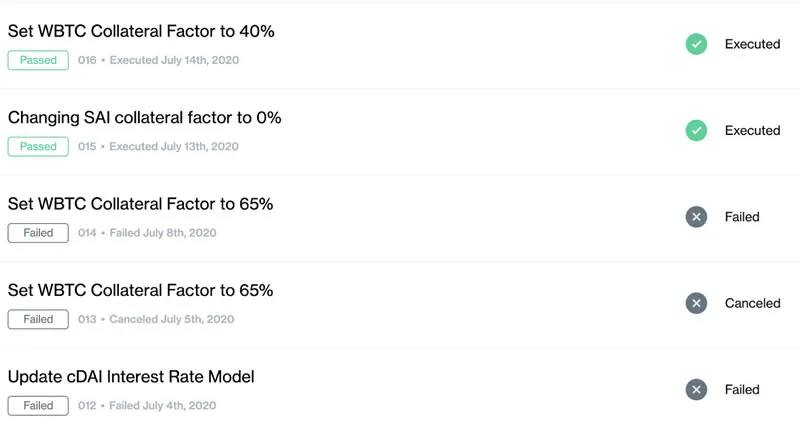
According to a recent blog post, Compound Finance released five new proposals through its governance system this month. Two of them passed, two were rejected, and one was canceled.
The democratized voting system was implemented after the distribution of COMP tokens began on June 15th. This enables COMP holders to participate in voting on governance issues.
The first rejected proposal, 012, was submitted by Dharma to update the cDAI interest rate model. The results of the governance vote showed that the proposal received 133,613 COMP votes in favor and 538,486 COMP votes against it, making it the first proposal to be rejected by the community.
On July 5, a second proposal by Alameda Research was withdrawn. The proposal aims to increase the collateralization factor of wBTC from 0% to 65%, allowing users to provide wBTC as collateral to borrow other assets from the protocol. The proposal was canceled because Alamanda's authorized COMP fell below the 100,000-vote threshold.
Alamanda made a second, similar proposal a few days later. It also failed, however, as the community feared that manipulating wBTC minting would introduce systemic risk to the protocol. The vote was rejected by 65% of the vote.
Among the two proposals that passed, the Sai devaluation package that reduced the collateralization factor from 35% to 0% was unanimously approved.
The fifth proposal 016, submitted on July 14, was passed with a very narrow margin (533998 vs. 523974), and the wBTC mortgage coefficient has been increased to 40%. Governance Proposal 016 was initiated by Alameda Research, the company's founder Sam Bankman Fried (also FTX founder and CEO) said: "I am very happy that Governance Proposal 016 can pass, and thank all participants who supported this proposal. I think it will have Help diversify Compound and bring more utility protocols.” There is support for increasing the collateralization factor to 65%, but this level is considered a good middle ground for the community to feel comfortable using packaged Bitcoin is used as collateral for lending.
These five proposals demonstrate the success of the new governance system based on holding COMP tokens. Those who hold the most COMP have a greater say, which is to their advantage as they are less likely to suggest anything detrimental to the system that would harm their investment.
secondary title
Confidential Custodian Curv Integrates Compound
Compound, which triggered the DeFi bubble theory, has also recently been integrated into the institutional custodian Curv (be careful not to be confused with the DEX liquidity pool Curve). Curv uses multi-party computation (MPC) to eliminate single points of failure in public key cryptography to improve the security of digital assets.
With the new funding, Curv will strengthen its infrastructure, grow its team and expand its global customer base, said Josh Schwartz, Curv's chief operating officer. The company is headquartered in New York with an R&D office in Tel Aviv, Israel.
Curv said in a statement: “We have integrated Compound’s supply functionality so their institutional clients can earn crypto interest in secure custody. The initial integration will support ETH, with other assets and borrowing to be added in the future.”
In addition to Curv, San Francisco-based exchange OKCoin recently announced the launch of an oracle service, OKCoin Oracle, which provides signed price data from the exchange. OKCoin Oracle provides another source of pricing for DeFi applications, Compound will be an early adopter of this oracle service, which means that the lending protocol is interested in continuing to expand different data sources to ensure the safety of the DeFi ecosystem.
Compound CEO Robert Leshner was pleased with the progress: “Having a reliable source of on-chain price data is critical to the growth of DeFi and the use of Compound. This effort by OKCoin is an important addition to the DeFi ecosystem.” contribute."
Compound's TVL is currently slightly lower than its high of $700 million, accounting for 27%, and it is still the king of the DeFi field. The protocol’s COMP token is currently trading at $155, down about 52% from its high a week after its release last month, according to Uniswap.info.
secondary title
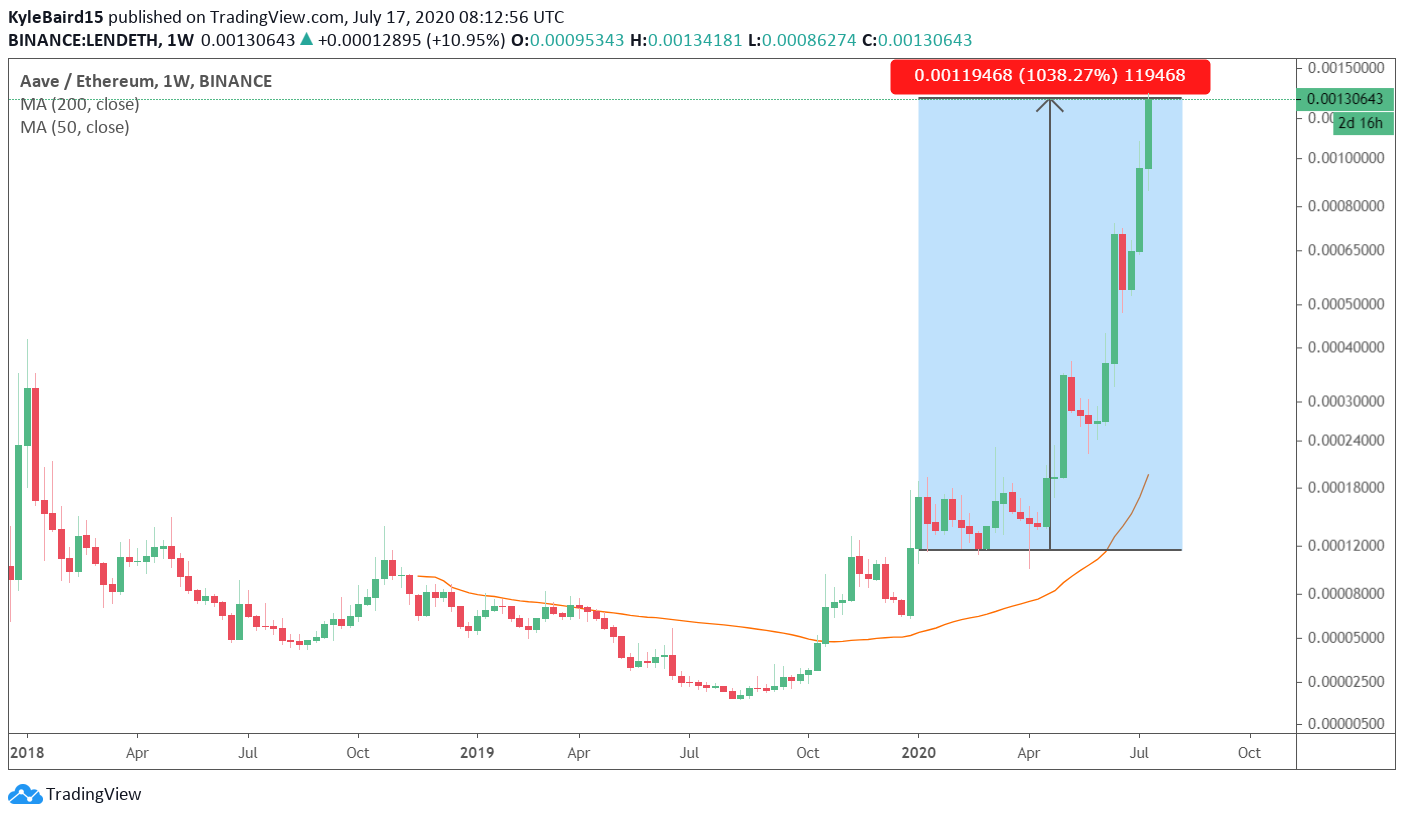
LEND hits a new high, but a sell-off may occur





