


Odaily Frontline | Miners want to increase the gas limit, developers have something to say


This article comes fromCryptoSlate, Originally by Shaurya Malwa
Odaily Translator |

This article comes from
, Originally by Shaurya Malwa
Odaily Translator |
On June 19, Bitfly (the parent company of the Ethermine mining pool) officially tweeted that Ethereum miners are voting to increase the gas limit of the Ethereum network from 10 million to 12.5 million. The current upper limit of Gas on the Ethereum network is 10 million. The previous community proposal EIP 1559 was mainly aimed at changing the Ethereum fee market.
Note: In response to the recent frequent occurrence of huge transfer fees on the Ethereum network, V God said that EIP 1559, a proposal that can reduce manual input fees, can reduce such situations. EIP 1559 is a community proposal that aims to change the current charging model by adjusting basic network fees with network demand. The current charging model allows users to choose their own fees after initiating a transaction, which will lead to higher transfer fees when the network is busy.
1. The current 10 million gas limit will be replaced by two values, one is the "long-term average target" (10 million), and the other is the "hard upper limit of each block" (20 million);
2. The transaction needs to pay a basic fee (BASEFEE, which will be burned), which is adjusted according to the block, and the goal is to determine a value so that the average block gas usage is kept at about 10 million.
The tweet from Bitfly sparked a buzz over the weekend. The broader ethereum community was immediately divided on the matter, including Vitaliks taking to Twitter.
secondary title
Miners said that increasing the gas limit would theoretically mean increasing the overall production capacity of Ethereum while reducing fees. Currently, ETH fees hover between $0.40 and $0.60 per transaction, while cryptocurrencies like BCH or ADA cost less than $0.20 or even as little as $0.10.to reportBriefly, every Ethereum transaction requires a certain amount of Gas to ensure a successful transaction or to execute a smart contract on the network. At any given time, network activity determines the exact gas price, although it does not vary significantly.
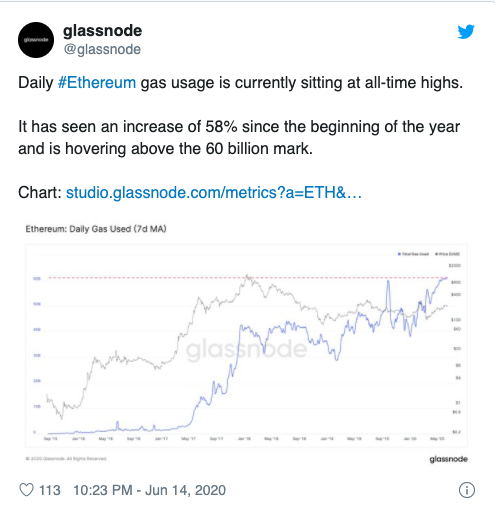
to reportTweetAs expected, Gas usage is approaching an all-time high. Presumably due to increased DeFi activity and growing institutional interest in the ETH network ahead of ETH 2.0’s launch.
Tweet
According to the data, the daily Gas usage of Ethereum is currently at the highest level in history. Since the beginning of this year, this figure has increased by 58% and is currently hovering above 60 billion.
If a majority of miners vote for the proposal, the move would theoretically mean that the ethereum network can now process 44 transactions per second instead of 35. Bitfly believes "this is another huge milestone for the community".
secondary title
Disadvantages of increasing the gas limit
Note: In Ethereum, orphan blocks are called "uncle blocks" (uncleblocks), and they can contribute to the security of the main chain. Because the block interval of more than ten seconds in Ethereum is too fast, it will reduce the security. By encouraging the reference to uncle blocks, the reference to the main chain can obtain more security guarantees (because the orphan blocks themselves are also legal), and the rewards are paid to Uncle blocks can also motivate miners to actively mine and actively quote uncle blocks, so Ethereum believes that it is valuable.say:
Someone in the comments on Bitfly's tweet pointed out that weaker nodes could leave the ETH network. This in turn would make Ethereum more centralized and more accessible to large miners, at least until its protocol is still a PoW network.
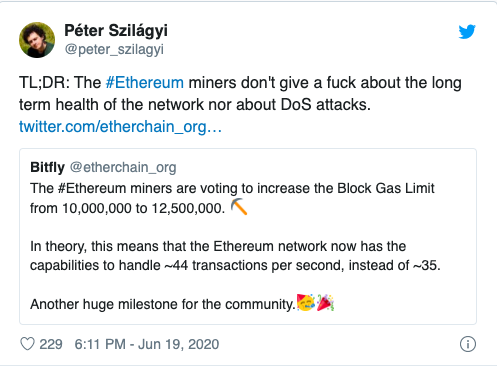
Some community members were broadly opposed to the proposal, core Ethereum developer Péter Szilágyi summarized Bitfly's tweet
"Ethereum miners don't care about the long-term health of the network, nor do they care about DoS attacks."expressSzilagyi added: “Unfortunately, there is both short-term profit and long-term investment. Almost none of the original miners are still in the ecosystem, but the original developers still need to pick up the pieces. When we still need to deal with the miners left When they are garbage, they themselves have long since disappeared."
Ethereum co-founder Vitalik Buterin (V God) also joined the comment, he
Doesn't "blame" the miners for their decision:
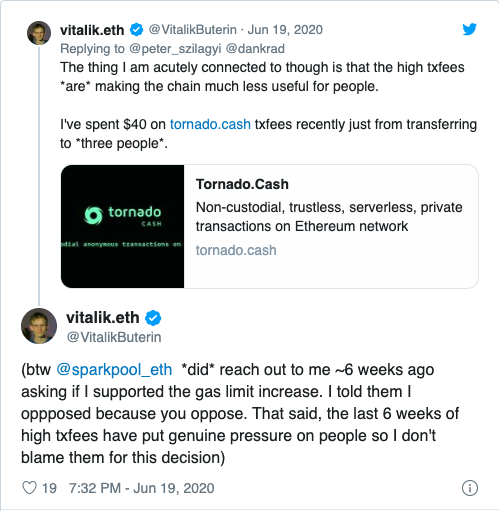
“I do feel that high transaction fees are 'making' the ETH blockchain less useful to people. I recently spent $40 in transaction fees on Tornado.cash (Ethereum mixing platform), but only Transfer to 'Three'."
V God also mentioned: "Spark Mining Pool contacted me 6 weeks ago and asked me if I support increasing the gas limit. I responded that 'because you object, so I object'. That is to say, the high-value transactions in the past 6 weeks Fees put real pressure on users, so I don't blame them for making this decision."
secondary title
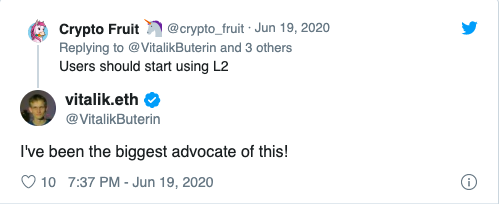
Layer-2 can solve the problem of expansion





