


Four reasons and two solutions to the recent "blocking" of the Ethereum network


Produced | Odaily
Editor | Hao Fangzhou
Produced | Odaily
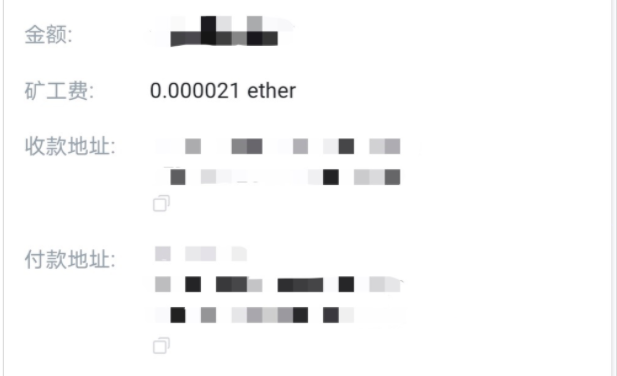
Recently, a novice user asked me for help: "My ETH transfer has not been successful for 2 days. Is it because the money is too small and the exchange does not accept it?"
image description
(transfer details)
As can be seen from the figure above, the gas fee is only 0.000021 ETH, which is already lower than the normal gas level; what's more, the current congestion of the Ethereum network is getting worse, and there will be no miners to pack it.
To give a more vivid example, calling Didi originally cost 100 yuan during the peak period. Not only do you not increase the fare, but you are only willing to pay 50 yuan. The possibility of the driver accepting the order is very slim.
Through this incident, I also realized that many people do not understand the current operation of the Ethereum network, and even the most basic Gas settings are also confused.
secondary title
1. 90% of the gas fee is "robbed" by the exchange
Gas, the Chinese translation of "gas", is the fuel for the operation of the Ethereum network.
Currently, the Ethereum network runs through the Ethereum Virtual Machine (EVM). To run instructions in the EVM—whether it is transfer, storage, or execution of smart contracts—you need to consume fuel and pay with ETH.
It is worth noting that the command operation here is actually carried out by the miners who run the nodes, and the transactions must be packaged by the miners before they can be broadcast to the entire network. Therefore, Gas can be regarded as a commission for miners, and tools such as Imtoken wallet will also directly mark the Gas fee as "miner's fee".
Gas fee consists of two parts: Gas limit * Gas Price.
Gas limit, that is, the maximum amount of Gas that a user is willing to pay for performing an operation or confirming a transaction. It is uncertain whether the work can be completed by spending these amounts of Gas. Generally, the default is at least 21,000.
Gas Price refers to the amount of Gwei, and refers to the price that users are willing to spend on each Gas unit; it determines the priority of the transaction being packaged, and is generally filled in according to the amount of data and the content of the contract.
Hearing this, many people are at a loss and focus on:Gas fee = Gas limit * Gas Price; the Gas limit defaults to 21000, and the Gas Price mainly determines your Gas fee and the priority of transaction packaging.
Usually, the Gas Price set by the user transfer is generally 10 -20 Gwei. If it is smaller than this range, miners will not give priority to processing, and the transaction will always be in an "unpackaged" state (the aforementioned case); if it exceeds this range, miners will give priority to processing, and the transfer can be completed in as little as a few minutes.
Since the gas fee can be clearly calculated, is the gas fee charged by the exchange in the usual transfer reasonable? The picture below is my transfer details in an exchange:
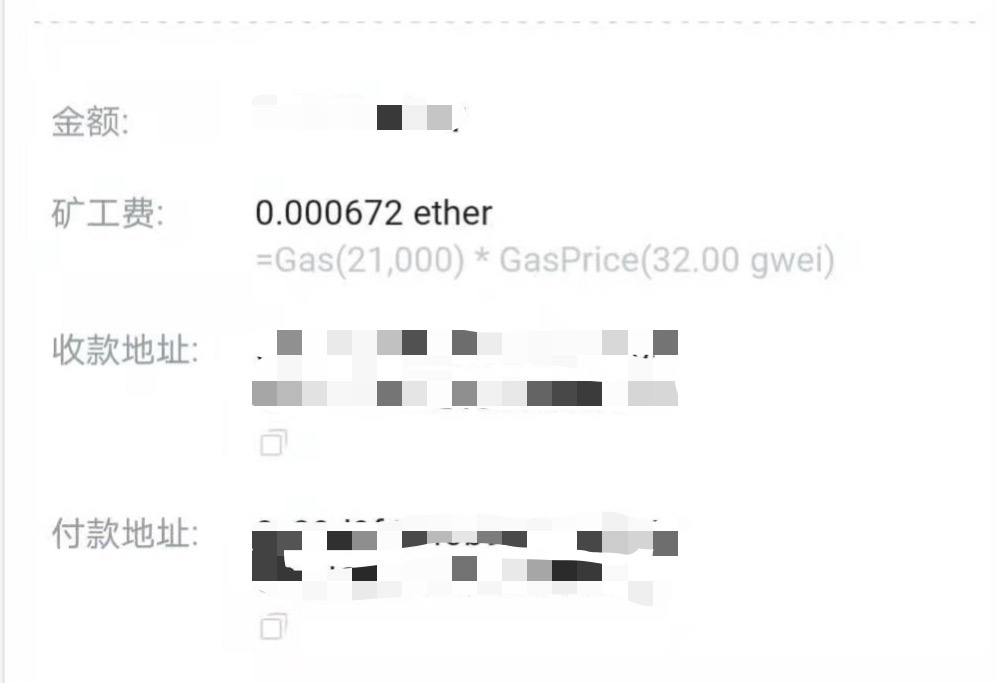
As can be seen from the above figure, the exchange has chosen Gas Price=32 gwei for me, so the transaction is packaged first, and the transfer speed is very fast.
In fact, the gas fee for the entire transaction is only 0.000672 ETH, but the exchange fee is 0.005 ETH (some are 0.01 ETH). In other words, nearly 90% of the fees are "robbed" by the exchange, which is also the current norm in the industry.
secondary title
2. Network congestion, so Gas rises
The transaction packaging failure in the previous case is very common in the near future.
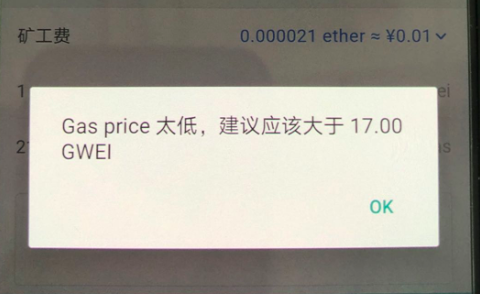
I also encountered a similar situation recently when I made an ETH transfer in my wallet. At that time, the system also gave a warm reminder: the gas price is too low, it is better to be greater than 17 gwei. So I gave 20 gwei, but it was still unsuccessful. In the end, I had to increase the price to 40 gwei before the transfer was successful.
And this situation was very rare last year.Throughout 2019, the Gas price basically remained at 10-20 gwei.
But this year, according to etherscanAccording to the data, since the beginning of the year, the gas price has gradually increased. in particularimage description
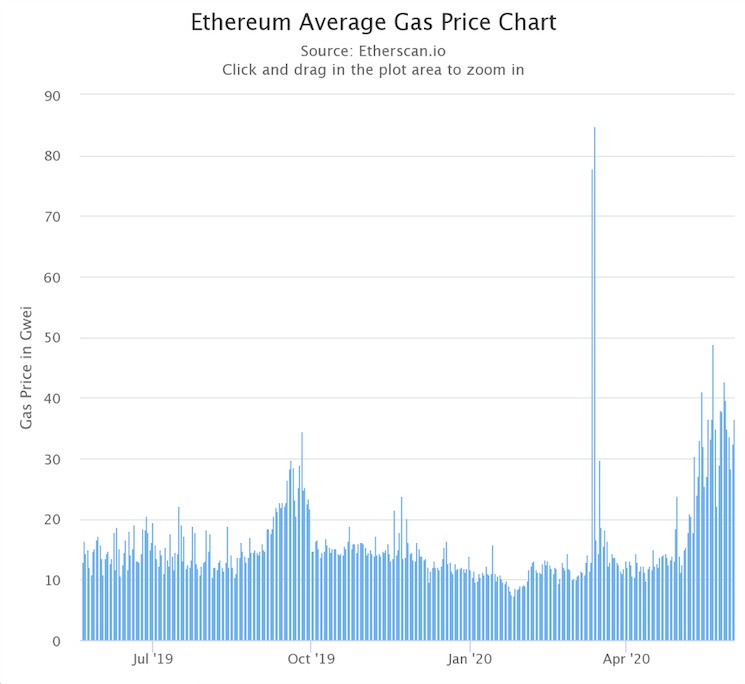
(Gas price changes in the past year)
ethgasstation.info The data shows that in the past 24 hours, more than 80% of the transactions paid Gas prices between 20-55 gwei.
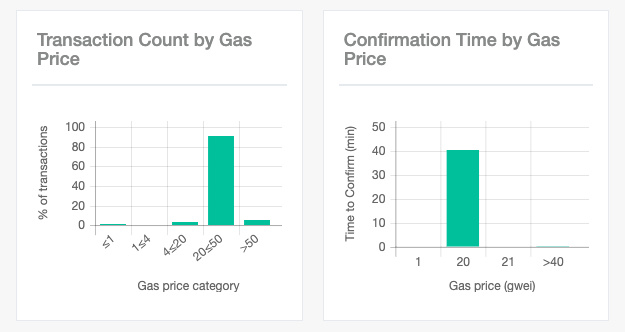
image description
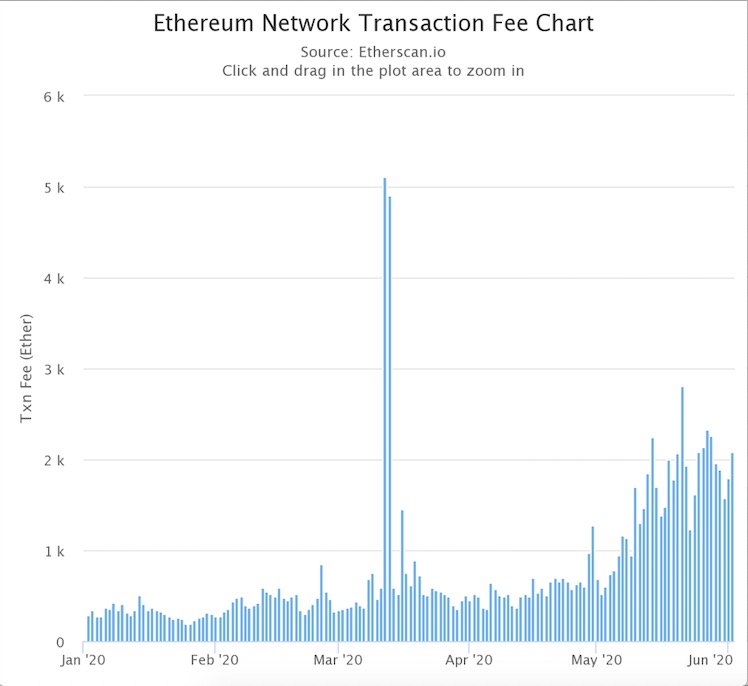
(Trend of Ethereum network fees this year)
The fundamental reason for the increase in Gas fees is that the utilization rate of the Ethereum network is constantly increasing and it is in a state of serious congestion.
Etherscan image description
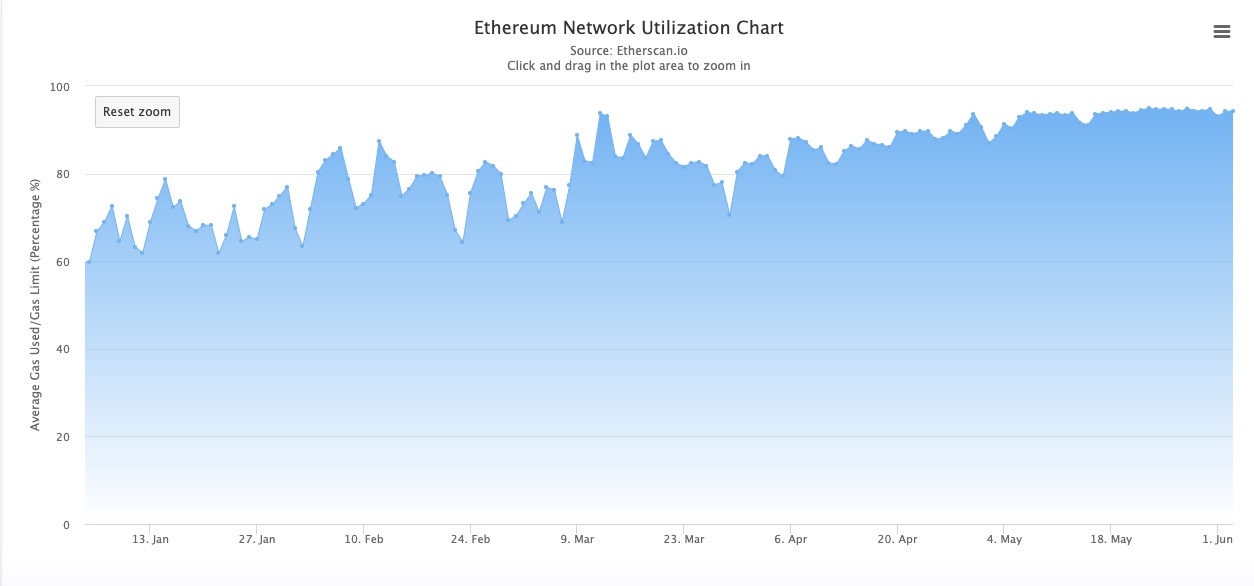
(Ethereum Network Utilization)
An increase in network utilization means a decrease in remaining available space. In the case of limited space, miners will first choose to pack transactions with high gas fees, and some transactions with low gas fees can only wait.image description
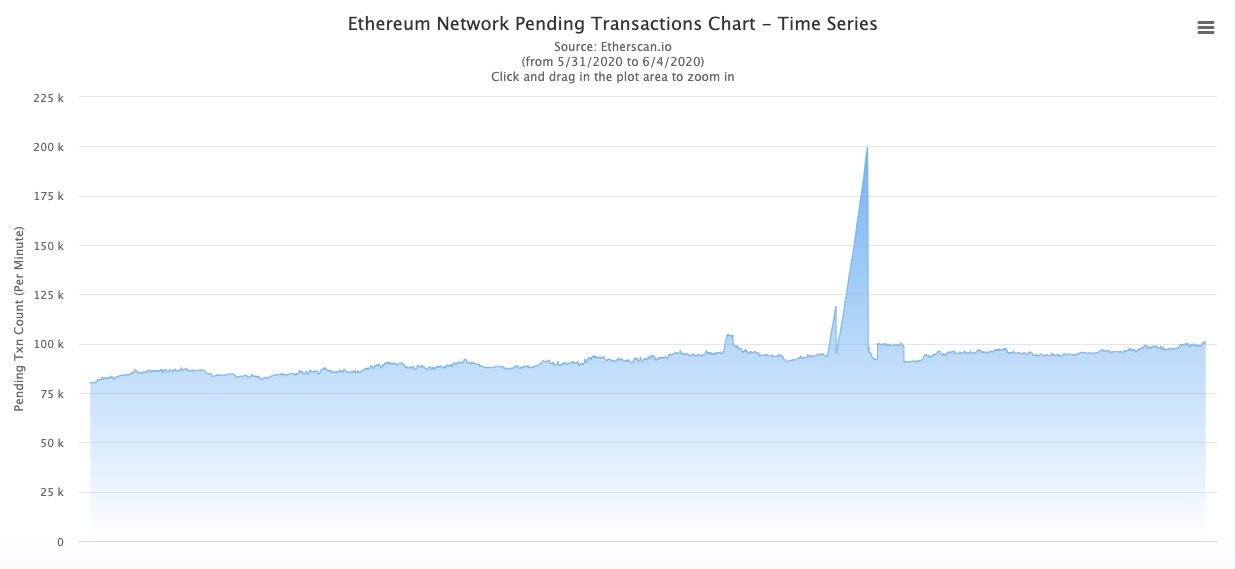
(The Ethereum network has not processed the transaction)
A large number of unprocessed transactions are piled up at the front, and latecomers will either increase the Gas fee to get the priority packaging right, or queue up obediently.
secondary title
3. The transaction volume increases, so the network is blocked
Why is the Ethereum network so congested? Because Ethereum transaction volume keeps rising.
Etherscan image description
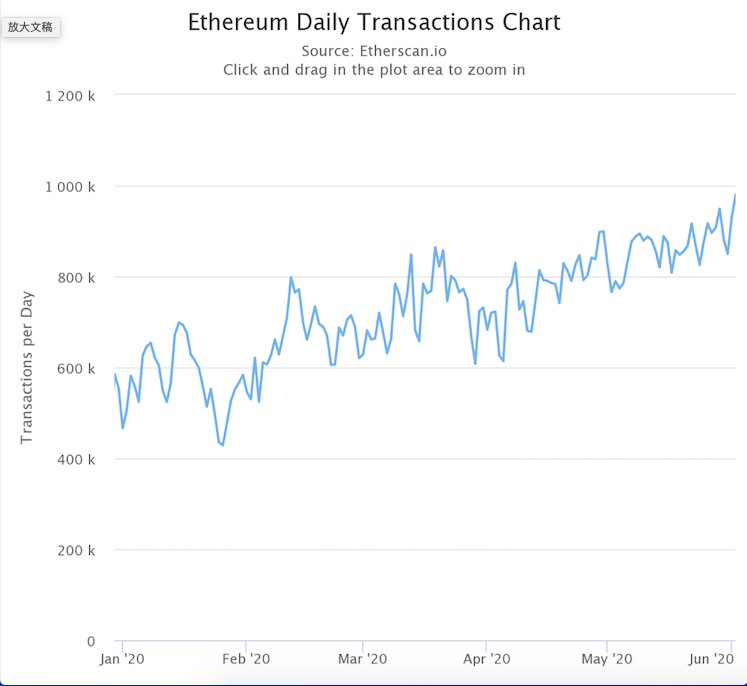
(Ethereum network transaction volume)
The driving force behind the rising transaction volume comes from four aspects.
1. Bullish to buy coins, active trading
For Ethereum this year, there is a major benefit: the zero beacon chain of the Eth2.0 phase will be officially launched soon.
According to the expectations of the development team at the beginning of the year, it is expected to be released in the second quarter of this year. Although according to the consistent tone of Ethereum, it is still unknown whether it can be launched as scheduled, but this does not prevent investors from being optimistic about Ethereum.
Especially with the successful launch of the Eth 2.0 multi-client test network "Witti" and the progress made in Phase 1, this bullish sentiment has been transformed into real purchasing power.
Since the beginning of this year, ETH/USDT has risen by nearly 90%, and ETH/BTC has risen by nearly 40%.
showshowimage description
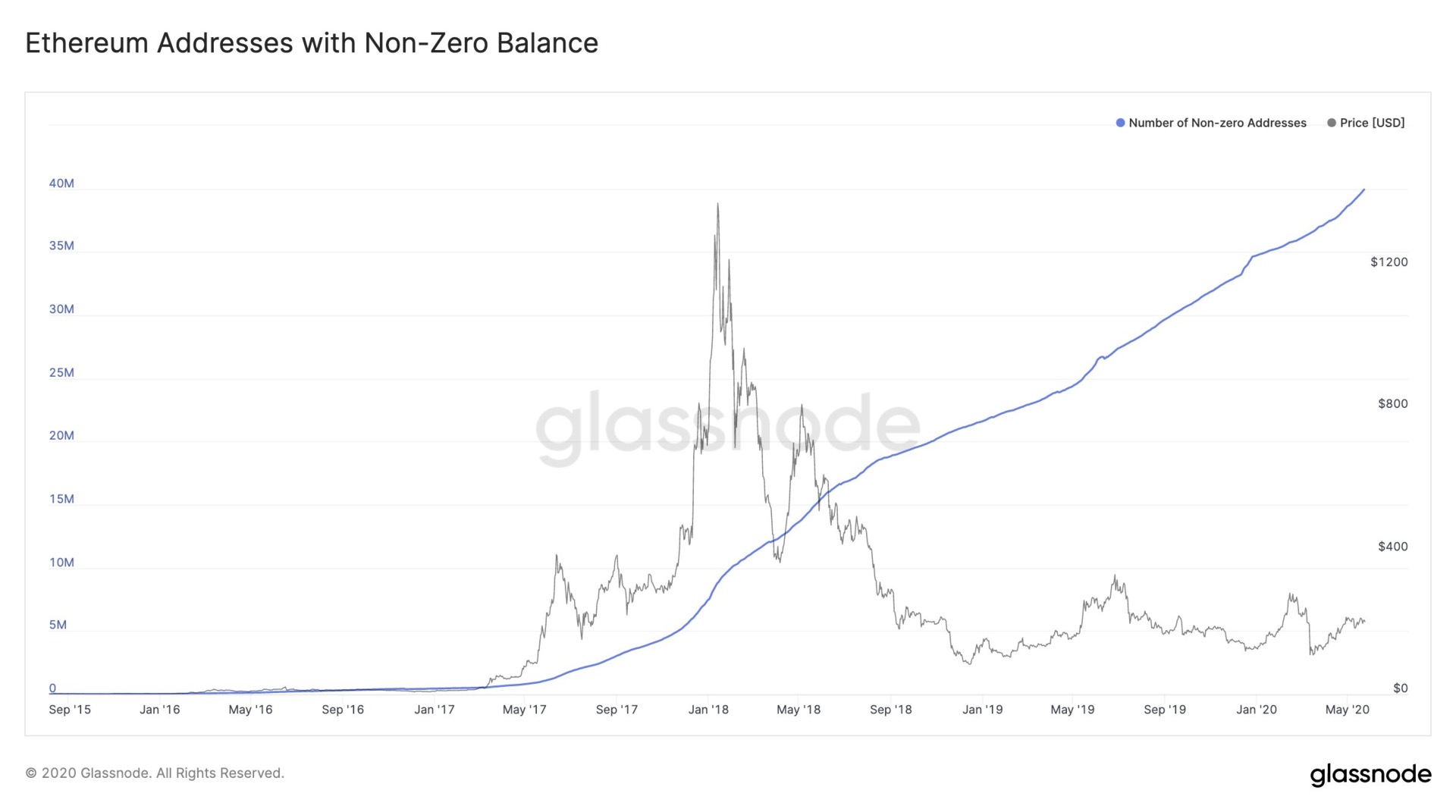
(The number of non-zero ETH addresses surged)
With the advent of ETH2.0, more investors are trying to hoard ETH to participate in its POS mining (32 ETH need to be pledged). In the Ethereum community where I belong, many people buy coins and transfer them to their wallets, waiting for the upcoming ETH2.0.
2. USDT meets the most payment needs
Many people jokingly claim that USDT is currently the largest application of the Ethereum network, and this is indeed the case.
According to data from ethgasstation.info, in the past 25 days, USDT was the largest contributor to GAS fees on the Ethereum network, spending more than 10,000 ETH in total, far exceeding other applications.
However, compared with the first quarter, the USDT activity in the second quarter was higher, and the root cause behind it was the demand for arbitrage.
OdailyIt has also been reported before that foreign buyers began to hoard coins (BTC) in the second quarter, which also caused BTC/USD to rise first, and there was a positive premium between USDT and USD, and arbitrage entered to buy USDT, so USDT was issued additionally.
In the past two months alone, USDT has issued an additional USD 3.3 billion, and the largest increase in a single month (April) was USD 1.8 billion, setting a new historical record. Among them, 1.5 billion USDT was issued on Ethereum. The continuous issuance of USDT and arbitrage transactions in the market also drive the Ethereum network to congestion.
3. The Rise of Ponzi Schemes
May 23,The Block image description
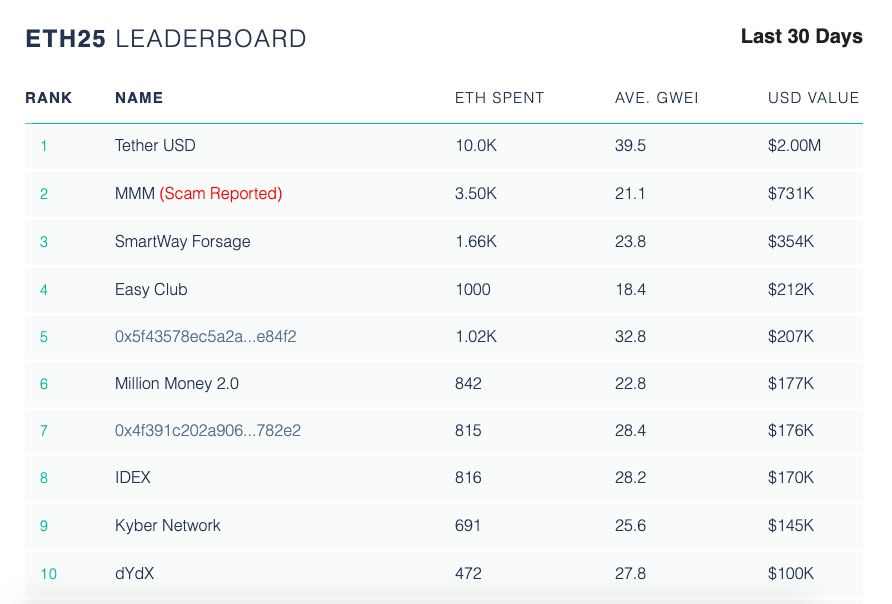
(Gas consumption)
ethgasstation.info The data shows that the contribution of MMM, SmartWay Forsage, Million Money 2.0, and Easy Club to Gas fees closely follows USDT. Although the consumption is far less than that of USDT, it is still a considerable amount.
The above-mentioned projects, more or less have the shadow of the Ponzi scheme, the basic routine is the same: players deposit money to become members, invite other people to deposit money to improve their level and dividends, forming a pyramid-like pattern. Once no fresh blood enters, the game will be over, and the organizer will change the brand and cut leeks again.
At present, the market is recovering, and such projects are constantly emerging. Odaily hereby reminds readers to pay attention to risks.
4. DeFi transactions
In addition to USDT and Ponzi schemes, DeFi (decentralized finance) is also an important source of increased transaction volume.
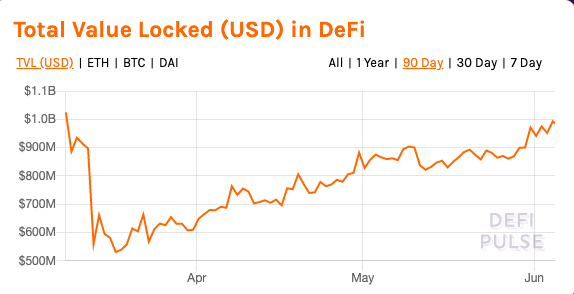
On March 12, the price drop of ETH led toDeFi Liquidations Surge, which once caused network congestion.
DeFiPluseThe data shows that after the 3.12 sharp drop, the DeFi market activity began to pick up, and the mortgage value on the chain continued to rise, rising from US$500 million to US$1 billion, an increase of nearly more than 100%.
ethgasstation.info secondary title
4. Having said so much, what can Ethereum do?
Solving the problem of Ethereum network congestion and realizing expansion is also the direction that developers have been working hard.
For capacity expansion, there are also two different research directions.
One is Layer 1 (the first layer), which emphasizes that a single node does not have to process each operation in parallel. This is also the idea behind sharding, which was proposed by Ethereum V God and other researchers. The so-called sharding means that a blockchain is divided into many different "slices", and each "slice" can process transactions independently. Fragmentation generally refers to the expansion scheme of layer1, because it is implemented on the underlying protocol of Ethereum. ETH2.0 will introduce sharding in phase one.
The other is Layer 2 (the second layer), which reduces the main network transactions on the chain and extends some other operations outside the chain, making it possible to interact outside the chain, and these interactions can still return to the main chain when needed. Related designs include state channels, Plasma, and Truebit.
For a detailed understanding of Layer 1 and Layer 2, it is recommended to read"Still struggling with Layer1 and Layer2? "。
Although the directions are different, they all lead to the same goal in the end. Especially recently, V God also publicly stated that the initial deployment of Layer 2 expansion was "basically" successful, and the rest is refinement and deployment.
We sincerely hope that the upgrade of Ethereum can alleviate the problems of network congestion and high transaction fees.





