Author | Qin Xiaofeng
Author | Qin Xiaofeng
Produced | Odaily

1. Overall overview
1. Overall overview
Second, the secondary market
Second, the secondary market
1. Spot market
image description
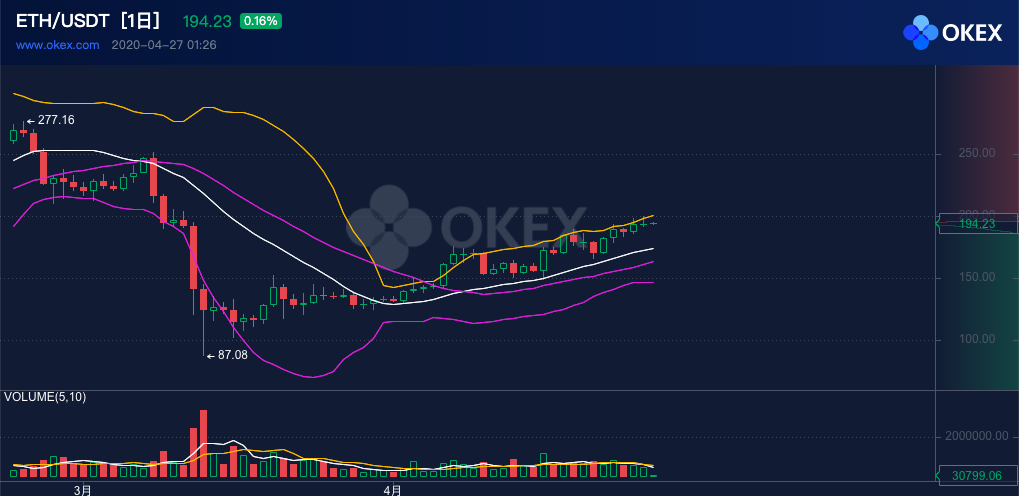
(ETH daily chart, picture from OKEx)
(ETH daily chart, picture from OKEx)
image description
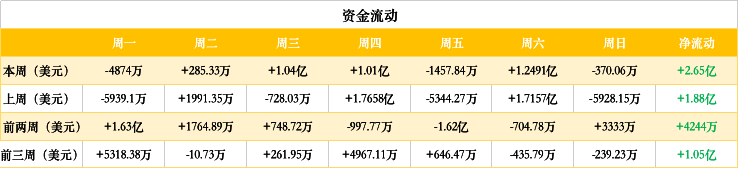
(data from BiNuNiu)
(data from BiNuNiu)
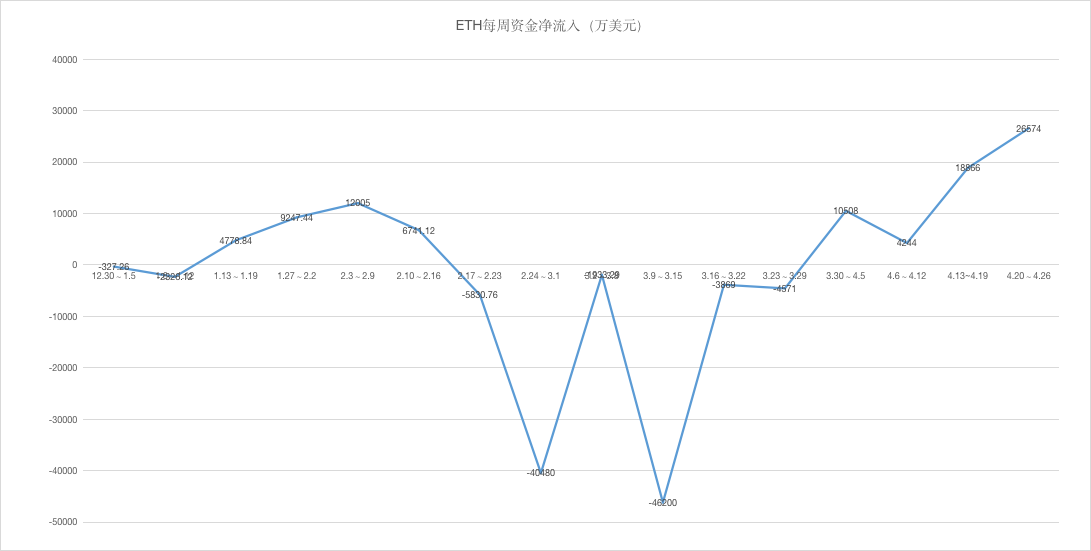
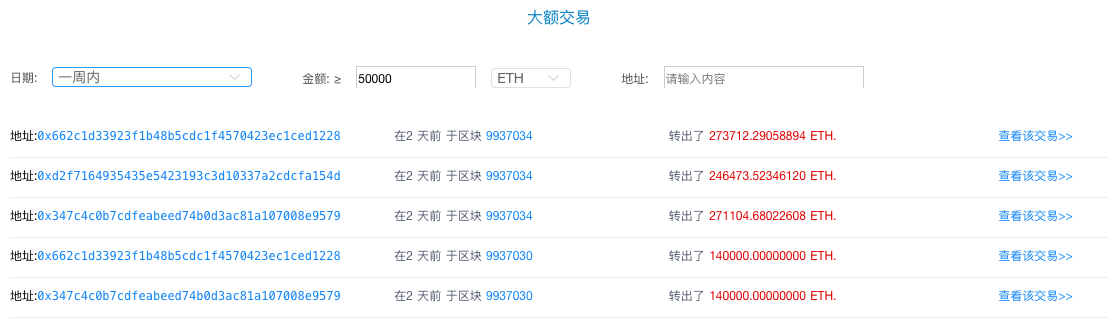
In terms of funds, funds fluctuated greatly last week, with the largest net inflows on Wednesday, Thursday, and Saturday, all exceeding US$100 million; and the largest net outflow on Monday, exceeding US$48 million.
(data from Tokenview)
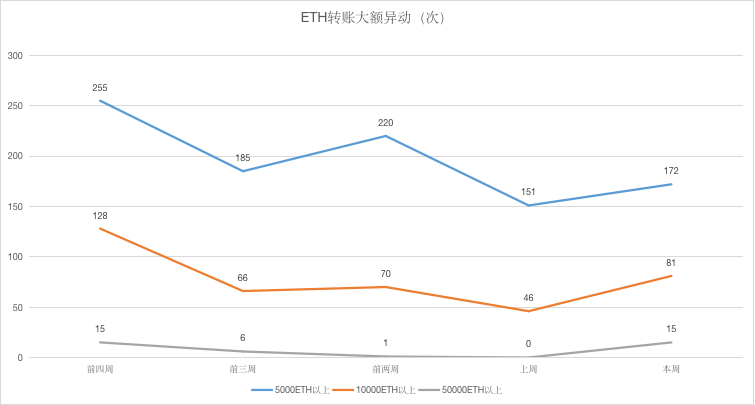
(data from Tokenview)
Tokenview dataTokenview data
 3. Ecology and technology
1. Development and technology
1. Development and technology
(1) Data: The number of Ethereum 2.0 validators increased
According to the latest Glassnode chart, there are currently 116,351 Ethereum addresses holding 32 or more ETH, which represents a surge of about 14% over the last year. It is reported that to become a verifier of Ethereum 2.0, the holder must maintain a balance of 32 ETH. The rise in this number essentially indicates that users are optimistic about the launch of the testnet. In fact, the number of validators climbed over 18,000 just a few days ago. Seven days have passed since then, and according to data on Etherscan, the number of active validators is 22,786, while six of them are marked as pending. (AMBCrypto)
(2) EthereumPrice.org released the ETH 2.0 Staking Reward Calculator
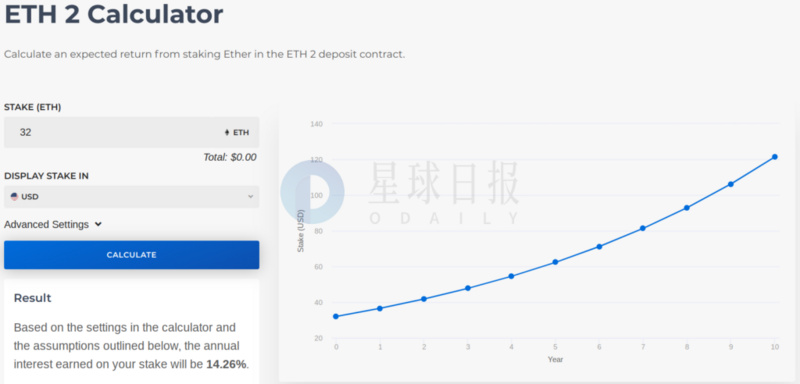 EthereumPrice.org has released a new tool to calculate Ethereum 2.0 10-year staking rewards. The calculator has various customizable settings to simulate different staking conditions. Ethereum 2.0 will move the network from PoW to PoS consensus. The calculator, developed using data from ConsenSys, using an open-source Google Form created by Colin Myers at ConsenSys Codefi, is currently in public beta. (Decrypt)
(3) Vitalik: ETH 2.0 requires 3 testnet clients to run stably for 8 consecutive weeks before it can be launched
In a recent Reddit forum AMA event, Ethereum co-founder Vitalik Buterin, ETH 2.0 researchers Danny Ryan and Justin Drake revealed that ETH 2.0 requires three clients to run stably on the test network for 8 consecutive weeks before it can be launched. (AMBCrypto)
(4) ETH 1.x researchers are promoting the implementation of "stateless Ethereum"
ETH 1.x researcher Alexey Akhunov is pushing to start implementing "Stateless Ethereum," a project designed to keep the ETH 1.0 network resilient as the blockchain continues to grow. People can choose to download parts of the state to run nodes on less expensive hardware without giving up full control over their data. V God said that statelessness is a prerequisite for block verification in ETH 2.0. According to Akhunov, the implementation phase of the project will start at the end of 2020. The goal of the project is to address the growing data burden of the blockchain. "Stateless Ethereum" is still in the research phase, and the implementation phase is expected to start by the end of 2020. (The Block)
(5) V God: Ethereum's soon-to-be-obsolete mining machines can be used for zero-knowledge proofs
Vitalik Buterin was asked in the interview what people should do with these outdated Ethereum miners once the network switches from its current consensus algorithm (Ethash) to no longer needing the current custom miners. V God said that he hopes to see these mining machines can be used, but certainly not all of them can be used, at most there may be only a part, and zero-knowledge proof is an option. (Cointelegraph)
The privacy protocol layer project Keep Network announced on the official blog that tBTC, a cross-chain protocol based on the Ethereum network and anchored to Bitcoin, will be launched on the mainnet on May 11. Limit DApp deposits to small amounts that will grow over subsequent weeks. (Keep Network)
2.DEX
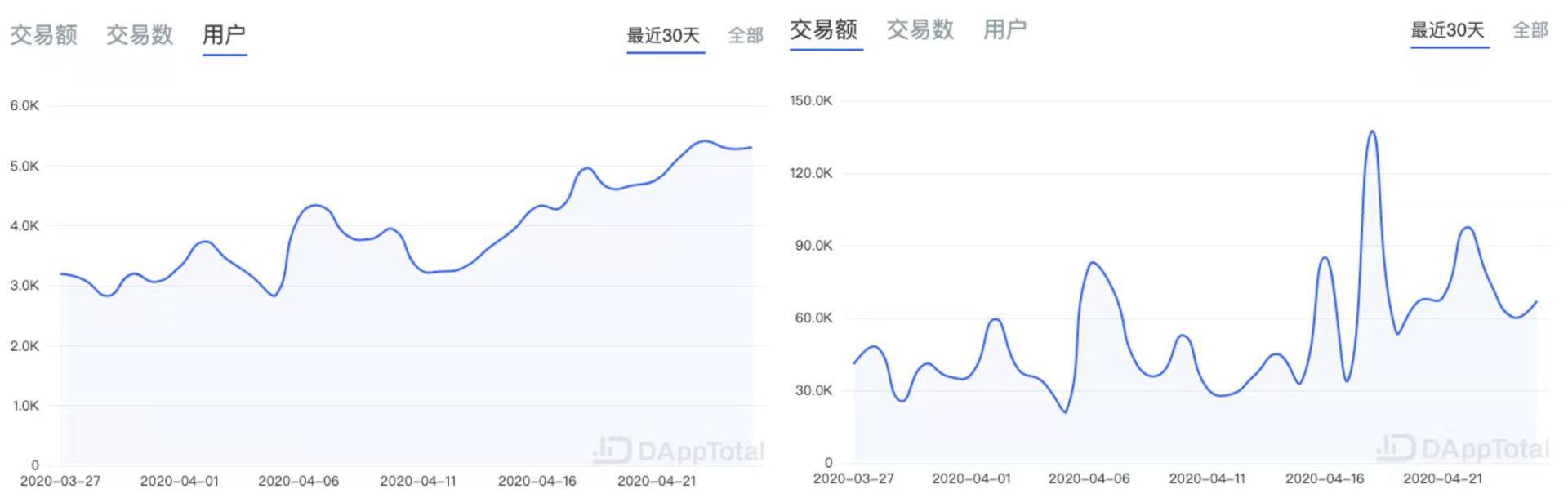
according toDAppTotal.com DEXaccording to
according to
3.Dapp
according toDappreview dataDappreview data
image description
(data from etherchain.org)
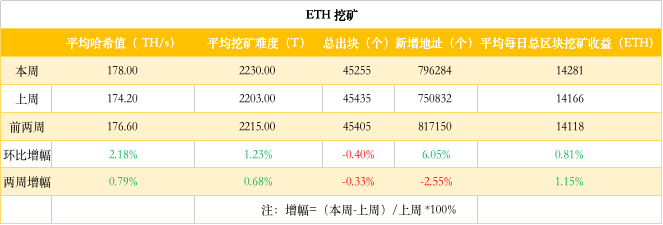
etherchain.org(data from etherchain.org)GlassnodeData, Ethereum (ETH) daily average number of new addresses (1d MA) reached 4017.625 on April 24, a three-month high. Previously, a three-month high of 3979.750 was observed on March 22.
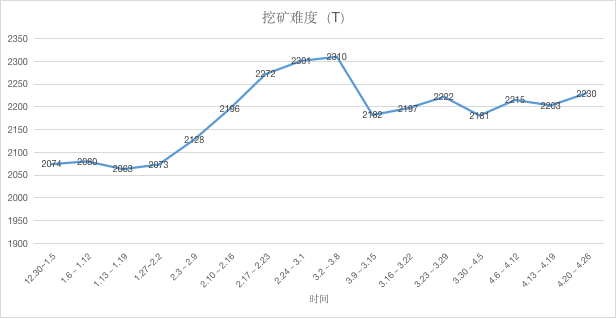
(Mining difficulty changes)
4. News
4. News
1. Analysis: Two mining pools on Ethereum account for more than 50% of the total network computing power
Two mining pools on Ethereum continue to dominate the competition, with Spark Pool and Ethermine accounting for more than half of the total network hashrate. Meanwhile, miners are already getting squeezed: In 2019, miners’ revenues on ethereum plummeted by 75%. Reports say the dwindling competition among ethereum miners is worrisome. However, if Ethereum switches to PoS anytime soon, it may not matter much in the long run. As things stand, Ethereum will continue to mine blocks for years to come. Therefore, we are likely to see these two dominant mining pools continue to expand their control. The end result could mean that the Ethereum network will be in a state of unusually low health before transitioning to PoS. (BeInCrypto)
2. ConsenSys will lay off about 90 people again
ConsenSys, the developer of ethereum, will cut staff yet again, according to two sources. ConsenSys announced on Monday that it would cut about 90 jobs, more than 10% of the company's workforce, one of the sources said. Previously, the company announced in February that it would restructure its core business and lay off 14% of its workforce. Odaily Note: Another cryptocurrency media, The Block, said that ConsenSys has confirmed the layoffs. (CoinDesk)
3. Analysis: Despite increased smart contract deployments, Ethereum transaction volumes remain stagnant
According to a recent report from Arcane, the number of smart contracts deployed in March hit a 12-month high. DuneAnalytics data shows that in the past month, the number of smart contracts has exceeded 2 million, but it has been a bad month for Ethereum in terms of price. It is reported that since April 2019, only one month has the implementation volume of smart contracts exceeding 1 million. The most recent peak was in October 2019, when the number of smart contracts in use was close to 1.2 million. From an Ethereum perspective, the rise of smart contracts is a positive, as it could indicate that more users are using these mechanisms in the DeFi ecosystem. However, the rise of smart contracts may also be indirectly related to the injection of USDT in the Ethereum ecosystem. Now, despite rising smart contract deployment activity, Ethereum’s daily transaction volume remains stagnant. This level has remained unchanged since early February, which may indicate that the smart contracts implemented are not really being used to facilitate user participation in the ecosystem. (AMBCrypto)
4.Hegic: 152.2 ETH is permanently locked in the unexercised option contract pool, and relevant users will receive a 100% refund
On-chain option agreement Hegic issued a document saying: 152.2 ETH (approximately $28,537) is permanently locked in the contract pool of unexercised put/call options. 16 of the 19 contracts are put options (DAI is locked), and 3 are call options (ETH is locked). Users involved will receive a 100% refund.
According to previous news, Hegic stated that there was a bug in its code, and it was unable to unlock the liquidity in the expired option contract for the newly created option contract. It called on users to immediately exercise all active option contracts. Hegic promised to provide a 100% refund, including the purchase of options. Premium. Hegic claims that this is not a security issue, but caused by a function naming error in the code.
Hegic previously announced the launch of the V1 version of the Hegic protocol. The functions include ETH put options, ETH call options, option writing user interface, custom arbitrary strike price settings, a new pricing formula (IV) that includes implied volatility, and liquidity provision. Investors sell puts and earn DAI and sell calls and earn Ethereum.
5. The first Ethereum Virtual Summit will be held online from May 7th to 8th





