






Lighthouse survey: Eth2.0 has these problems in its design


Editor's note:This article comes fromMedium,authorAqeel MohammadEditor's note:

,author
overview
; Compiled by Odaily Qin Xiaofeng, please be sure to indicate the source when reprinting.
Ethereum 2.0 has been in full swing, and the zero-beacon chain will be launched this summer. Recently, the Ethereum 2.0 client Lighthouse conducted a user experience survey report on Eth2.0 pledge/verification, and found that there are many problems that cannot be ignored. This report is of great reference value for developers; in addition, the report also sorts out the development stage of Eth2.0, which is also suitable for beginners who are interested in Ethereum to read. The content of the report is as follows:
overview
This report aims to provide the results, insights, and recommendations of Eth2.0 UX research to better structure the verification process for Ethereum network participants, and to help various ecosystem projects interested in further collaboration align with Ethereum.eepurl.com/gYB3r9To conduct the research, we surveyed 111 participants interested in the Ethereum network and conducted 10 face-to-face interviews with stakeholders in various existing POS (proof-of-stake) blockchain communities. interview. This can help Ethereum participants better improve the user experience involving staking/validation, thereby ensuring the successful launch of the Eth2.0 mainnet (phase zero).@ qnou / @ sigp_io,We are very grateful to all the respondents who took time out of their busy schedules to participate in our survey. The development of Eth2.0 is an ongoing open source effort, and we will continue to engage with the community to better gather user experience about Eth2.0.Lighthouse DiscordIf you want to participate in our survey or study, you can register our address
https://www.notion.so/eef0eabeb35f42989b384a6b398211ba?v=dda780e7aaec47bebe02585088d45b46。
Introduction
foreword
Introduction
Target
Research methods
survey results
opinion
suggestion
Follow up
suggestion
Follow up
first level title
1. Foreword: Chasing Serenity
Ethereum will eventually move to Proof of Stake (PoS), which has been at the heart of the research and ethos of the project since its inception, and is one of the main reasons many of us were drawn to the Ethereum ecosystem in the first place. On January 15, 2014, Vitalik, the founder of Ethereum, published an article about POS on the website of the Ethereum Foundation: "Slasher: A Punitive POS Algorithm", which is better than the official article "Slasher" published by Ethereum. The Ethereum: Now Going to public article is a week too early.
(Odaily Note: In 2014, V God and the Ethereum research team designed a mechanism called slasher to punish malicious actors in PoS and cut their entire mortgage.)In the Ethereum roadmap in 2015, Serenity (the "Serenity" stage) is the final stage of Ethereum development. Eth2.0 (Tranquility) replaces the POW mining process with a PoS consensus model, where validators will be responsible for maintaining the network.Eth2.0 phase zero will introduce a POS chain, called "The beacon chain" (The beacon chain), while relying on the existing Eth1.0 chain (PoW) to load validators and guide the network. In addition, Eth2.0 hopes to solve the scalability problem by introducing independent shard chains (Shard Chains). These shard chains are relayed to the beacon chain and eWASM, giving each shard chain a dedicated virtual machine. The beacon chain is the scaffolding for the operation control center and the work of the sharding system.
The Eth2.0 specification underwent a major revision in late 2019/early 2020 and continues to evolve as implementation continues. However, this month's
External Security Review Ethereum LighthouseIt is shown that the overall structure is stable. Although the transformation of Ethereum to PoS is a controversial and long process, Eth2.0 is still one of the most interesting and anticipated topics in the blockchain ecosystem. Ethereum Lighthouse"Eth2.0 is a scalable PoS infrastructure where we will place the Ethereum we know and love today." Danny Ryan, Ethereum Foundation.Sigma PrimeThis report is made byhttps://github.com/sigp/lighthouseis an open source ETH2.0 client focused on security, performance and usability, written in Rust, byhttps://sigmaprime.io。
The team develops. For more information about Lighthouse, you can log on to Github Repo:
; For more information on Sigma Prime, please visit:
first level title
2. Introduction
POS: This is a consensus mechanism different from POW, and participants can mine or verify block transactions according to the number of tokens they hold.
Energy saving - Unlike POW, stakeholders do not have to continuously produce blocks;
higher security;
Improve performance and scalability.
text
1. Ecosystem Considerations
The current market value of the existing PoS network is about $9.6 billion, of which $6.3 billion is locked by staking. With the full rollout of Eth2.0, we will add another $14.5 billion to the current POS market cap.
As can be seen from the long-term roadmap provided by V God, there are many interdependent parts in the system, which have different degrees of UX complexity, and need to cooperate with each other to make the system work as expected.
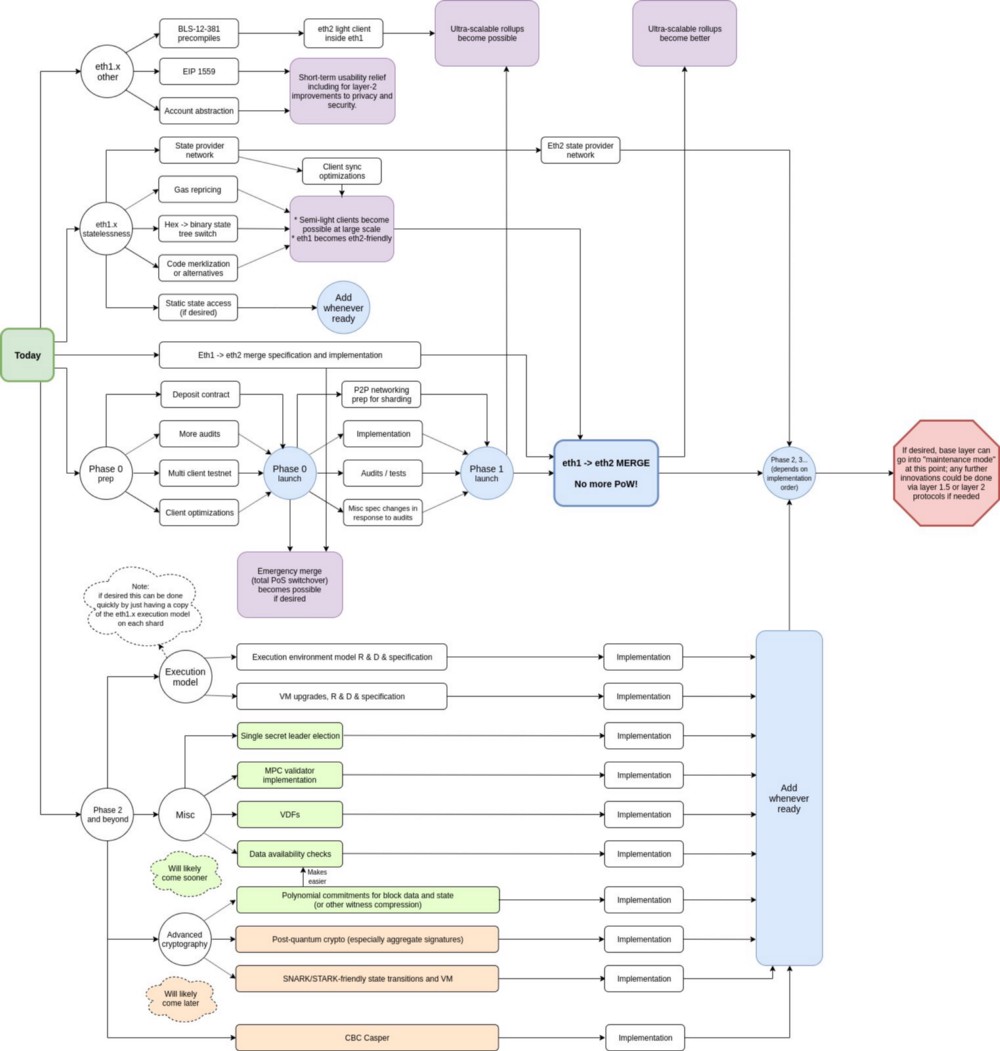
Therefore, our current focus is to ensure that the user experience of Eth 2.0 phase zero is consistent with the long-term vision and success of the Ethereum network as a powerful decentralized PoS protocol.
2. Phase Zero
image description
Vitalik Buterin's view on the Eth2.0 roadmap (5-10 years)
In phase zero of Eth2.0 (Serenity), we will see:
Beacon chain - as the core consensus and backbone of ETH2.0 and subsequent stages, the beacon chain will be launched during this period;
Deposit Contract - allows one-way transfer of Ether from Eth1.0 to Eth2.0 to become validators. These initial deposits will form a security pool and be used to protect the network when Eth2.0 launches;
One-way bridge mode (one-way bridge) - no two-way transmission, means that ETH deposits will be locked in the beacon chain, the community will be seamlessly linked, and the two chains (Eth1.0 and Eth2.0) will be simultaneously run, but will still remain in unity;
Large public testnet with multi-client capabilities - can simulate production environment, load validators and get familiar with running nodes and clients;
Users - Since no transactions take place on-chain, users will primarily consist of validators and stakers. They hope to use this opportunity to learn about this new ecosystem or earn staking rewards before Eth2.0 is fully operational.
3. Decentralization
Centralized mining is an important factor that has to be considered in the process of turning to staking. Although in the past few years, various decentralized pledge agreements have appeared in the market. But in fact, it is not a change of medicine, and a small number of verifiers and staking service providers still control most of the network. The goal of Eth 2.0 is to completely change this model. However, if the user experience of independent validators is relatively poor, we could see a large amount of network participation happen on external staking services - because they lower the cognitive threshold for end users.
"I am hopeful that the release of Eth2.0 will help to change the commonly held view that there are less than 100 (or even 50) qualified POS validators in the world today." Chainflow operator Chris Remus.
4. Client implementation
Unlike other PoS networks currently in operation, Eth2.0's clients are open source, available in various programming languages and built by different independent teams.
Client diversity is an important goal of Eth2.0, the ideal situation is that no specific client owns more than 30-40% of the network, so that the network as a whole has better security.
first level title
3. Goals
In order for a new generation of independent validators to participate in the decentralization of the Ethereum network, we need to ensure that the overall user experience is intuitive and helps meet the needs of a diverse user base with varying technical abilities and educational needs. By integrating PoS, Ethereum hopes to expand the validator ecosystem to 1000s of independent network participants, with each participant taking an active role in maintaining the network.
Therefore, understanding the needs, pain points and motivations of these players is critical. Through our introductory research work we hope to:
Profiling user groups interested in Phase Zero;
Identify the information needs of target users;
Assess expectations for client implementation;
Evaluate the criteria for developing user interfaces and other user touchpoints.
first level title
4. User Research Methods
User research is a systematic study of users' goals, needs, and capabilities to benefit users' work and life by specifying designs, structures, and improving tools and resources.
Stakeholder Interviews
In order to better define the direction of our work and understand the challenges we face, we chose to interview some key stakeholders, whether they are participants in the existing POS ecosystem or have different degrees of expertise in the wider Ethereum community. Knowledge participants.
online survey
Eth2.0 PoS User Experience Survey / Respondent Selection
(Odaily Note: The author means that many of the participants in this report are Eth2.0 developers or people who really contributed to Eth2.0, not passers-by. The side shows that this report is professional and of great reference value )
first level title
5. Survey results
secondary title
1. Participant roles
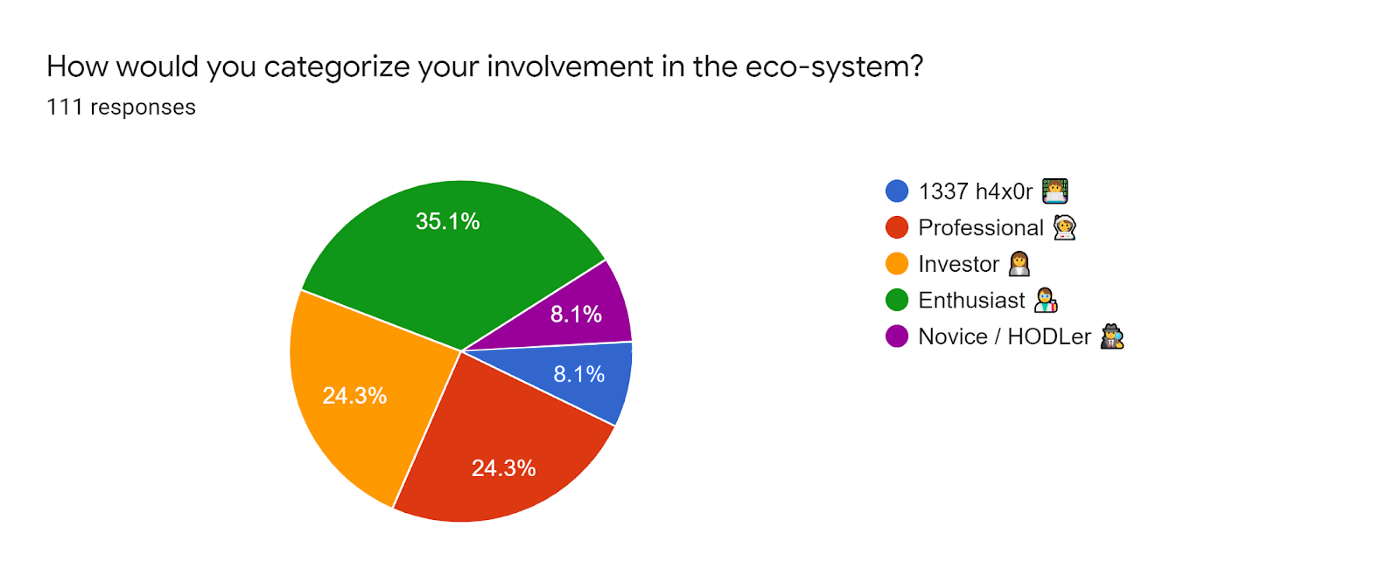
When respondents were asked how they would categorize their involvement in the ecosystem, 67.5% of participants categorized themselves as “knowledgeable but not particularly tech-focused,” split as: Enthusiasts ( 35.1%), investors (24.3%), and novices (8.1%); the remaining 32.5% classify themselves as “professionals or developers working in the ecosystem.”
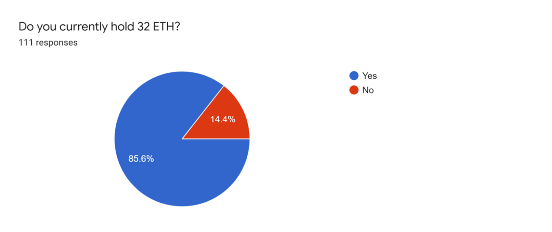
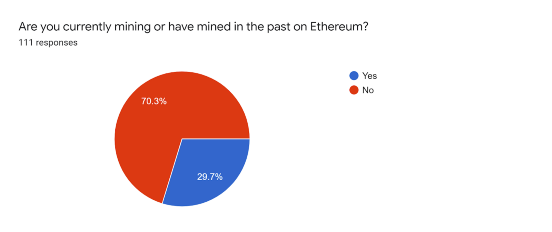
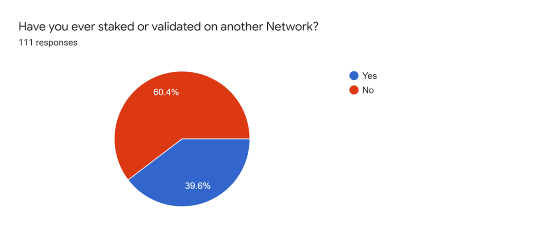
85.6% of these users currently hold 32 ETH (the minimum number of zero participation pledges in the Eth2.0 phase); only about 30% of them have previously participated in mining on POW’s Ethereum; about 40 % have previously staked or validated on another PoS network. This means that most of the verification/staking (Validation/Staking) users will be new to the Eth2.0 ecosystem, and this will be the first time they actively participate in independently managing validator clients and nodes to maintain the integrity of the Ethereum network. decentralized.
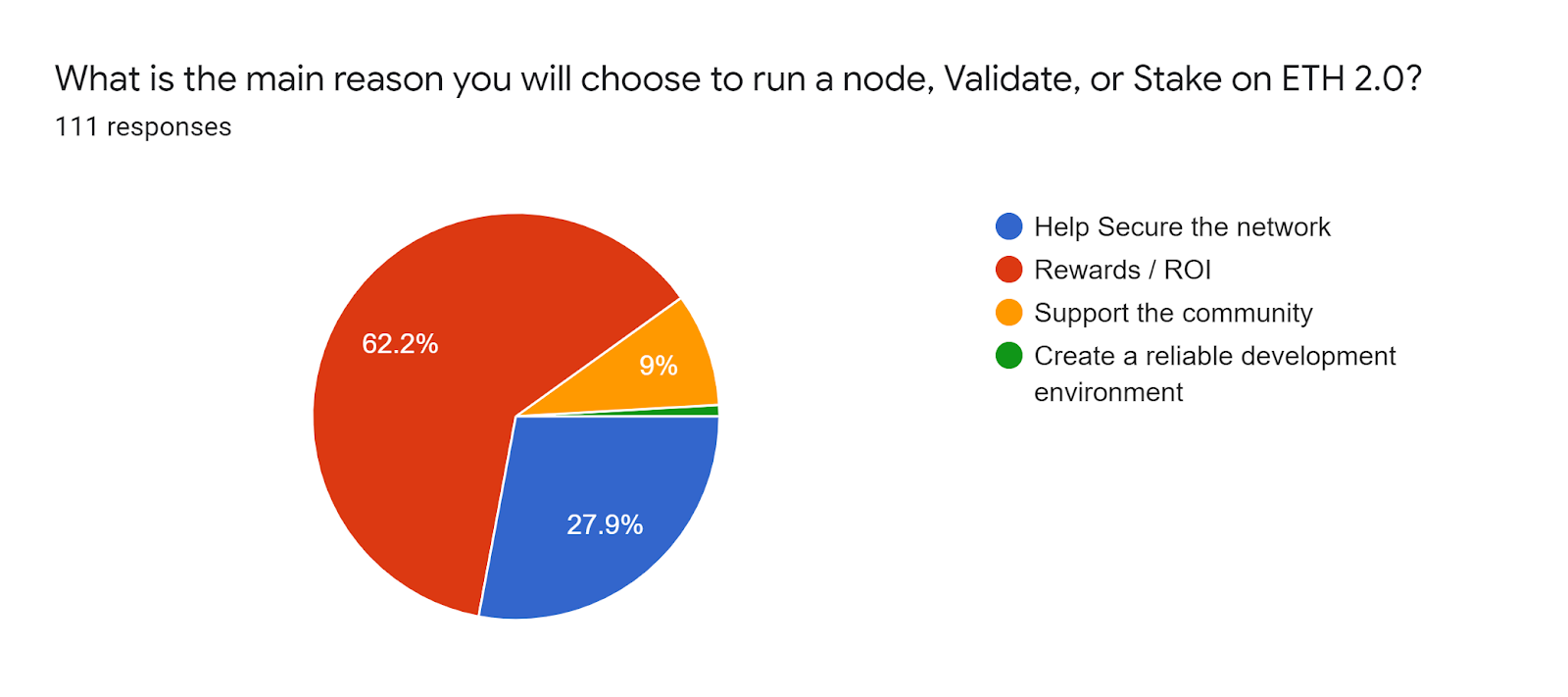
Among the factors that motivate participants, 62.2% want to get rewards through staking; 27.9% of participants want to help secure the network; and the remaining 9% want to support the community through their participation.
2. Participant Education
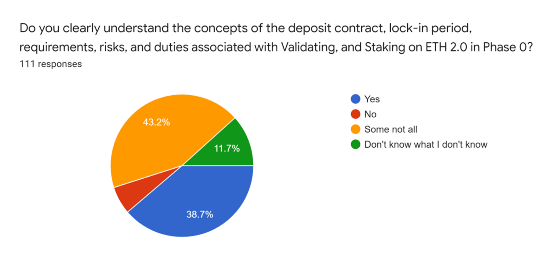
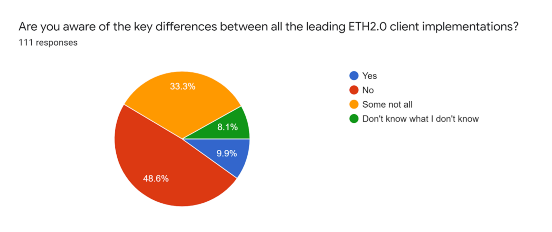
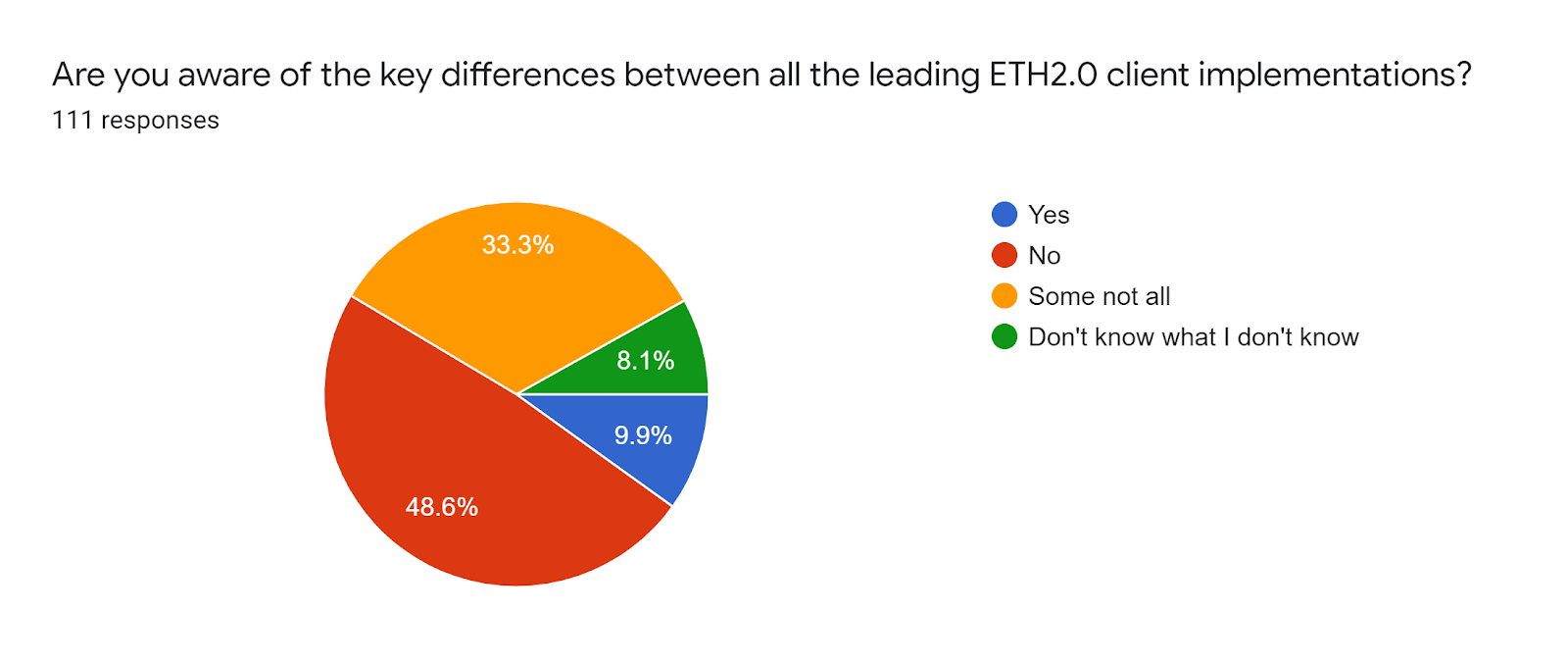
61.3% of the participants were not very confident in understanding the key concepts of staking and verification in Eth2.0 phase zero; 90.1% were not sure about the key differences between Eth2.0 clients.
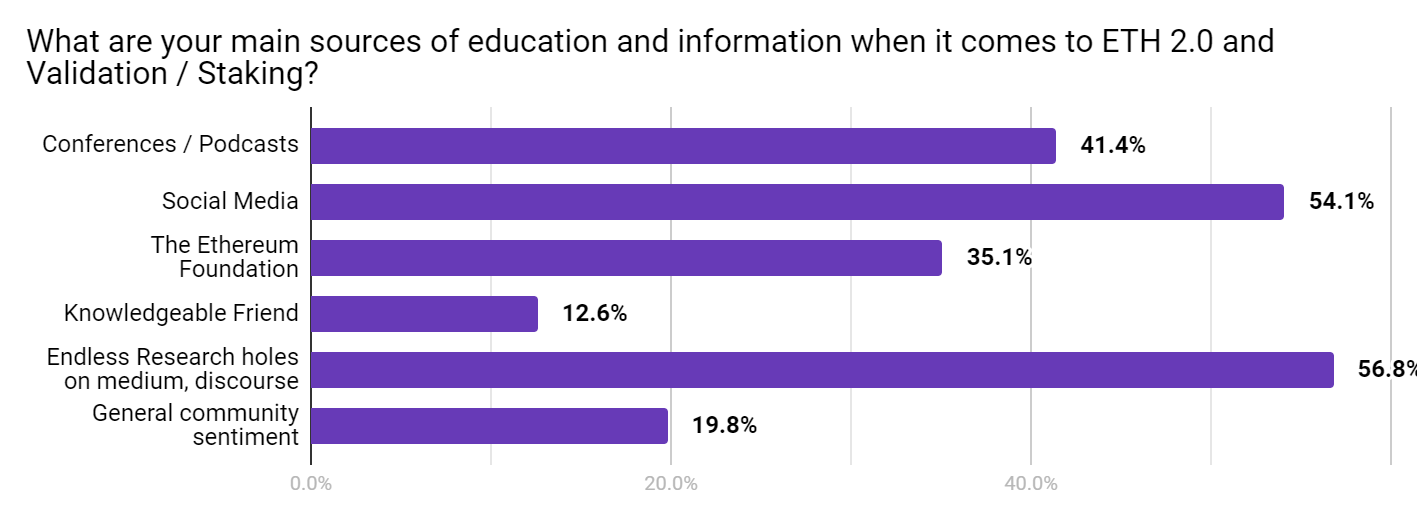
 56.8% of the respondents actively researched to obtain information through platforms such as Medium, Discourse and Google; 41.4% of the respondents obtained more information through conferences or podcasts (Podcasts); 54.1% passively Get content shared on social media; 35% of respondents still see the Ethereum Foundation as their primary source of information.
secondary title
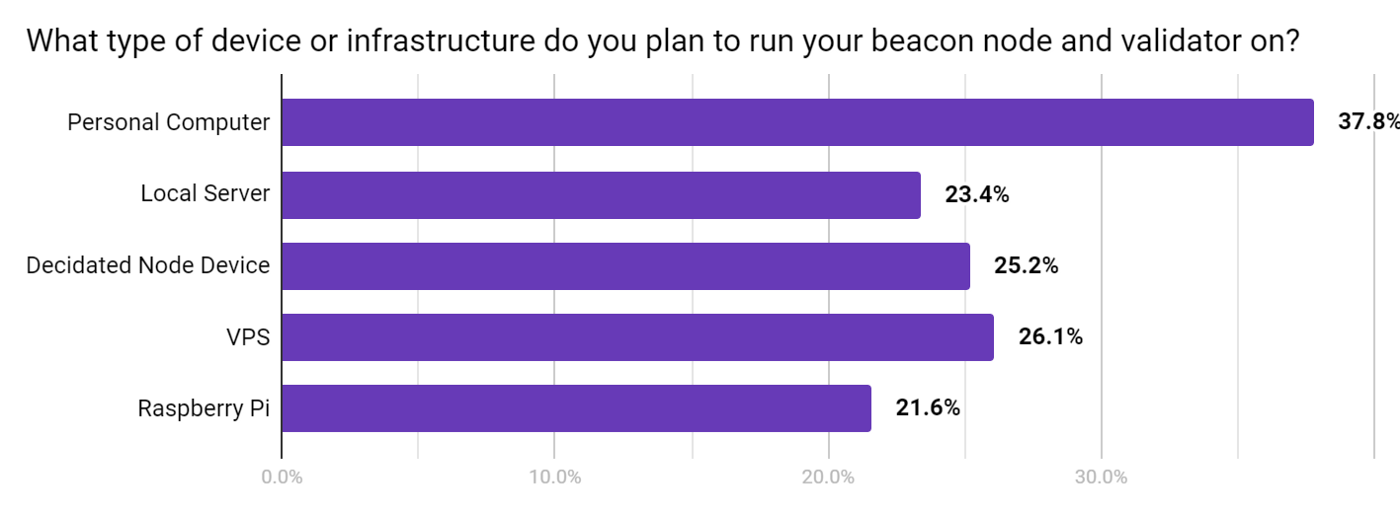
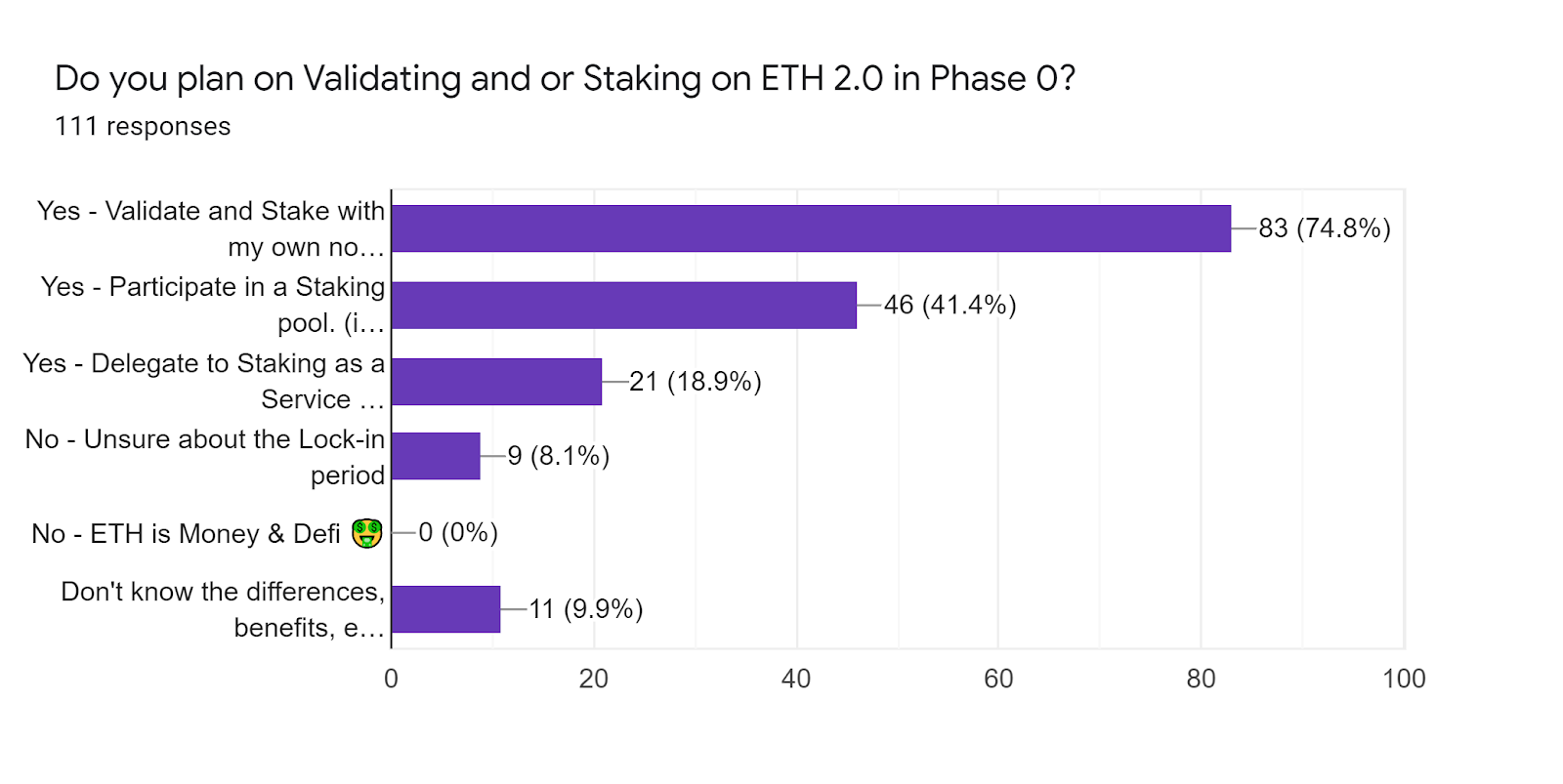
When respondents were asked how they planned to participate in Eth2.0 phase zero, 74.8% of participants were excited about being able to run their own nodes and validator clients to validate/stake on the Ethereum network; 41.4% planned to participate Staking pool (Staking pool, the infrastructure that provides staking hosting services); 18.9% plan to become a staking service provider; since the staking lock-up time is unknown, 8% of users will not participate in phase zero, and 9.9% of users do not know yet benefits of staking,DApp NodeorAvadoOne of the biggest issues to consider is what equipment or infrastructure participants want to use to run their nodes and validators. 37.8% of respondents believe that they will be able to safely run a node and manage validators on a personal computer; 26.1% will seek external VPS (Virtual Private Server) services; 25.2% want to buy or use a dedicated Node devices (such as
or
); 23.4% want to create their own local server; 21.6% want to be able to use small devices like Raspberry Pi.
4. ETH2.0 client experience
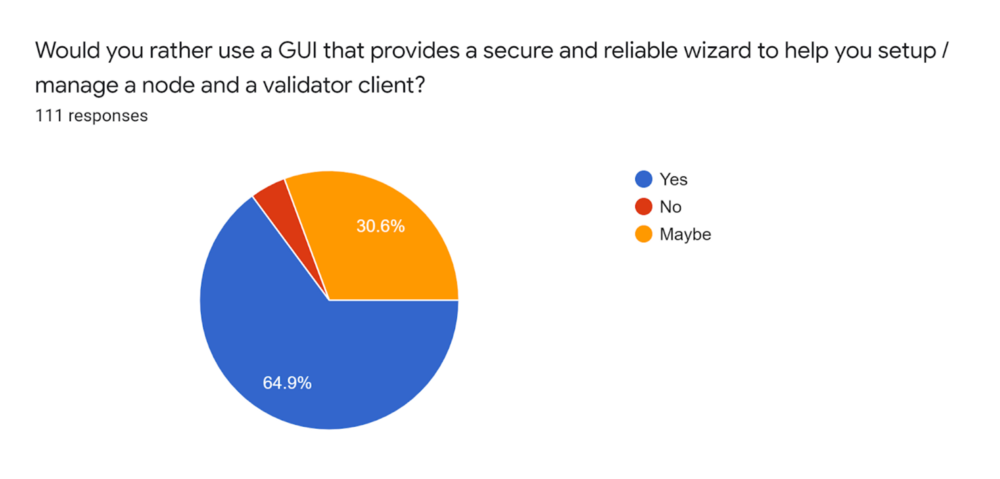
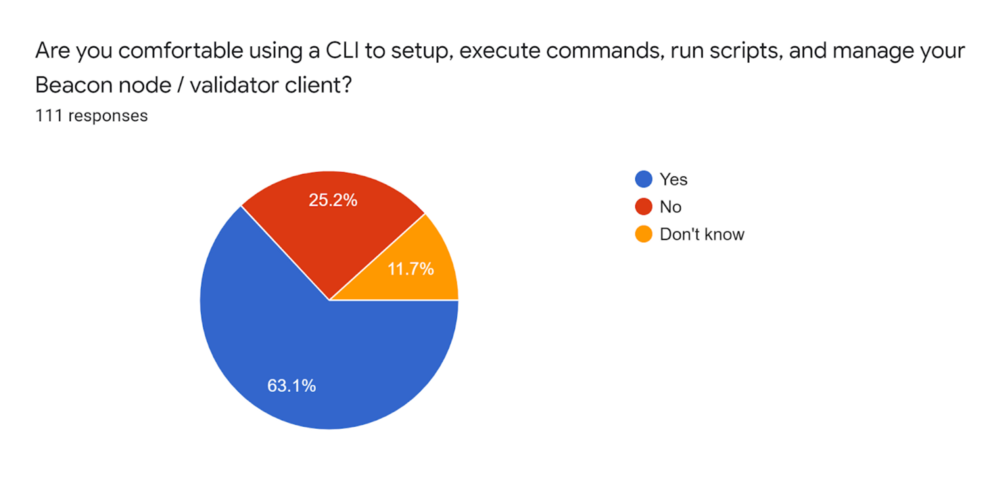
When participants were asked if they would be willing to use the CLI (command-line interface) to set up, execute commands, run scripts, and manage beacon nodes/validator clients, 63.1% responded that they were able to Operation, 25.2% of people are sure that they can't manage it, and 11.7% of people said they don't know. 64.9% of participants would rather use a reliable GUI (Graphical User Interface, also known as Graphical User Interface) to help set up/manage their nodes and validator clients, and 30.6% of participants would use GUI security and usability to Using it, 4.5% of participants were unwilling to use the GUI.
first level title
6. Insights
secondary title
1. User portrait
Possesses a strong foundational knowledge of advanced ecosystems, but is not particularly specialized.
Actively seeks out and researches relevant information through a variety of mediums.
Will be interested in validating the network for rewards and ROI.
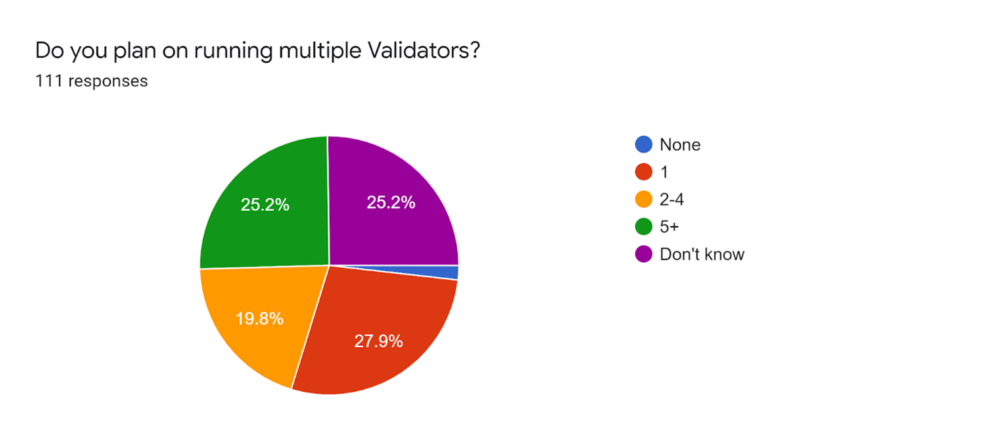
Holds over 32 ETH and plans to run multiple validators.
Helping secure a decentralized network for the first time, have not previously mined on Ethereum and most likely have not participated in existing PoS networks.
The educational requirements, personal resources, and overhead required to run and manage beacon nodes and validator clients on Eth2.0 may be currently underestimated.
Prioritize network security and decentralization.
Interestingly, those looking to participate in staking do not seem to see DeFi as a favorable option due to system differences, changing risk profiles, and different incentive models.
secondary title2. Educational needs
With the introduction of PoS and the wide application of new systems in Eth2.0, we naturally introduce some new concepts and terms. These concepts and terminology need to be introduced and taught to users so that they can successfully become validators. Respondents also expressed concern that existing validator documentation often targets the wrong demographics and makes it difficult to locate information when problems arise. Some of the content needed for education are listed below, citing participants' needs for relevant information:
Hardware requirements:Most users want to use their local device to run and manage their node/validator clients. Considering the fact that most of the participants believe that PC and Raspberry Pi are the ideal solution, this means that there is a certain degree of preconceived notion among the participants, ignoring the security and operational risks of running on personal devices, etc. . In addition, users may overestimate the reliability of continuous Internet connection, and users need to be guided to make the best settings for the core principle of "maintaining decentralization".
"What hardware to use and if I can set up an inexpensive machine through AWS or something like that to make sure it's always online."
Lock-up period:From a financial and operational standpoint, participants need to be more aware of how long the lock-up period is. Because they cannot voluntarily exit the system and then restart it, their stake will be held until phase one or beyond.
"When can I withdraw Eth2.0 tokens? How long is the lockup period? This will affect when I start staking."
Deposit contract:The irreversibility, one-way and key generation process of the deposit contract is a new concept. In addition, there is a very dangerous element: potential phishing attacks. The source code of trusted interfaces and service providers needs to be highlighted.
“Hopefully EF (Ethereum Foundation) will put out a separate page as a source of truth.”
Locked Ethereum (bETH /ETH2.0):Technically, locked ether should not be considered another asset class. However, due to the nature of the lockup period, service providers will naturally see an opportunity to provide liquidity for the staked ETH. Many have started referring to staked ETH as Beacon ETH or bETH, while others refer to it as "Eth2.0"; also, other service providers such as Rocketpool intend to launch their own liquidity mechanism (rETH) , further complicating things. This may become the key for new participants to see the essence through the phenomenon, understand the concept, and truly grasp the problem.
"How to convert bETH to regular ETH?"
Client implementation:
All clients have different programming languages, performance, security, tools, usability, stability, and even different rewards/penalties based on the extent of the client's usage on the network and the type of optimizations done for authentication . Participants will need an authentic source to gain unbiased information and opinions and to have a say on which clients might be best for them to use and why they should consider client diversity."
"What are the key differences between clients, and what are the differences in rewards between different clients?""Which client is reliable? I don't want my deposit reduced."
“Before network launch, understand the uptime/performance of different clients.
Synchronize to ETH1.0 chain:What most users don't realize is that to become a validator you need to be running or connected to an existing ETH1.0 node.
"Do we need to run an Eth1.0 node to stake?"
BLS key pair:Introduces a new key generation mechanism. Key management will differ from signing keys for validator activities and exit keys required to exit the system. Additionally, existing software wallets and hardware wallets do not currently support BLS keys.
"Key generation, key management, which keys are stored and how are they used to exit the system?"
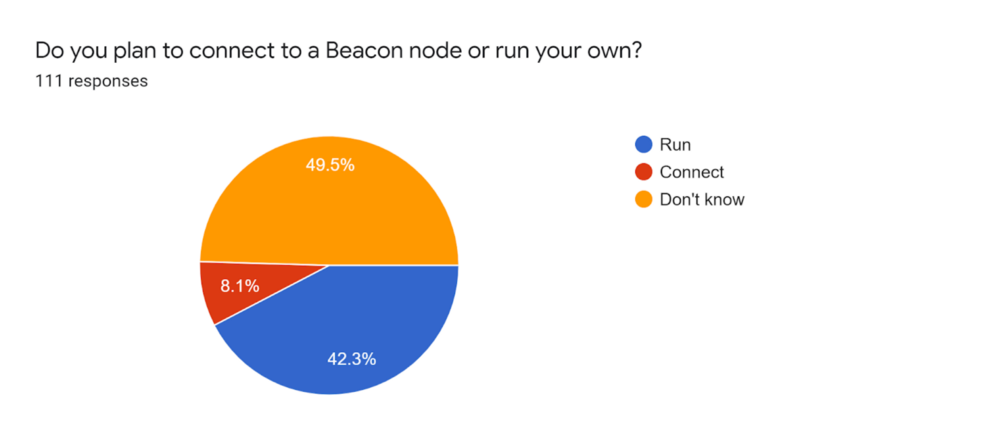
Beacon node requirements:49.5% of participants said they did not know if they should run their own beacon nodes. In order to run and maintain beacon nodes, more resources are required.
"Clarify the incentive mechanism of the beacon node, and finally decide whether to connect to the node or the host."
Eth2.0 economics:Systems economics is complex and evolving. Participants need to have a clear understanding of how things will mature and how to optimize their participation for different environments.
“Give some stats about rewards, like how much ROI do I get if there are so many validators in the network, etc.”
Rewards and ROI:Rewards are relative to the total amount of ETH staked in the network. Rewards are the main factor motivating people to be interested and willing to participate in the verification process. Therefore, participants should have a clear idea of what rewards and benefits they should expect to receive from their early participation and how this will affect their future.
“What can the rewards earned in phase zero do, for example, can they be used to continue staking? Is the reward based on the total value currently locked (including previous rewards), or is it just the initial 32 ETH locked? Can the rewards already earned generate any value before Phase 2?"
Risk Profile of Participation:Participants are not yet informed about the risks of validating and validating at phase zero, and guidance should be provided up front in a more understandable manner, with relevant consequences highlighted appropriately for people to assess before choosing to participate.
"If something goes wrong, will it go to zero? Or can you rewind the system?"
Validator Responsibilities & Guidance:About 75% of participants want to be fully involved in the validation and governance process. However, most of them are actively involved in securing a decentralized network for the first time, so the understanding of the network varies, and some guidance is needed to explain the nature of the duties involved, the benefits, risks, and guide How they solve problems.
"I'm not a developer, but I have an Avado and plan to run a validator and participate in staking. However, I'm not sure about the security of my network. VPNs and network security are like another language to me. I Without even realizing it, I could have a big security problem on the network or on the device."
Slashing vs Penalty:Participants often confuse concepts such as what is cut, punished, and what is simply punished and how much.
“Under what circumstances could my stake be slashed? For example, what if a machine dies or my router goes down and I’m on vacation? How likely is it to reduce the stake pool?”
dPoS and PoS:Participants may have different understandings of the nuances of Ethereum staking/validation and other PoS networks.
“How can I participate in staking without running my own node, validator? I think the ledger can be delegated like in cosmos or tezos.”
Staking VS Verification:The term "staking" is used widely in the blockchain ecosystem and has many different meanings. Unlike existing PoS networks, only validators who actively participate in the Ethereum consensus can receive rewards in the Ethereum POS network. Unless using an external service, participants not only need to stake ETH as collateral/equity, but also perform duties (i.e. participate in validation).
"We need to understand the staking mechanism to have a clear idea of what I should be doing."
stage:Since each development phase has a significant impact on validators and how they participate, it is necessary to ensure that the information submitted by the development team about progress and impact is accessible and understandable to non-developers. Although it is difficult to predict the actual results of the development phase and system operation, a clear frame of reference is still needed.
“I need a clearer understanding of the transition from Eth1.0 to Eth2.0 (especially in potential Eth2.0 phase 1.5) and how this will affect my ability to validate.”
the term:About 40% of participants indicated that they had staked on other PoS networks in the past, so had some frame of reference for key terms that might be used in network operation. However, when using Ethereum, we still need to pay attention to the actual situation analysis.
Experimental/Testnet:
Participants want to experiment and learn in a low-stakes environment before committing to the network.
"I want to run through my setup first to make sure everything will work when we get to phase zero."
secondary title
3. Fear and anxiety
When respondents were asked about their greatest fears and anxieties when participating in Eth2's phase zero, responses focused on the following: client/validator management, security, usability, exposure of funds, Ethereum phase progress/locks positions and errors.
Client/Authenticator Management:
"Long time offline due to hardware failure/power failure etc. Lost collateral."
"The client is unreliable."
"Not sure about the reliability of the internet connection."
"Sync problem."
"Software stability.""
"Safety:"
"Unknown major vulnerability."
“Hacking occurred while ETH was locked.
There is a loophole in the deposit contract.
"Insufficient awareness of home cybersecurity risks."
"My private key is under attack."
mistake:
"I can't fix either issue. So far, all I've been able to do is copy and paste the command line instructions, which seem to be working. But if I need to upgrade or have other problems, I don't know what to do."
Availability:
"Authenticators are offline but not properly alerted. Even though the user experience is terrible, there are multiple validators to manage."
"My only concern is lack of CLI experience".
funding problem:
"The price of Eth1.0 is still higher than that of Eth2.0, which makes the conversion of Eth1.0 to Eth2.0 very small."
Ethereum Phase Progress / Lockup:
"If there is a lot of delay in phase one and beyond, will ETH1. Can it be unfrozen after the other phases are available?"
"The one-way bridge model means that a considerable part of the assets I hold may not be available for 1 to 1.5 years, because it is not sure how far the first and second stages are from the ultimate goal."
secondary title
Staking on an exchange or through a service provider is inherently antithetical to decentralization. These services are necessary for individuals who do not have the resources or facilities to participate in verification, helping them lower the barrier to entry, but at the same time causing unnecessary losses to their funds.
The survey results show that most of the respondents who are actively concerned about Phase Zero are not interested in staking service providers, but are interested in participating in staking and verification themselves. Therefore, this requires that the user experience of Eth2.0 pledge/verification is the same as that of third-party service providers, lowering the threshold, so that these interested people can enter the Ethereum network as they wish, and realize the decentralization of the network. Additionally, participants are more likely to choose to participate in staking pools.
“Why should I stake? I need other incentives besides rewards.”
secondary title
Clearly, we need to focus on end-user interactions and help build mental models that allow users to easily understand and understand the benefits, risks, and responsibilities of participating in Eth2.0 staking without in-depth protocol and technical knowledge.
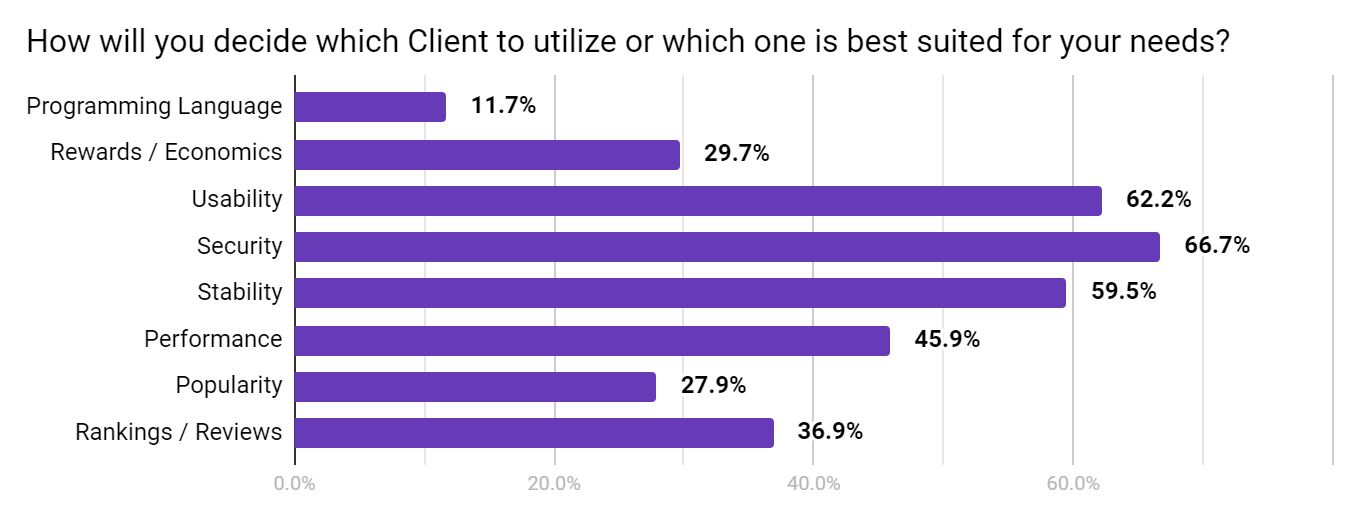
Participants were currently not aware of the main differences between different client implementations, with only 9.9% of respondents clearly aware of them. When users choose a client, the main consideration is security, followed by user experience and stability. Although most people are interested in participating in staking because of the rate of return on staking. But the difference in return expectations between different clients is not one of the main concerns of users when choosing which client to use. In addition, most users are not yet aware of the complex economic model behind Eth2.0, and how specific client resource consumption and authentication optimizations affect the final return.
In summary, the main factors for client selection are: security, performance, stability, and return on investment.
6. Validator Tool
Participants also indicated that they are more likely to use a well-designed GUI rather than a CLI to manage their nodes and validator clients, thereby circumventing user errors from the client side. After all, these mistakes could potentially result in penalties for own staked ETH.
first level title
7. Suggestions
secondary title
1. Education, education, or education
Considering the user group who are interested in staking/verification on Eth2.0 phase zero, the documentation of client communication should also consider non-developers, that is, it should be more popular. Therefore, the verifiers who enter the system will not be difficult to participate in the verification due to factors such as lack of technical language and media resources; in addition, more attention and resources need to be allocated to these people to ensure that they can clearly understand the current system. changes and a clear vision for the future.
What educational resources should be provided:
Provide better calculation tools and more understandable articles, clarify rewards, rewards, and punishments;
Provides a validator guide, emphasizing hardware requirements, responsibilities, expectations, risks, troubleshooting tips, etc.;
Provide articles about different Ethereum pledges and the impact of each choice on the network, focusing on comparing the differences between individual pledges, pledge pools, and pledge service providers;
Provides articles on the differences between different clients, the need for interoperability, and the distribution of networks between clients for security;
Provides participatory experimentation tools that allow users to simulate the process of running a node, use the testnet, and conduct trial runs before committing real funds.
secondary title
2. Nomenclature
"Using the word "Ethereum" where possible is probably admirable, and it will push the consensus in a better direction. Danny Ryan, the Ethereum Foundation, said that words like Ethereum should be used more.
Staked or verified ETH should be considered the same asset locked in a different state for a specified period of time, whereas in the above nomenclature it is considered two assets.
Therefore, care should be taken when naming new things to avoid public confusion about the relationship between technology and tokens. For example, the word "ETH" used to refer primarily to the "ETHER" token, now due to the ETHx.y naming convention, "ETH" can also refer to the Ethereum technology, which makes it difficult for newcomers and those unfamiliar with the ecosystem People have misunderstood.
secondary title
3. Experimental
secondary title
4. Cooperation
The progress of Eth2.0 currently relies heavily on existing systems and the excellent work done by individuals, teams, and organizations at all levels of the technology stack for Eth2.0 development. It also requires us to be in sync when creating communications and making decisions that focus on user-facing. Ethereum will not be a good POS decentralized network system without the help of all parties, and we hope that everyone will share insights, agree on terminology, and provide educational resources.
first level title
Eight, follow-up





