


Where did the Ethereum Foundation spend its money last year?


Editor's Note: This article comes fromEditor's Note: This article comes fromEthereum Foundation Blog
Recently, the Ethereum Foundation releasedReportReport
, announced the latest progress of the "Ecosystem Support Program" (Ecosystem Support Program, referred to as "ESP") and the use of financial funds in 2019.In 2019, new grants from the Ethereum Foundation to teams totaled $7.809 million. According to the 2019, the foundation will invest $30 million in key projects on the entire Ethereum ecosystem, regardless of whether the price of ETH goes up or down, this budget will not be affected; in addition, $19 million in the budget is planned to be used to support the development of ETH 2.0 , 8 million US dollars are used to support the development of "ETH 1.0", and 3 million US dollars are used to introduce and motivate development talents.
secondary title
1. Recent progress of ESP
The Ecosystem Support Program (ESP) is a branch of the Ethereum Foundation dedicated to supporting teams across the Ethereum ecosystem, both financial (funding) and non-financial. ESP is also an extension of the Grants program, which focuses primarily on financial support.in 2019spring report
In , the Ethereum Foundation proposed the plan for the first time and made some imaginations. Since then, the foundation has continued to provide direct funding and help connect ESPs with other potential sources of funding, as well as facilitating industry expert advice, community exposure, access to cloud services and other infrastructure, and more .
In the past 9 months, the Foundation has collected feedback from all parties and improved the application process. The changes are as follows:
Standardize the process for ESP review applications;
Expanded expertise in the field, available to assist with peer-reviewed applications, or to advise applicants on their projects;
More focus on providing applicants with 1V1 feedback;
Work more closely with accepted projects to establish clearer goals, roadmaps and shared expectations.The Foundation is also working to increase the profile of the ESP and attract more high-quality applications. To this end, the foundation has also made some changes in the way of communication, from improving existing channels to providingAdd some new pages.
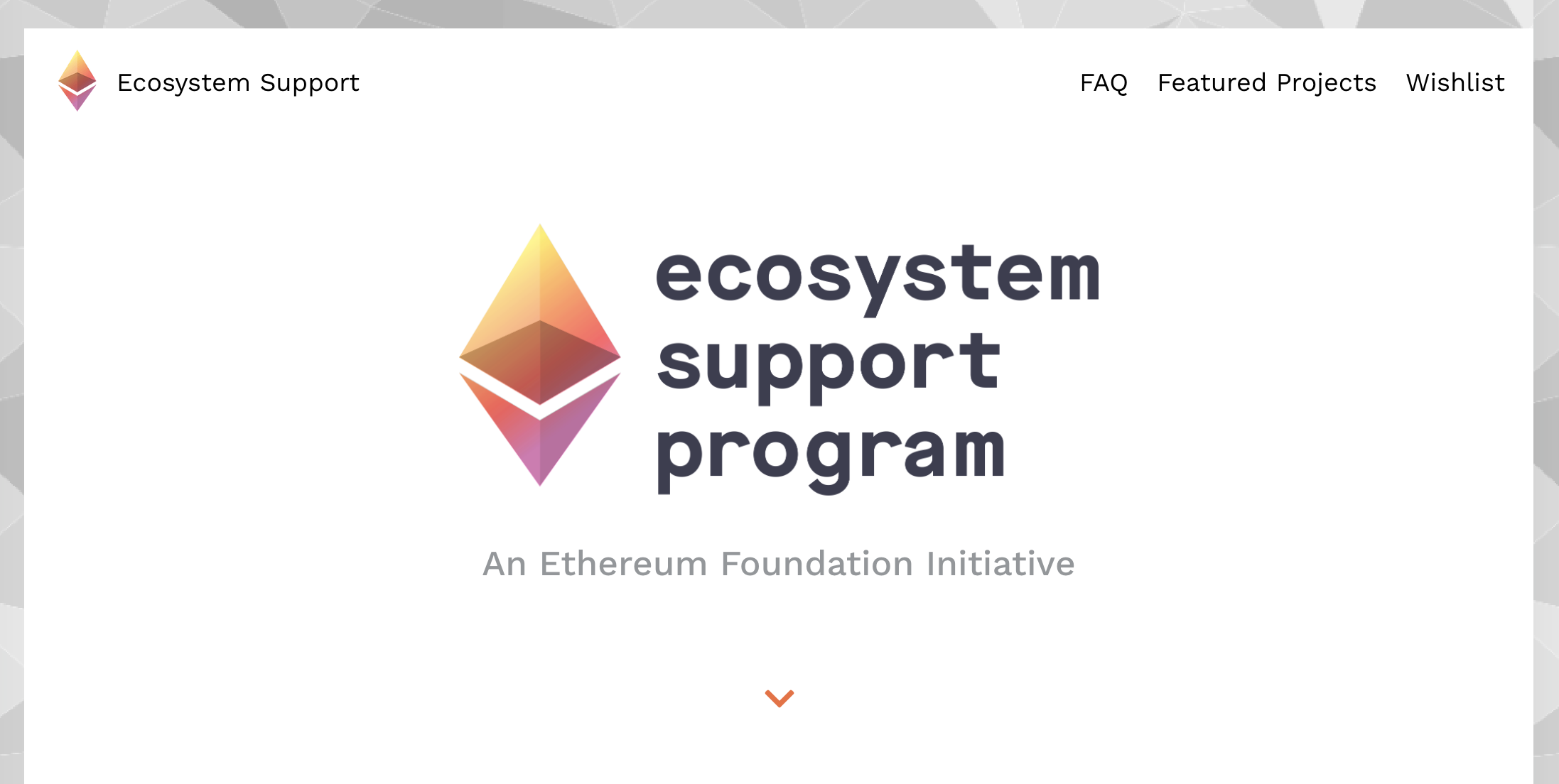
image description
(ESP official website)
Some of the changes are non-obvious, but the Foundation hopes they will inform the community and better assist potential applicants. Now, you can follow the latest news on the homepage of the ESP website and learn about the activities that ESP will participate in under the epidemic.
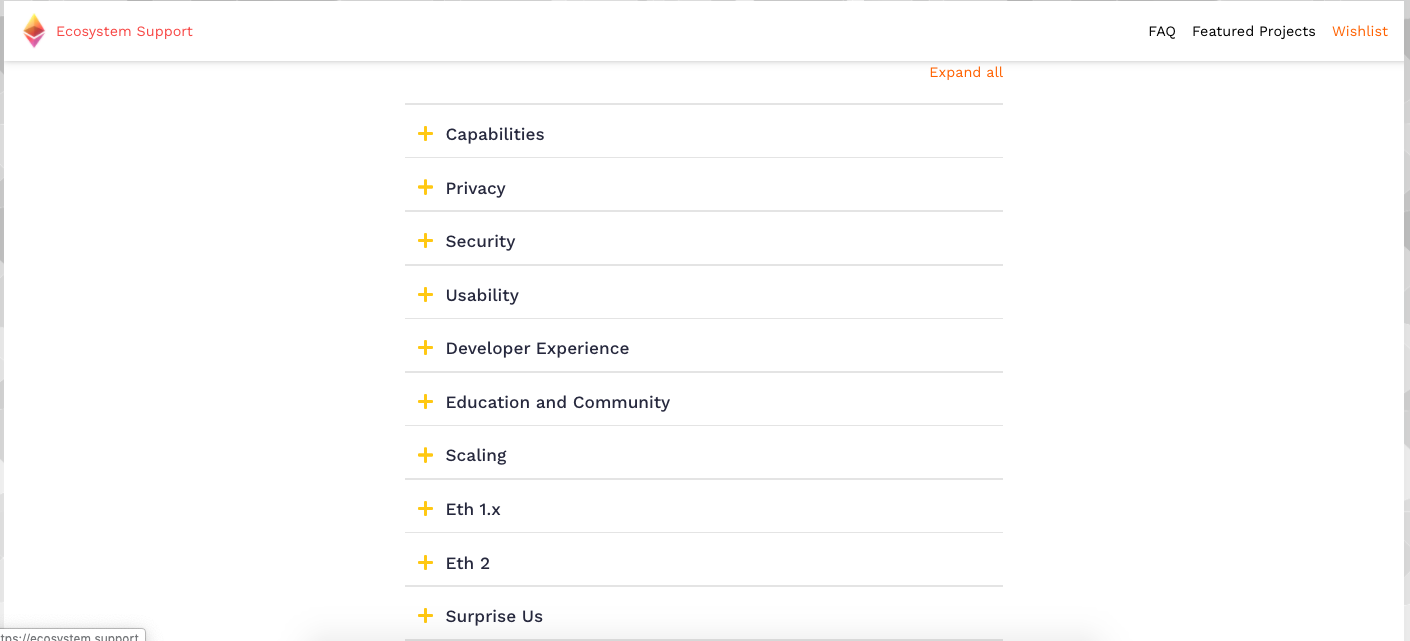
Frequently Asked Questions have been added to the website and the survey format has been improved. Most importantly, the website has also added a "Featured Project" display, which regularly rotates to display some projects supported by ESP and their related conditions.Additionally, the site has added a"wishlist"
Next, ESP will post periodic blog posts announcing new grant recipients. But this is just the beginning, and future ESPs will also highlight what the supported teams are trying to accomplish. You can keep an eye out for more new additions in the coming months, as well as regular updates to existing content.
secondary title
2. Financial use in 2019
While we have worked hard throughout 2019 to improve the Ecosystem Support Program, we have also continued to support the development of projects across the entire Ethereum ecosystem, and funding is just one way we provide support. There are many fantastic teams who are not recipients of Ethereum grants, either because they have already received funding, or because their research directions are not suitable for our grants. However, we still do what we can to support these important contributors (for example, by helping their projects grow).
Of course, financial support remains a major part of our support for the entire Ethereum ecosystem. In 2019, more than 70 projects received financial support from the Ethereum Foundation.
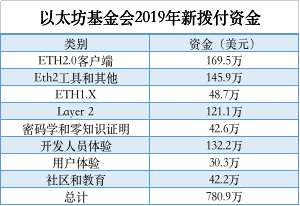
Listed below are new funds allocated to teams in 2019, excluding the following three situations: regular funding support, previously awarded funding awards, and funding for other Ethereum Foundation teams.For each grant title and abstract, we also make aForm (click to read)
ETH2.0
. The details of this grant are as follows:
The development of ETH2.0 is in full swing. Through the efforts of many teams, Ethereum has also become more scalable and secure, and Proof of Stake (POS) has also been introduced. The Ethereum Foundation has also funded a number of Ethereum client teams who have been working on interoperability, reliability, and developer tools.
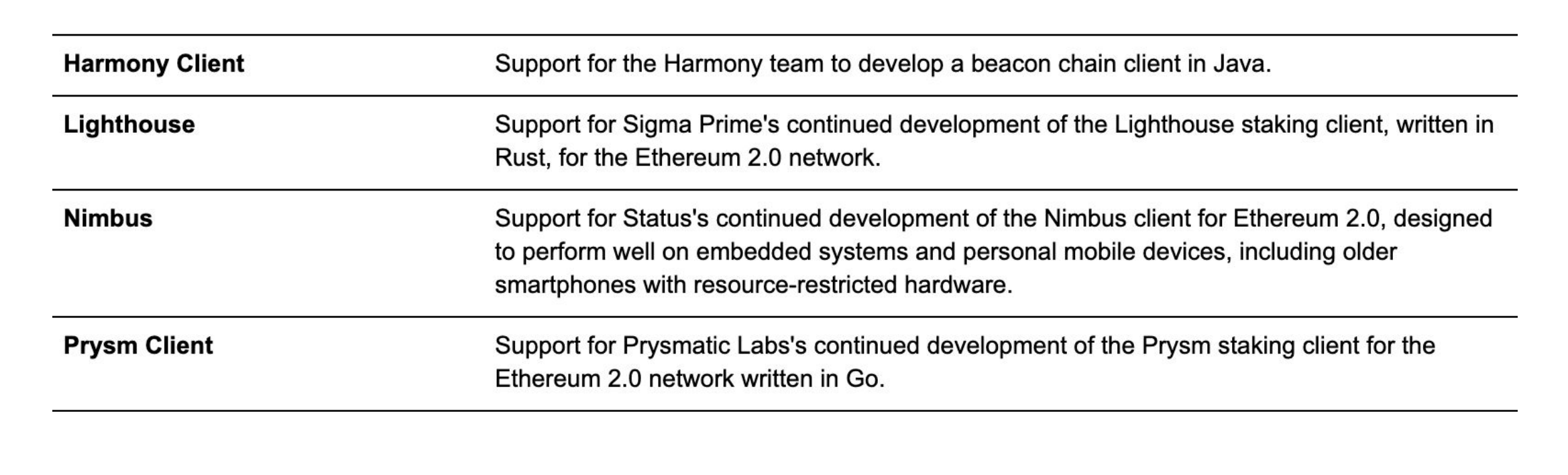
Eth2 client: $1,695,000
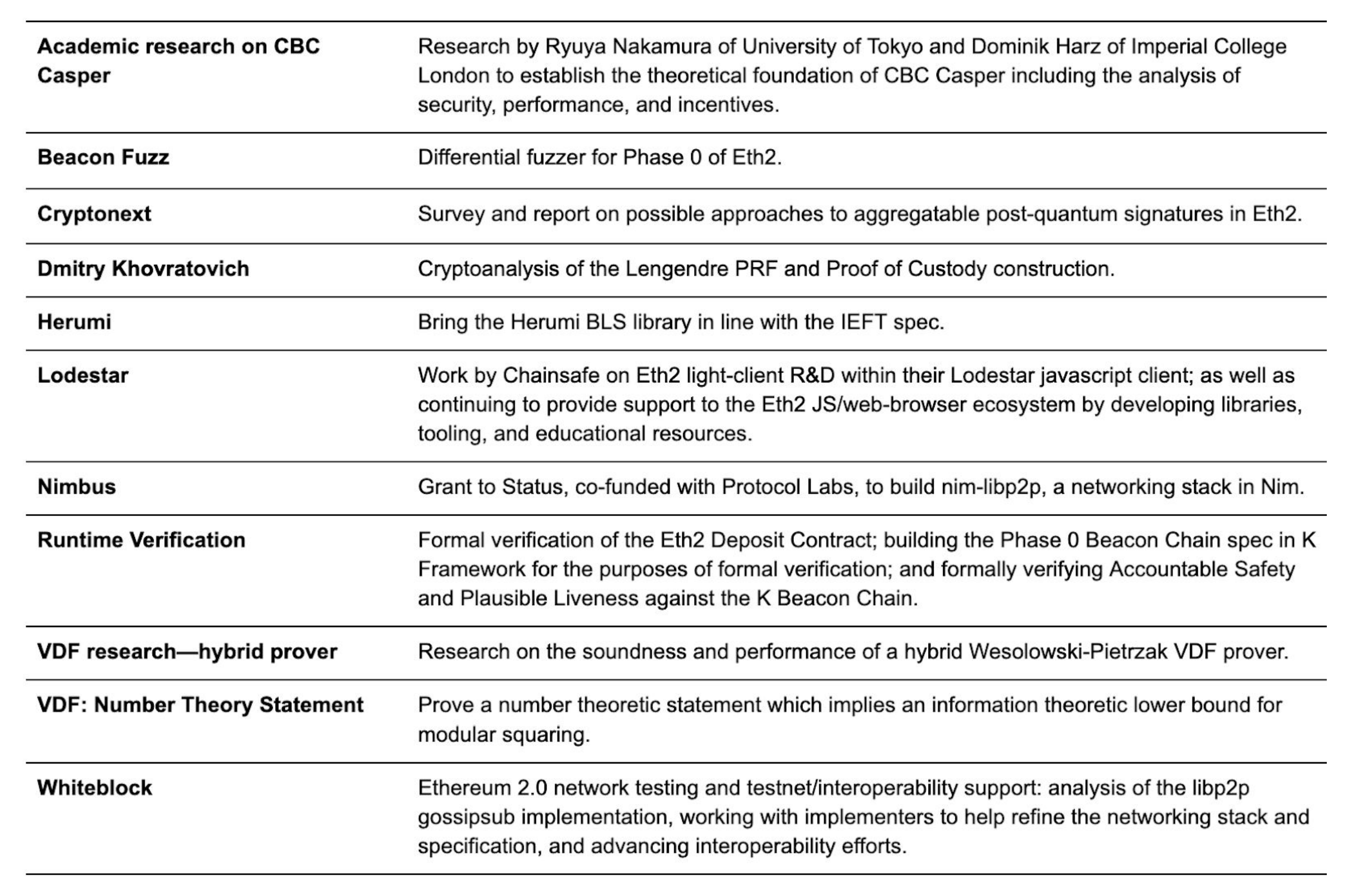
In addition to the grants listed above, work on ETH2.0 is supported by regular grants and other sources.
ETH1.X:487,000 dollars
000 dollars
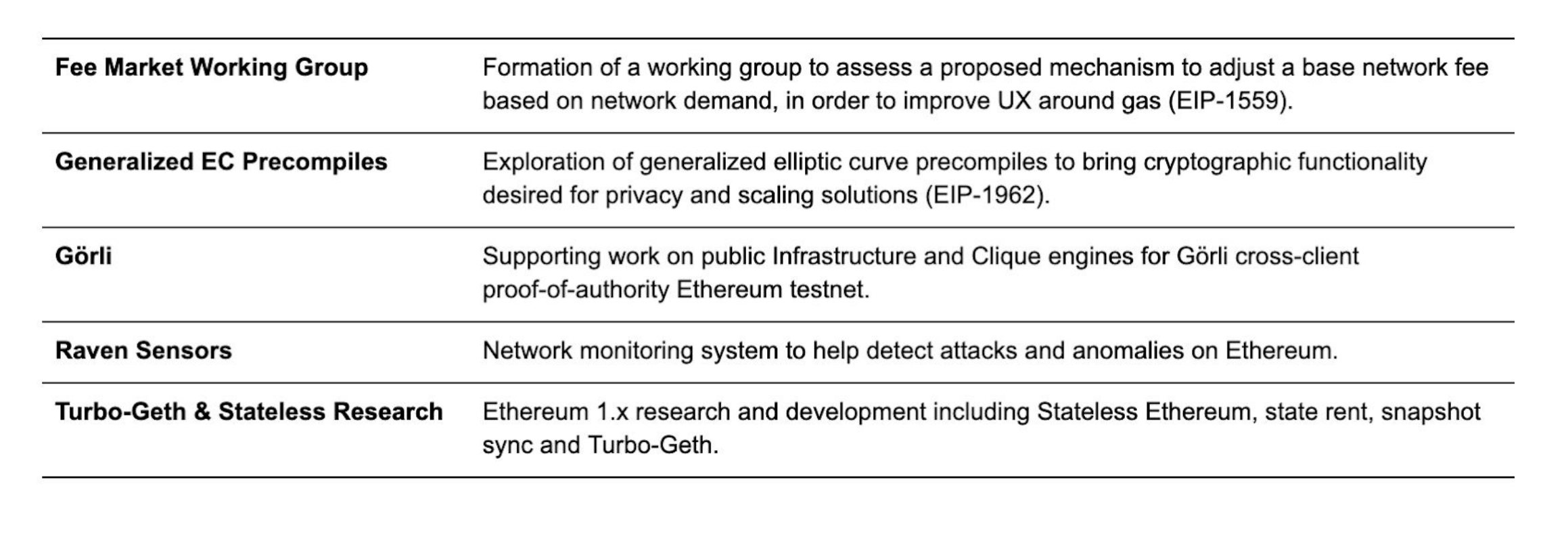 To this day, the most important work continues to improve Ethereum. Some ETH1.x are still working tirelessly on upgrades to help Ethereum continue to improve in the short term. Areas of focus include stateless Ethereum, improving the developer experience, increasing node client diversity, ensuring the sustainability of running full nodes, and paving the way for the launch of ETH 2.0. Here are some ETH1.x funding support projects:
Layer 2:1,211,In the future we will share more information about other support efforts, including Geth, other ETH1.x and stateless research.
000 dollars
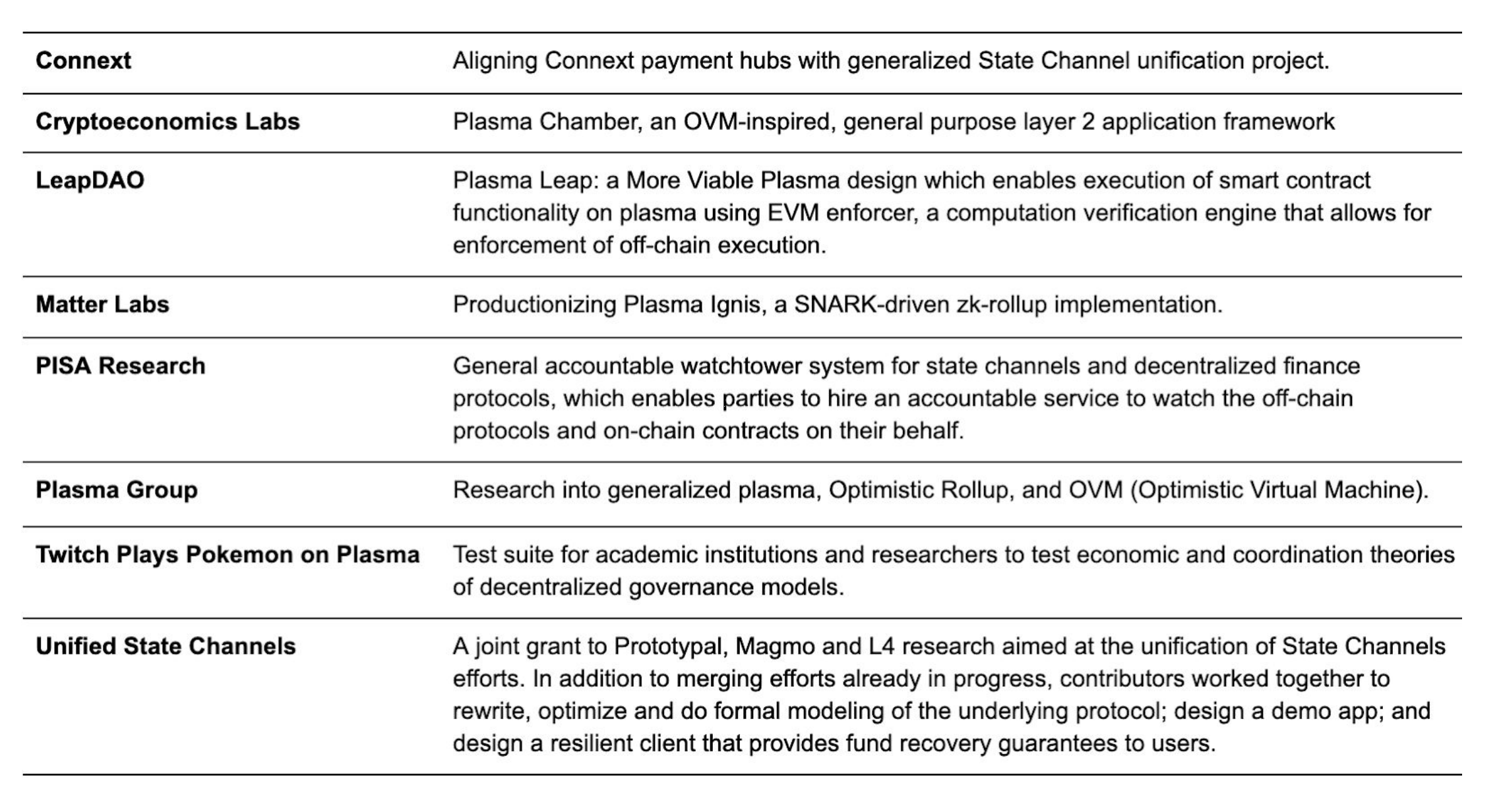
Layer 2 (Layer 2) solutions support a wide variety of applications that may be too expensive, too slow, too complex, or impossible to implement directly on the Ethereum base layer. In 2019, teams and individuals across the community came together to make Ethereum more useful and scalable. This work is not only critical in the short term, but also in the long run. Eth 2.0 will also benefit from the enhanced privacy, scalability, and flexibility provided by Layer 2.
Cryptography and zero-knowledge proofs: $426,000
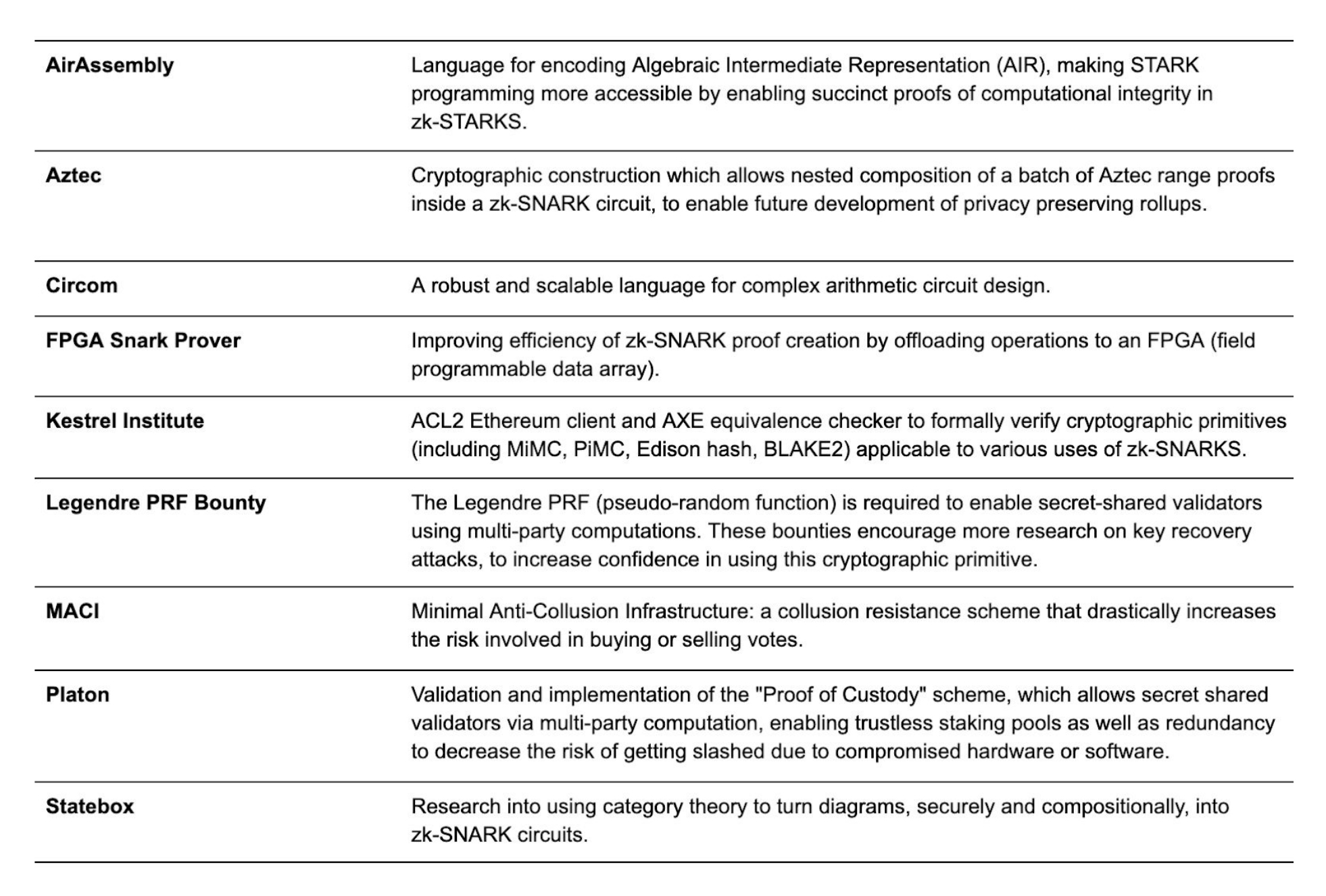
Last year, there was more research and development in cryptography and zero-knowledge proofs than ever before. These efforts strengthen the protocol's infrastructure, opening up new possibilities for scaling, privacy, and security. The goal for 2019 is to take a practical step toward building tools that make it easier for developers to make progress without requiring a deeper understanding of cryptography.
Developer Experience: $1,322,000
Ethereum opens up a whole new design space for applications. As developers explore the field, it is inevitable that new pain points are discovered and new tools are required. We have invested heavily in enhancing the developer experience on Ethereum, including improvements to the programming language, software libraries, development tools, node infrastructure, distributed storage, messaging, and more.
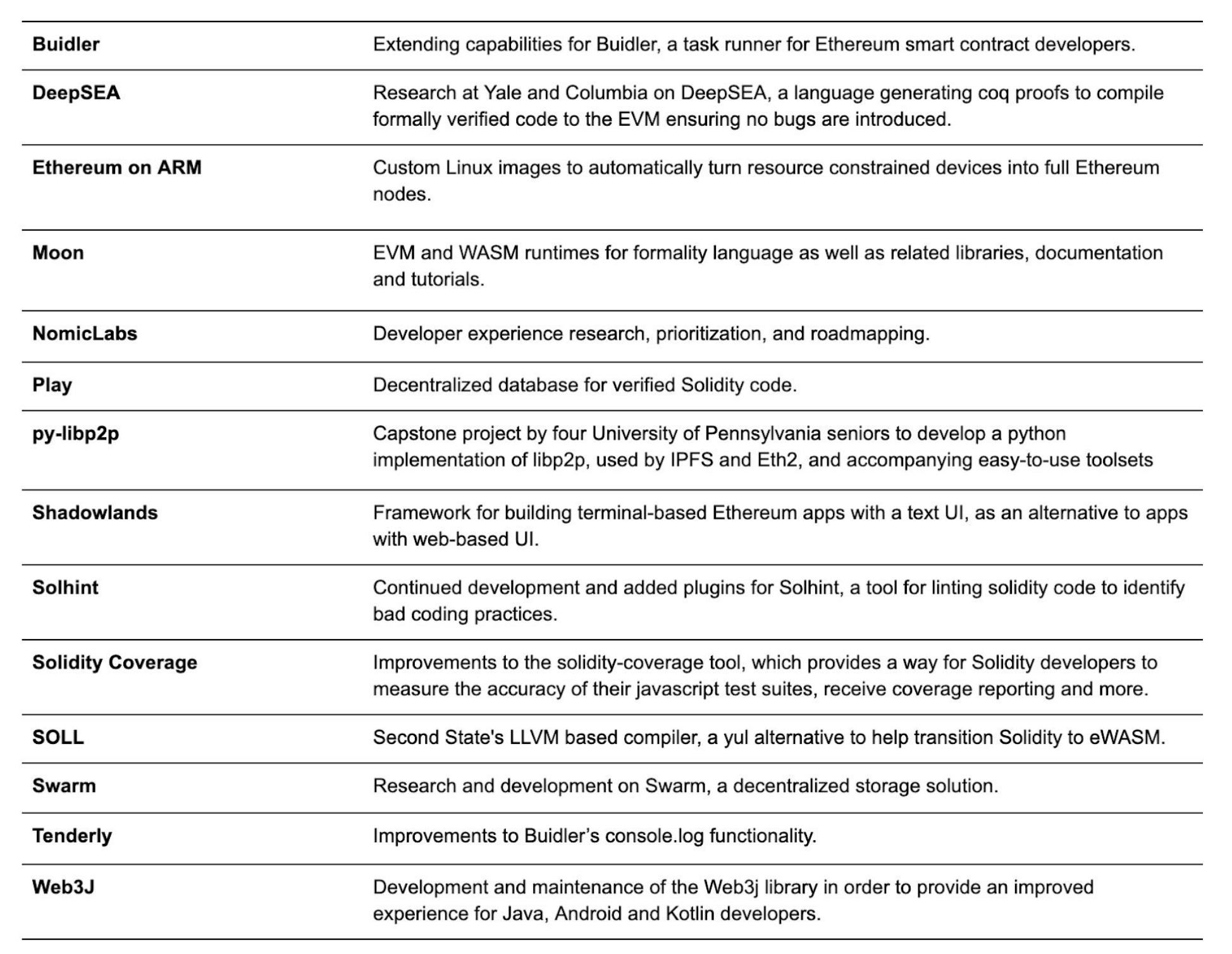
These improvements make it easier for developers to do more, so they can focus on their products instead of building their own custom tools. Ultimately, we want them to make building on top of Ethereum easy and fun.
User Experience: $303,000
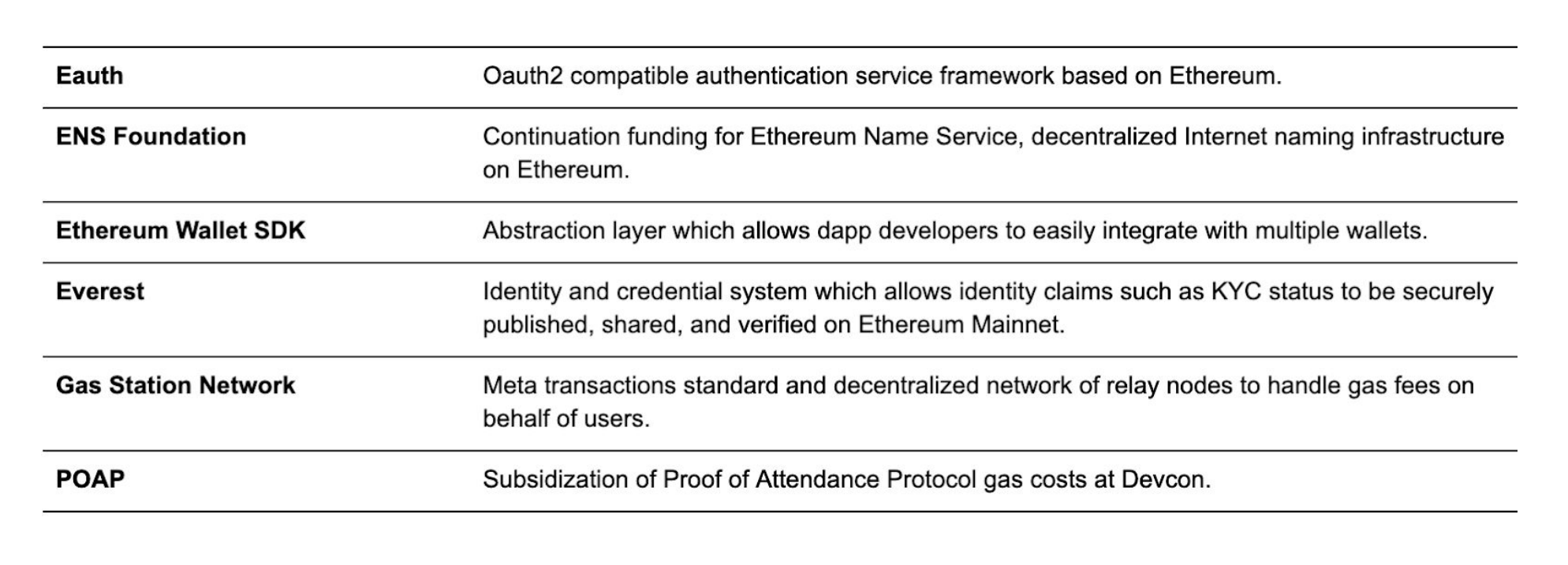
We are always looking for common tools or upgrades to reduce friction costs for end users without compromising decentralization or some unique products on Ethereum. We need to solve some common pain points, such as gas cost, identity management, address readability, and interoperability, so that DApp developers can serve users more conveniently everywhere.
Community and Education: $422,000
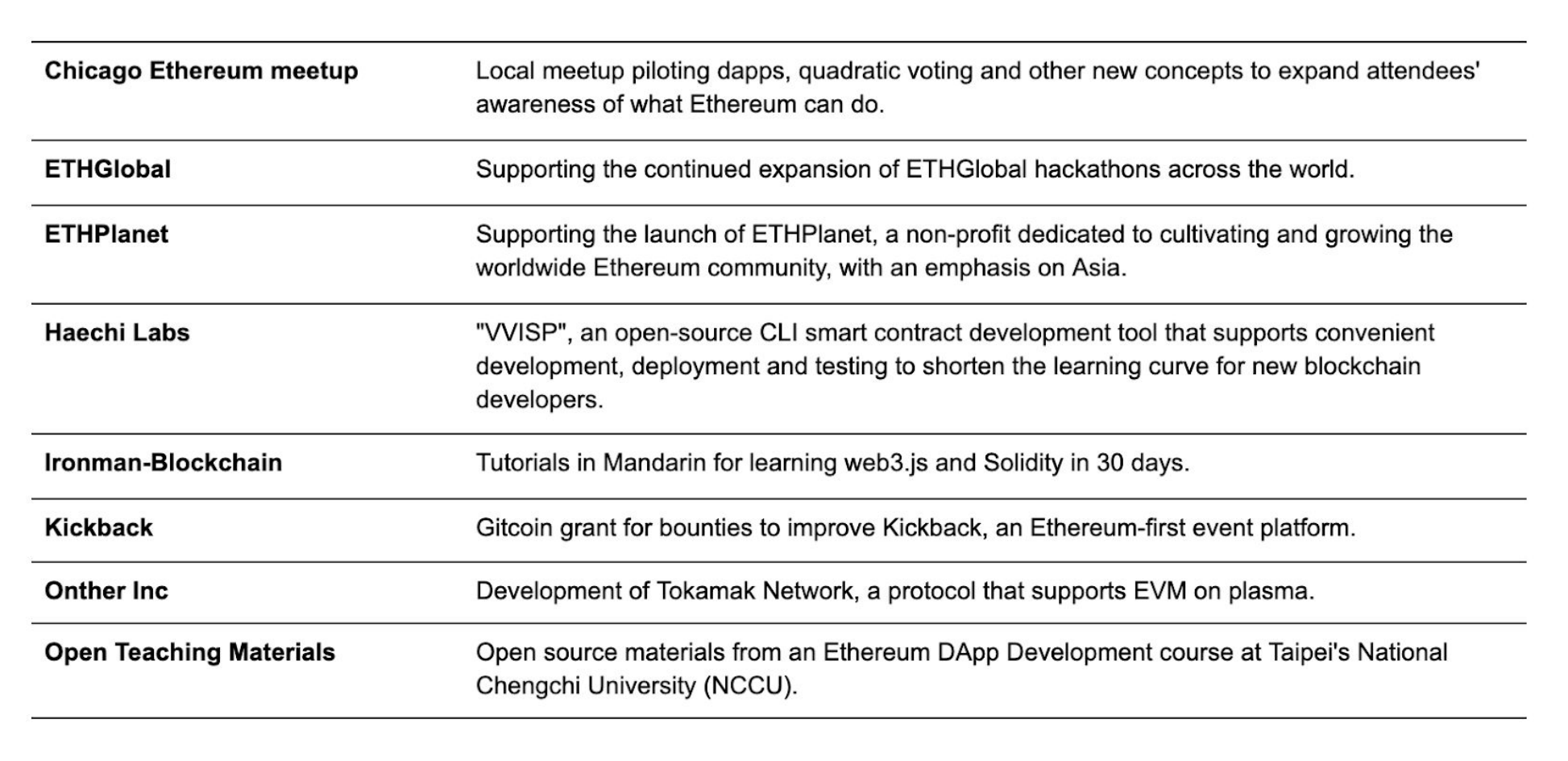
In short, Ethereum cannot exist without its community and those dedicated to growing and enriching the ecosystem. These teams bring people together, whether in person or online, increasing the diversity of our global community and helping build a general knowledge base by making educational materials freely available to all.
Indirect funding: $484,000
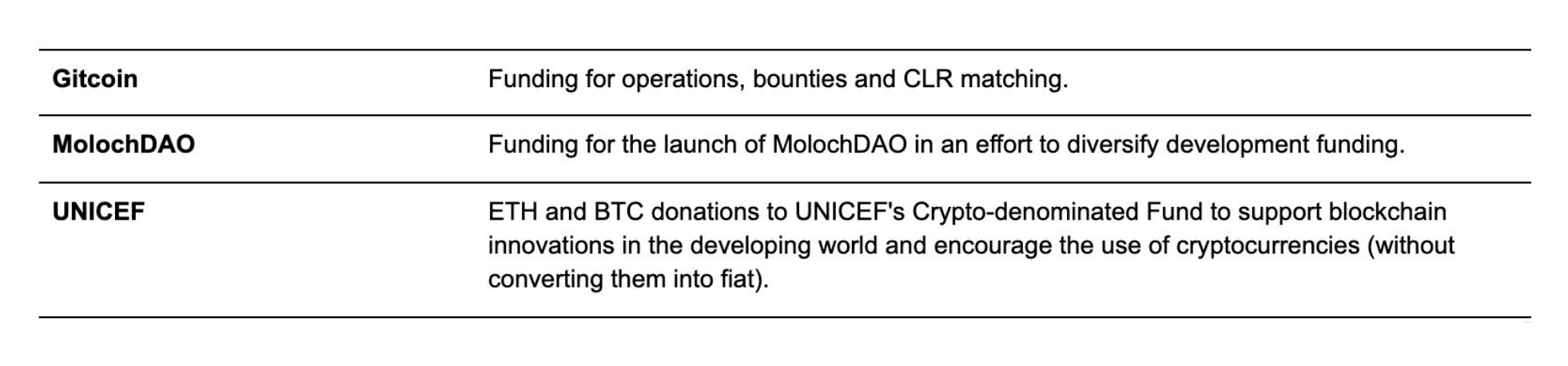
A new ecosystem requires new ways of financing. The Ethereum ecosystem relies on open source developers and independent thinkers to thrive. To this end, outside the traditional structure of companies and organizations, we want to provide funding for talented contributors, including: donations, venture capital, contracts, salaries. This class is all about delegating resources to the community, as follows:
We are proud of all that we accomplished in 2019 and we will continue to forge ahead in 2020. As always, a big thank you to the community for their enthusiasm and support.





