A New Round of Financial Revolution: Why are Crypto-Stocks the Next Future?



- 核心观点:币股代表金融效率革命。
- 关键要素:
- Circle曾因SVB倒闭脱锚。
- 币股7x24交易无地域限制。
- 提供更高杠杆与套利机会。
- 市场影响:加速传统金融链上化进程。
- 时效性标注:中期影响。
We all witnessed the success of Circle's IPO this year, but does anyone remember that just two years ago, it experienced a major derailment -
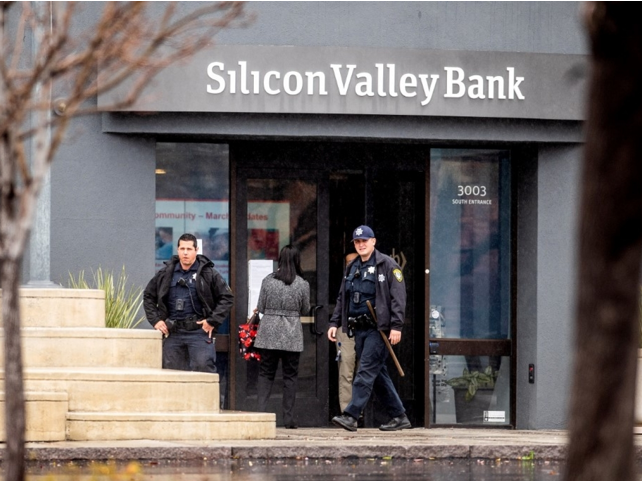
On March 8, 2023, Silicon Valley Bank (SVB) issued a seemingly ordinary announcement: it sold a $21 billion bond portfolio, recorded a $1.8 billion loss, and planned an emergency share issuance to cover the shortfall. The market immediately reacted with its footing—SVB's stock price plummeted nearly 60% intraday, triggering a chain reaction of panic among Silicon Valley startups and institutional investors.
And this was just the beginning. Over the next 48 hours, US stock investors experienced a series of shocks, including circuit breakers, trading suspensions, and regulatory takeovers, culminating in the bank's closure on March 10th. Those holding SVB stock could only watch helplessly as the value of their accounts evaporated each night. Those who reacted quickly might have sold their shares on Thursday morning, while those who were slow to react were forced to lose all their money.
In the Web 3 space, Circle's $3.3 billion in reserves were held in SVB, causing its price to plummet to $0.87 over the weekend. However, unlike traditional stock markets, $USDC trading continued unabated. During this period, a single wallet address successfully arbitraged $16.5 million by trading USDT against the USDC/DAI price difference.
This contrast of "same origin storm, different outcomes" also hints at what Paul Atkins wanted to express in the opening introduction: the lack of traditional financial markets and the efficiency revolution in the new round of financial markets. Yes, I am referring to tokenized stocks.
Limitations of traditional stock markets
- Time limit: Taking the US stock market as an example, trading is only allowed from 9:30 to 16:00 ( EST ) from Monday to Friday. The liquidity of pre-market and after-market options is limited. Many major events often occur during non-trading hours, resulting in " opening gaps " and investors have no chance to react immediately.
- Geographical restrictions: Overseas investors seeking to participate in US stocks require complex compliance processes and cross-border brokerage accounts. Many of our friends in China are likely to understand this best.
This structure made sense in the past, as securities trading relied on physical locations and centralized settlement systems. But with blockchain? Forget it.
Why are cryptocurrency stocks definitely the future?
Why are cryptocurrency stocks definitely the future?
Higher leverage and potential returns
Crypto-to-stock trading platforms are likely to offer higher leverage. Traditional brokerages can only offer 2–4x leverage, but for those of us working on Web 3, 10x leverage is like rolling a bead on a roulette wheel. In other words:
•For risk-loving investors, cryptocurrency stocks offer a new casino;
• For arbitrage funds and quantitative funds, cryptocurrency stocks provide a more flexible means of risk hedging;
More dangerous? Yes, a certain gang boss said -

Lower participation threshold
For many investors living in mainland China, opening a US stock account is incredibly difficult. However, now, we can open accounts directly with crypto wallets on platforms like @stablestocks and @xstocks. This means:
•Investors no longer need to go through the cumbersome process of opening an account with a cross-border brokerage firm; they can access U.S. stocks through a single wallet.
•For the United States, global funds can more easily enter the U.S. stock market, thereby opening up channels for overseas funds to enter the country for investment.
Oh yeah, and a higher total crypto market capitalization.
Let’s go back to the SVB case. What would happen if this incident happened on a cryptocurrency stock platform?
When SVB announced its losses, the crypto-to-equity market did not trigger a circuit breaker, allowing global investors to immediately enter the market, establish leverage, arbitrage on-chain price differences, or hedge risk. Countless on-chain trading experts are living proof that anyone can act quickly in a 24/7 market, without having to passively wait for the next trading day to open.
Crypto-stocks are definitely not the digital mapping of traditional stocks, and the new round of financial revolution is definitely not just empty talk from the government. It represents faster transactions and settlements, higher returns and risks, and lower barriers to participation.
Thank you, Crypto