






Dujiangyan released the "government service + blockchain" loose coupling model, or preempted the smart digital government service field


Produced | Odaily (ID: o-daily)
Produced | Odaily (ID: o-daily)
image description
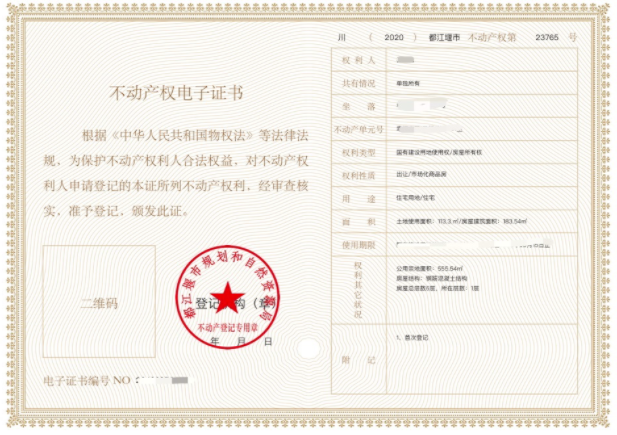
(Dujiangyan City's first blockchain real estate certificate)
Different from the "tight coupling" of other provincial and municipal affairs alliance chains, Dujiangyan City adopts a "loose coupling" processing mode, keeping the original business logic and citizen data at the application layer, and only "data results" that need to be transmitted in cross-departmental collaboration Encrypted on-chain for comparison. Not only does it take into account authenticity, security and privacy, but it is also more convenient to promote everywhere because it does not conflict with the original business process.
The blockchain license is just the beginning. In the future, "smart party building + blockchain", "community smart service platform + blockchain", "urban governance + blockchain" will also be applied in Dujiangyan City one after another.
secondary title
Government services + blockchain, or the achievement of "killer applications"
The national "two sessions" in 2017 mentioned blockchain technology for the first time; in 2018, the government work reports of the national and local governments once again mentioned "blockchain" technology on a large scale; in 2019, the central government determined that "blockchain as a core technology An important breakthrough for independent innovation", "blockchain" has also become a hot word of the year; Policies have been introduced to support.
The national "two sessions" in 2017 mentioned blockchain technology for the first time; in 2018, the government work reports of the national and local governments once again mentioned "blockchain" technology on a large scale; in 2019, the central government determined that "blockchain as a core technology An important breakthrough for independent innovation", "blockchain" has also become a hot word of the year; Policies have been introduced to support.
With the development of technology, more and more blockchain applications have been implemented, effectively countering the "useless blockchain theory". However, the most intuitive feeling of ordinary people is that the blockchain does not seem to appear in their lives. Why? "In the past few years, blockchain has been widely used in the financial field. In the non-financial field, although there are many implementations of blockchain, there is a lack of "killer applications". "Tao Quming, general manager of Sichuan Kaiyuanguan Technology Co., Ltd., told Odaily. In his view, blockchain applications have mostly been concentrated in the financial sector in the past few years.
And so it is. The most typical example of domestic blockchain financial applications is the digital renminbi. As early as 2014, the central bank established a digital currency research institute to study the feasibility of issuing legal digital currency. This year, the Central Bank's Digital Currency (DCEP) has also been pilot tested in many places across the country, and it will be officially launched soon. In addition, large commercial banks such as China Construction Bank have been conducting research on "cross-border financial services + blockchain" since 2018; the China Securities Regulatory Commission also launched the "Regional Equity Market Blockchain Registration and Custody Infrastructure Construction" in July this year. The pilot work, exploring the application of "equity + blockchain"...
In contrast, in the non-financial sector, although there are also applications such as "traceability and anti-counterfeiting + blockchain", "social networking + blockchain", and "copyright protection + blockchain". But for ordinary people, the sense of existence of the blockchain is not strong, and even a bit "tasteless".
"In the non-financial field, especially the field where the traditional Internet is good at, if a business pain point can be solved by traditional Internet methods, blockchain has no chance." Tao Quming explained.
Taking anti-counterfeiting and traceability as an example, before the birth of blockchain technology, various leading e-commerce platforms had already worked hard, but they still failed to completely eliminate the problem of counterfeiting. Today's "traceability and anti-counterfeiting + blockchain", although the data on the chain cannot be tampered with, the authenticity of the original data is still not guaranteed. What's more, most of the original data upload nodes are related enterprises, and their own credibility is doubtful. It can be said that the blockchain also does not fundamentally solve the pain points of anti-counterfeiting and traceability. To promote the development of blockchain in non-financial fields, the key is to find out which scenarios are most suitable for the development of blockchain.
"Government services may be one of the most important scenarios of blockchain in the non-financial field." Tao Quming told Odaily, "Because of its technical characteristics such as non-tamperable and distributed storage, blockchain has built a unique trust mechanism, which can effectively solve the traditional The pain point of trust in e-government services."
As early as 2017, the country had promulgated the "13th Five-Year Plan for the Construction of National Government Informationization Projects", and it is necessary and urgent to innovate government informationization work. In the past few years, although various regions have actively promoted e-government and data sharing, they still face the following problems in actual implementation:
There are risks of data tampering and falsification in the centralized system, especially cross-department government data;
The centralized system has the risk of being invaded, and various departments are worried about security risks such as information leakage;
The failure of the centralized system may lead to the unavailability of the entire service;
Centralized institutions are not equal, it is difficult to collect information comprehensively, and the efficiency of coordination needs to be improved.
Through blockchain, the above problems can be effectively solved.
From the perspective of organizational structure, the blockchain is a distributed multi-agent collaboration, and the government structure is also a typical distributed system. Different departments and levels have different divisions of responsibilities, but they are also a community of multi-subject collaboration. The two have natural similarities.
secondary title
"Loose coupling" replaces "tight coupling" to revitalize "government + chain"
At present, many provinces and cities in my country and other regions have tried to run "government services + blockchain".
Compared with traditional e-government, the blockchain can effectively break the problem of data islands; and, completely different from traditional information systems, the data stored in the blockchain cannot be tampered with, and the integrity of the data is guaranteed from beginning to end, leaving traces of data usage. Traceability, higher safety performance.
However, in the actual implementation process, many problems also emerged, which need to be solved urgently.
(1) Problems with the existing alliance chain
At present, the "government service + blockchain" in most provinces and cities adopts Consortium Blockchain as a solution. The node is the bookkeeper, and the generation of each block is jointly determined by all pre-selected nodes. Other access nodes can participate in the transaction, but do not intervene in the bookkeeping process. Other third parties can perform limited queries through the open API of the blockchain . In order to achieve better performance, the consortium chain has certain requirements for the configuration of consensus or verification nodes and the network environment. With the access mechanism, the transaction performance can be improved more easily, and some problems caused by the uneven participation of participants can be avoided.
However, the alliance chain has encountered difficulties in promotion in practice. The main reasons are as follows:
One is that different government departments have different business logics.
In the government affairs system, different government departments undertake different functions, such as taxation, environmental protection, medical care, etc., and the processing logic of government affairs data is also different, which is determined by the government management system of our country.
For example, the public security department will register residents' personal identity information, but this involves citizens' privacy. If all these private data are released on the chain, once a large-scale privacy leak occurs, it will inevitably violate the vital interests of citizens. Even if it is not leaked by the public security department, it is difficult to escape accountability.
It is the issue of power and responsibility and the existence of various hidden dangers that form a barrier and hinder the sharing of data among various government departments.
The second is that the data is redundant, which affects the operation of nodes.
The consortium chain requires each node to store all the data, which can avoid "single point of failure", but it will greatly affect the efficiency in actual operation.
According to the "Government Big Data White Paper", the national government big data adds up to at least hundreds or even thousands of Alibaba (100PB). If a node wants to run these data, it is undoubtedly difficult and costly, and it is also unrealistic.
The more nodes of the current government alliance chain, the more subjects of collaboration, the complexity and difficulty of system integration and implementation will increase exponentially in terms of technology and execution, the design and construction cost of the new system and the cost of integration with the existing system The difficulty and workload will increase exponentially accordingly. Conversely, if there are not enough nodes, the value of the trusted network will be limited, and it will be difficult to realize the vision of all-in-one network.
Based on the above reasons, although the "government service + blockchain" applications in various places seem to be booming and bustling, there are very few really brilliant ones.
(2) "Loose coupling" becomes the way to break the situation
In order to solve the predicament of the previous government alliance chain, let blockchain technology truly improve the efficiency of government services and enhance credibility. Dujiangyan City creatively proposed a "loose coupling" approach in the implementation of the application to replace the "tight coupling" approach of the traditional government alliance chain.
image description
(tightly coupled)
The so-called "loose coupling" is to leave the original government business logic and data in the application layer, and only compare the result information that needs to be transmitted in cross-departmental collaboration.
"Data is zero-shared, and business logic is hardly changed. Everyone follows a unified open standard to break down system barriers." Tao Quming explained.
image description
Specifically, using the blockchain certificate storage technology, the electronic certificates that have already been digitized are created and stored, and a string of password "digital fingerprints" are generated; each "digital fingerprint" corresponds to an original, and when it needs to be used, It is only necessary to compare whether the "digital fingerprint" is consistent with the original to know whether it is consistent with the original, without the need to transmit the original data.
At this time, blockchain technology only uses a plug-in or standard protocol to store "digital fingerprints" in a distributed manner. All departments and residents can use these "digital fingerprints" under certain standards and authorization. On this basis, data services based on the "digital fingerprint library" can be provided, the interface can be opened to third-party service companies, and innovation in open technology services can be encouraged in an open source and innovative way.
(loose coupling)
image description
Previously, users had to bring their original ID card and household registration book to apply for a real estate title certificate, and usually had to be present in person to facilitate staff review. The real estate registration center also needs to connect information with taxation, public security, civil affairs and other departments to verify the authenticity of the information. The whole process is not only cumbersome, but also time-consuming.
Now, users do not need to carry a lot of paper materials, because ID cards, household registration books and other documents have already been stored in public security systems; The government blockchain network verifies the authenticity of relevant materials and directly issues blockchain real estate certificates to users.
In addition, blockchain certificates such as real estate title certificates and business licenses will also be stored as encrypted data for users to handle other businesses. In this pilot project, Dujiangyan Zangzhentang Traditional Chinese Medicine Clinic successfully applied for the country's first blockchain medical institution practice license by uploading blockchain real estate certificates, business licenses and other materials, after automatic system verification and manual review. for the record.
This also means that once the blockchain-based real estate title certificate and business license are launched, they can be used to support subsequent richer government affairs.
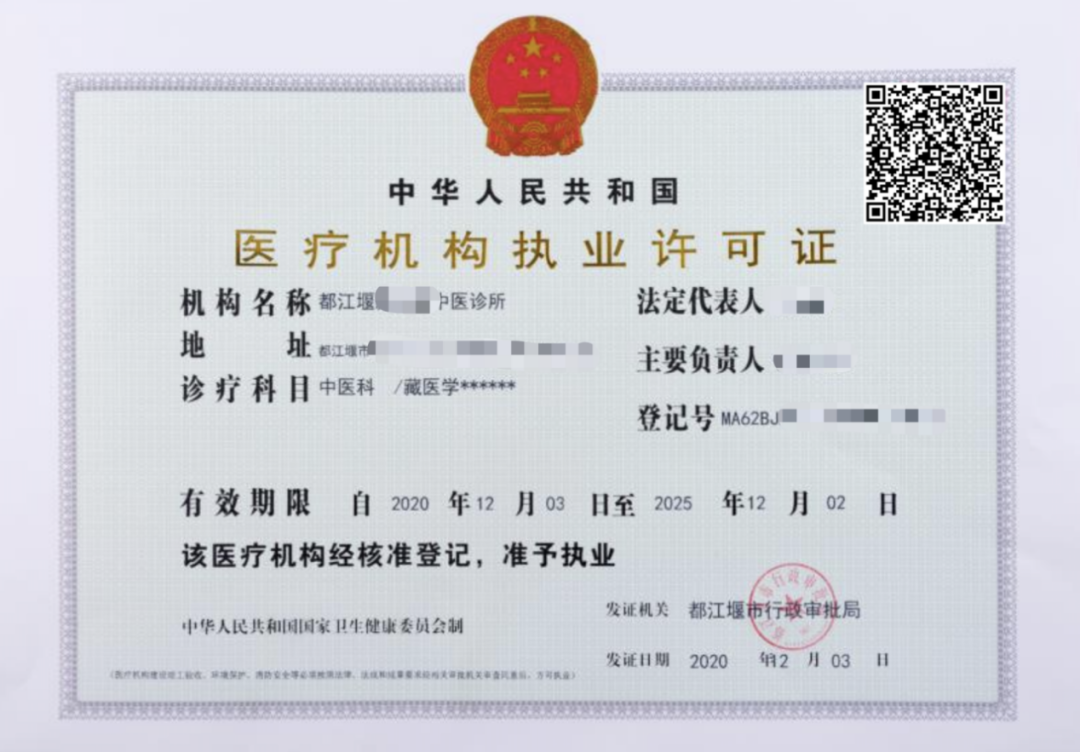
(Use the blockchain license to handle clinic records)
During the whole process, the original data will not appear, which avoids the regulatory requirements on the use of original private data, and at the same time can complete the transmission of information, reducing the difficulty of system collaboration between various departments by 90%.
In addition, once the original data changes, the corresponding encrypted data will also change, which greatly ensures the real-time synchronization of data and can record the status. For example, the blockchain property right certificate can record the status of each property transaction, which helps to verify the true status of property rights, facilitates the verification of housing availability in real estate transactions, and improves the efficiency of real estate transactions.
Some people may question, what is the authenticity of these encrypted data before they are uploaded to the chain?
At present, each node on this government affairs chain is a government department, and when the data is stored, it will also be signed by the CA digital certificate and the execution key, which has complete legal effect.
Another question that people care about is how efficient is the government affairs blockchain in Dujiangyan City?
Tao Quming said that the theoretical throughput (TPS) of the chain can reach tens of thousands of times, and the performance is fully sufficient to support the current business volume.
Overall, this new model can realize a closed loop of trust between government departments, government departments, enterprises and residents without changing the existing business logic of each department and avoiding unnecessary sharing of data in different systems , while taking into account security, efficiency, open source, and real application requirements, it has opened up a new technical solution for "government services + blockchain".
secondary title
From Sichuan to the whole country
The issuance of blockchain real estate certificates and blockchain business licenses is only the first step for Dujiangyan City. In the future, other important personal documents such as marriage certificates, degree certificates, and retirement certificates can be digitized in the same way, reducing trust costs and improving work efficiency. In addition, next year Dujiangyan plans to put all government licenses on the blockchain, including business licenses.
"We can use a digital wallet to store digital certificates on our mobile phones, just like storing a merchant's VIP virtual card in a WeChat card wallet." Tao Quming made a vivid metaphor.
If users want to handle various businesses, they don't need to go back and forth across departments, they only need to click on the corresponding certificate on the mobile phone to authorize access.
Tao Quming explained that in the future, government services will not only save time and effort, but also be mobile and intelligent remotely like other market-oriented services such as travel.
Dujiangyan is just the beginning of Sichuan's government affairs blockchain.
At present, Tao Quming's "Kaiyuanguan Technology" has signed an investment cooperation agreement with the Dujiangyan Municipal Government of Chengdu. "Kaiyuanguan Technology" will cooperate with Dujiangyan City to form a national demonstration effect. Integration of government affairs within the country and one network across the country. At that time, government affairs data in various places can be more smoothly interconnected and realize greater economic value.
We also expect Chengdu to continue to explore the application of "scenario + blockchain" in the era of blockchain, and promote the in-depth development of industrial blockchain.


